Bemidji annual walk honors missing and murdered Indigenous relatives
A 1.2-mile walk from Paul Bunyan Park to Sanford Center put a stark Minnesota MMIR gap in front of Bemidji: less than 1% of residents, 10% of missing people in 2024.

Indigenous women, girls and two-spirit people made up less than 1% of Minnesota’s population but accounted for 10% of the people who went missing in 2024, a disparity that gave Sunday’s Bemidji Missing and Murdered Indigenous Relatives walk and conference its force. The annual event drew people to Paul Bunyan Park, where the walk began at the Paul and Babe statues before moving 1.2 miles along one of Bemidji’s busiest roads to the Sanford Center.
The 2026 gathering carried added weight because it was the first Bemidji MMIR walk and conference without Simone Senogles, the organizer many in the community credited with helping drive the event for years. Senogles died unexpectedly on Sept. 20, 2025, and MMIW 218 organizer Valahlena Steeprock said the group felt that loss in its opening remarks. Fellow organizer Wenona Kingbird said the first teepee setup without Senogles’ guidance made clear how central she had been to both the logistics and the spirit of the event.
MMIW 218 has held its Bemidji event for more than a decade, turning the city into a recurring public space for remembrance and pressure on institutions that too often fail Indigenous families. The group has tied its observance to Minnesota’s Missing and Murdered Indigenous Relatives Day of Remembrance on Feb. 14, and in 2025 organizers asked people to wear red and bring signs. The event has also become part of a wider Minnesota pattern, with annual marches in Bemidji, Duluth and Minneapolis keeping the issue visible beyond one community or one weekend.
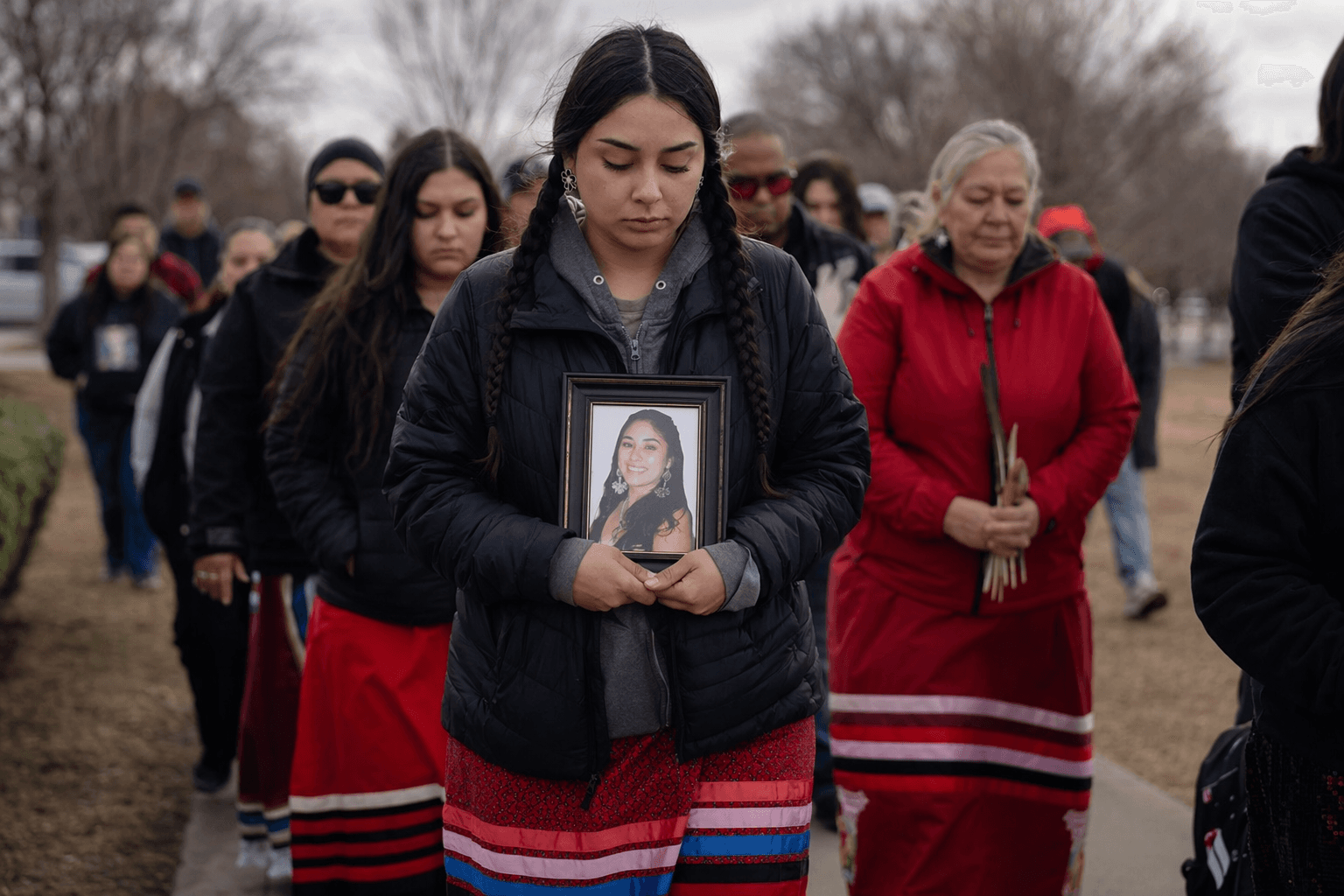
That visibility matters because the state’s Missing and Murdered Indigenous Relatives Office, housed in the Minnesota Department of Public Safety’s Office of Justice Programs, says its work is to reduce and end violence against all Indigenous people in Minnesota. MPR News has noted that for more than a decade, Indigenous communities across the state have gathered around the Feb. 14 remembrance day to press for attention, accountability and action.
In Bemidji, the walk was not just a memorial. It was a public reminder that families, tribal communities, law enforcement and elected officials are still being asked to confront an ongoing safety crisis with the urgency it demands, not only when the banners go up, but all year long.
This article was produced by Prism’s automated news system from verified source data, official records, and press releases, then run through automated quality and moderation checks before publishing. The system is built and supervised by the people who set the standards it runs under. Read our full AI policy.
Did this article answer your question?


