Bemidji City Council marks Sexual Assault Awareness Month, swears in reserve officers
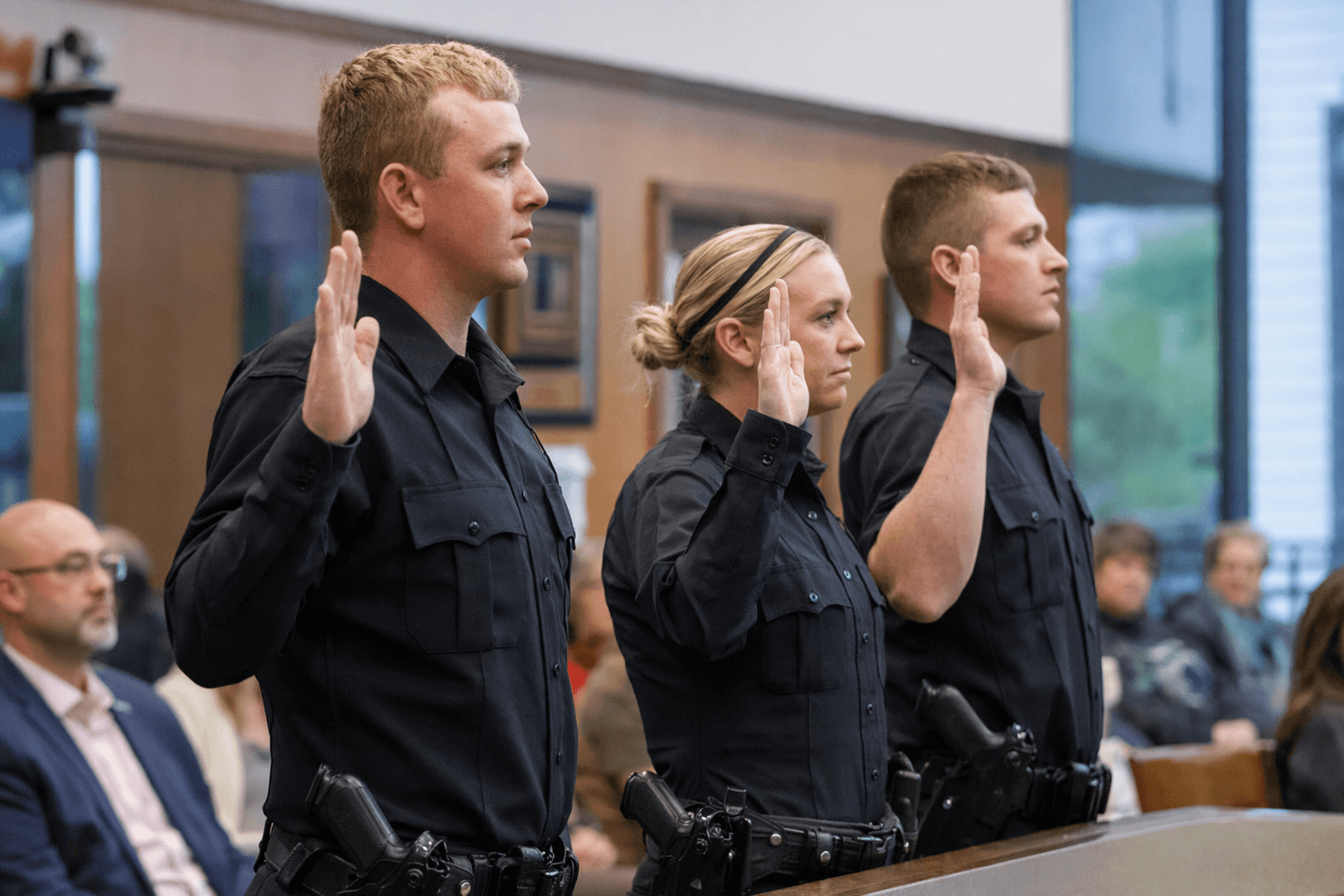
Three reserve officers were sworn in as Bemidji paired public-safety staffing with a Sexual Assault Awareness Month declaration and Take Back the Night date.

Bemidji gave its police department three more reserve officers and used the same City Council meeting to put sexual-assault awareness on the public record, declaring April Sexual Assault Awareness Month and April 23 Take Back the Night. The session also included a semi-annual review of the city manager, putting staffing, oversight and survivor support into one night of business.
The reserve officer swearing-in mattered because those part-time officers add flexibility to a department that has to cover events, answer calls and keep a small city moving when demand rises. In Bemidji, that kind of backup can affect how quickly officers are available for neighborhood problems, public gatherings and other routine calls that still shape daily life in Beltrami County.
The council’s proclamation tied Bemidji to a longer-running local effort around Take Back the Night. Bemidji State University lists a Take Back the Night event in connection with April sexual assault awareness programming at the BSU Lower Lakeside Student Union. Regional coverage has described the annual Bemidji event as an effort hosted or co-hosted by Support Within Reach, with earlier collaborators including Bemidji State University, United Way, Community Resource Connections and the Red Lake Nation.
That event has been framed as more than a symbol. Support Within Reach has said it uses Take Back the Night to bring resources to victims of sexual violence in the community and to promote healing. The group has also pointed to a Minnesota estimate that one in three women and one in six men will experience sexual violence in their lifetime, a reminder of why an official city declaration still matters to survivors and advocates.
For Bemidji, the meeting showed the city trying to do two things at once: strengthen the practical side of public safety through reserve-officer staffing, and keep attention on a trauma that affects families, campuses and neighborhoods across the region. The semi-annual city manager review added another layer of accountability, signaling that the council was watching both the front-line response and the administration behind it. In a city like Bemidji, those pieces are connected. Public recognition, police coverage and management oversight all shape how residents experience their local government.
This article was produced by Prism’s automated news system from verified source data, official records, and press releases, then run through automated quality and moderation checks before publishing. The system is built and supervised by the people who set the standards it runs under. Read our full AI policy.
Did this article answer your question?