Bemidji Housing Summit Highlights Funding, Aging Infrastructure Challenges
Leaders and stakeholders gathered Jan. 3 at the Sanford Center for a housing summit that laid bare how a nationwide housing crisis is playing out locally in Bemidji. Participants reviewed a Beltrami County comprehensive housing needs analysis and identified funding shortfalls, aging housing stock and redevelopment opportunities as urgent concerns for residents.
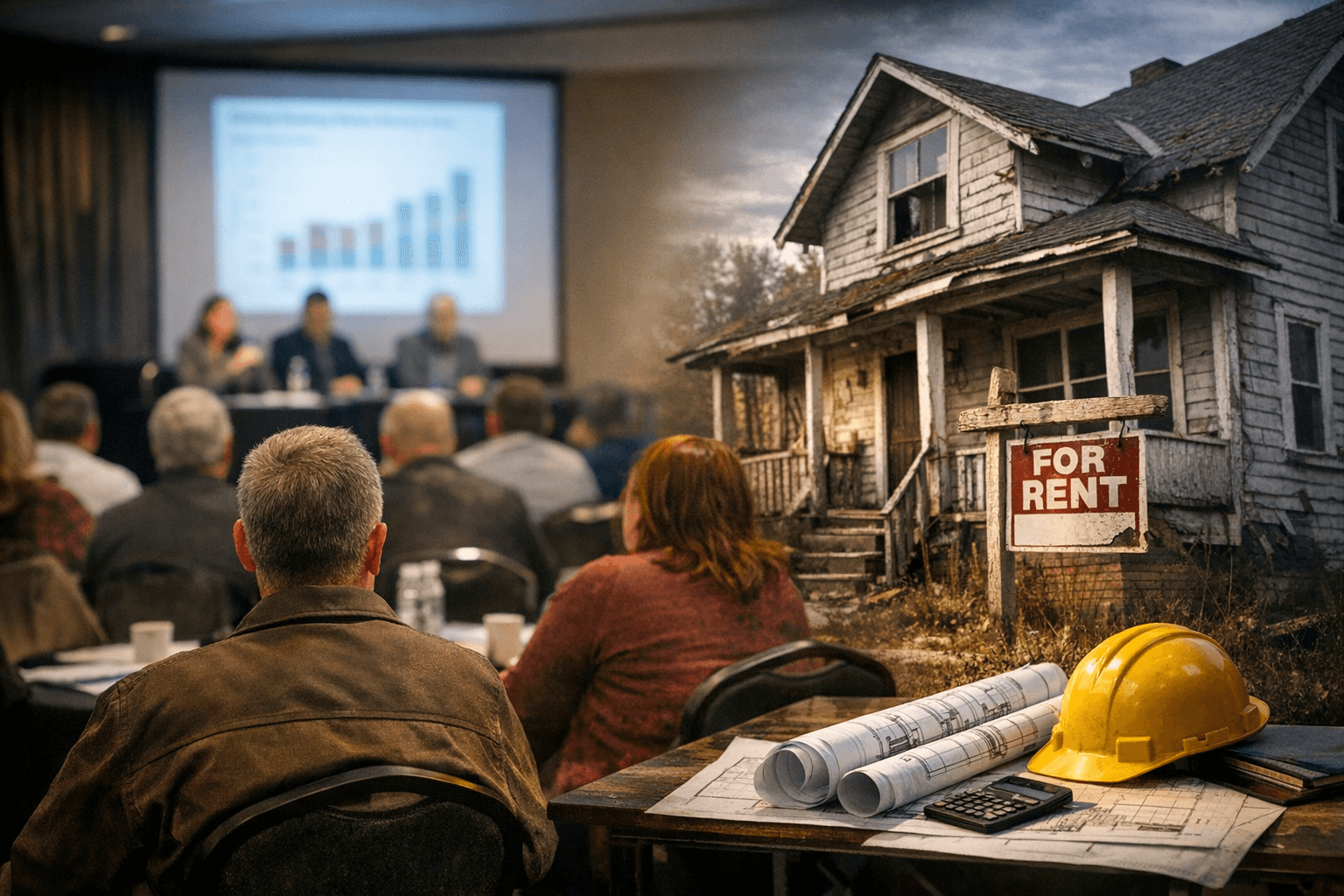
Developers, community resource organizations, bankers, state representatives and tribal partners convened at the Sanford Center on Jan. 3 for a daylong housing summit intended to spark local solutions to a tightening housing market. The event included a presentation of a Beltrami County comprehensive housing needs analysis by Maxfield Research and drew attention to immediate pressures on affordability, safety and reuse of vacant properties.
Summit participants described funding shortages as the principal obstacle to new affordable units and to renovating existing homes. “The simplest (barrier) is money,” Skip Duchesneau, DW Jones president, said during the summit. “There's a gap of money, whether it's an affordable project that Minnesota Housing finances … with the tighter state budget, the state hasn't been providing as much extra money to the agency, so funding is lower there.” That shortfall, speakers noted, mirrors trends seen across many municipalities as state and federal resources tighten while demand rises.
Local conditions increase the urgency in Bemidji. Aging infrastructure and a stock of older downtown homes built for smaller households are being used by larger, modern households, stretching electrical, heating and cooking systems beyond original design. Bemidji Fire Chief Justin Sherwood warned that the stress is already showing in emergency calls. "These homes, which are built in downtown, were built at a time for smaller families who operate in a very different way," he said. "Now, here in 2026, our housing is providing shelter to more people than intended. The overall infrastructure in the home are being pushed to a limit to which they were not designed, and as a result, we're getting more electrical fires, cooking fires, heating fires."
Speakers discussed how abandoned properties such as Red Pine Estates and stalled local projects intersect with the county’s needs, posing both liabilities and potential sites for redevelopment. Plans under discussion include adaptive reuse along the downtown rail corridor, which proponents say could expand housing supply and stimulate economic activity while opponents caution about displacement and infrastructure costs.
Mayor and development officials at the summit emphasized that private development and public-private partnerships will be crucial to any realistic, locally led response. Attendees encouraged aligning financing strategies, leveraging remaining state and federal programs, and coordinating with tribal partners to ensure culturally appropriate approaches.
For Bemidji residents, the stakes are practical and immediate: more scarce affordable units, older homes pushed beyond their design limits, and a built environment in need of investment. The summit signaled alignment across sectors and the start of a community effort to translate analysis into action. This article is the first in a series examining housing challenges and responses in Bemidji.
This article was produced by Prism’s automated news system from verified source data, official records, and press releases, then run through automated quality and moderation checks before publishing. The system is built and supervised by the people who set the standards it runs under. Read our full AI policy.
Did this article answer your question?