Bemidji planning board previews road construction, business projects, zoning
Bemidji’s next construction season will reshape Highway 197, add 86 apartments, and advance a Chipotle project that could open by year-end.
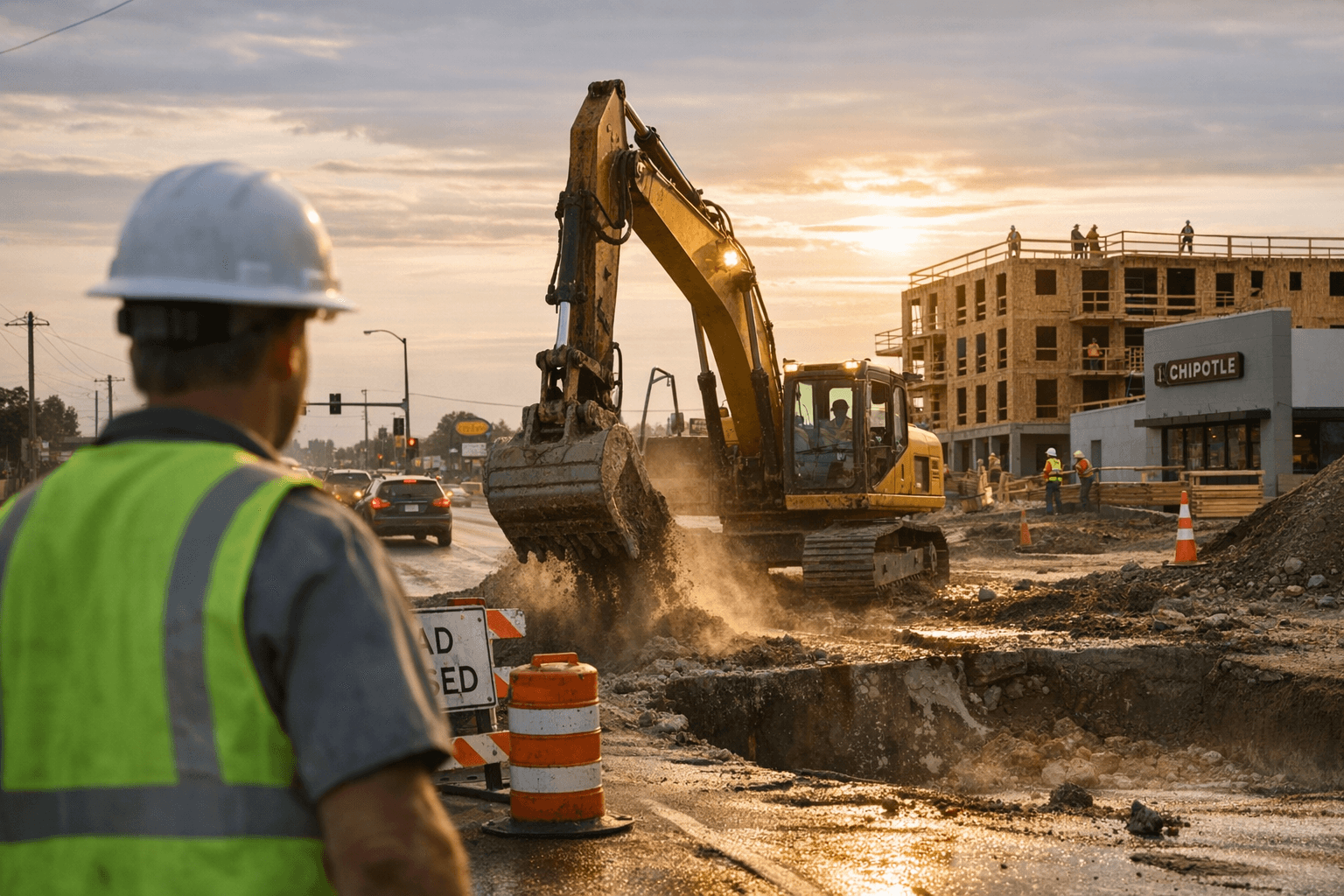
Highway 197 is the biggest immediate change
Bemidji is heading into a construction season that residents will feel on the road first. Minnesota Department of Transportation says its portion of the State Highway 197 reconstruction project is set to begin Monday, May 4, 2026, with the first phase running from May 4 to mid-June and using temporary driving lanes and signals to keep traffic moving as much as possible.
That matters because Highway 197 is not just a through route. It is a business corridor, a neighborhood connector and one of the places where small design choices, such as lane shifts or signal timing, can change the rhythm of daily trips across the city. MnDOT says the work is being done in coordinated stages with the City of Bemidji so access can be maintained as much as possible, but drivers should still expect the corridor to feel different as the project advances.
The open house for the project, held Monday, April 13, 2026, at the Bemidji MnDOT Building at 3920 Hwy 2 West, gave residents a chance to see what is coming before construction starts in earnest. That public step matters because the project is built around changes people will notice right away: roundabouts, boulevard space and a multi-use trail on both sides of the highway. MnDOT says Highway 197 currently has limited pedestrian and bicycle facilities, so the reconstruction is being framed not only as a road project but also as a safety and mobility upgrade.
What the staging plan means for nearby streets
The sequencing around the project is as important as the construction itself. MnDOT’s staging plan lists city Stage 1 on 23rd Street as completed in 2025, while city stages on Middle School Drive and Hannah Avenue are planned for 2026. MnDOT’s own Stage 1 on the west end of Highway 197 is also listed for summer 2026.
That combination tells a clear story: the corridor is being rebuilt piece by piece, and the effects will spread beyond the highway itself. Nearby streets may see changes in access patterns, turning movements and traffic flow as work shifts from one stage to the next. For people who live, work or run errands near the corridor, the practical effect will be a series of short-term detours, changed entry points and construction zones that will require more attention than a normal commute.
The city and MnDOT are trying to avoid total disruption, but coordinated staging still means neighborhood routines will be interrupted. School traffic, business deliveries, customer parking and side-street travel are all likely to feel the strain when lanes shift and signals are temporary.
Planning board decisions are already shaping what gets built next
The same planning process that helps manage Highway 197 also filters private development before dirt starts moving. That is where Bemidji Planning Board decisions become visible in everyday life. Projects that pass through the board can affect traffic, parking, noise, construction timing and how quickly a business or housing complex starts serving the public.
One of the clearest examples is Tamarack Woods Apartments. After Planning Board approval, the project is estimated to begin construction in spring 2026 and will add 86 new housing units. That is a sizable addition for a city of 12,073 people, according to the city’s Planning & Zoning page, and it is the kind of growth that can influence demand for roads, utilities and nearby services long before the first residents move in.
Housing projects like this also carry practical effects for surrounding blocks. Construction traffic, worker parking and delivery trucks can alter neighborhood routines while the project is underway, then new residents add pressure to streets, schools and services once the units open. In a city where multiple projects are moving at once, the planning board is effectively deciding what the next layer of Bemidji will look like.
The Chipotle variance points to a different kind of change
A second project shows how zoning and site design shape commercial growth. The Bemidji Pioneer reported that a Chipotle Mexican Grill parking lot variance was approved by the Bemidji Planning Board, with construction expected to begin in spring and the restaurant potentially open by the end of 2026.
That approval matters because a parking variance is not just a technical adjustment. It can affect how many spaces are available, how cars move on and off the site, and how well the property fits into surrounding traffic patterns. For nearby drivers, that can translate into smoother or more difficult access depending on how the site is built. For customers, it can determine whether a new restaurant is easy to reach at lunch rush or a hassle to visit at peak hours.
The project also shows how planning board decisions influence business timing. A variance approved now can move a project into construction this spring, then toward an opening later in the year. In practical terms, that means residents may see early site work, grading and construction activity before they ever see a restaurant sign light up.
Why zoning still matters in a city built on growth management
Jamin Carlson’s explanation of zoning in the planning-board preview is important because zoning is the structure underneath every one of these projects. It determines what can be built where, how land can be used, and what conditions city leaders can attach to development before construction begins. In Bemidji, that means zoning is not abstract paperwork. It is the system that decides whether a corridor becomes more walkable, whether a housing project can proceed, and whether a business site needs a variance before moving ahead.
Bemidji Planning & Zoning’s public materials reinforce that role by giving residents access to the development code, the comprehensive plan and planning-board calendars. Those documents are the city’s guidebook for growth, and they matter most when multiple projects land on the same calendar. Road work, housing, business development and summer prep are all arriving together, which makes the board one of the few places where residents can see the city’s next few months being assembled in real time.
What residents are likely to notice first
The next few months will probably bring the same three changes in different forms: lane shifts on Highway 197, visible construction at approved private projects and the kind of summer preparation that changes how people get around town. Some effects will be obvious, such as temporary signals or work zones. Others will be quieter, such as adjusted access to a business lot, new traffic patterns near a housing site or changes to how sidewalks and bike access connect along the highway.
Bemidji is not waiting for one project to finish before the next begins. It is managing a major corridor rebuild, an apartment project that will add 86 units and a new restaurant project that is moving toward construction this spring. For a city of 12,073, that is a lot of change to absorb at once, and the planning board is where much of that change gets its first public stamp.
This article was produced by Prism’s automated news system from verified source data, official records, and press releases, then run through automated quality and moderation checks before publishing. The system is built and supervised by the people who set the standards it runs under. Read our full AI policy.
Did this article answer your question?