Concordia Language Villages breaks ground on new Korean grove
Han-Mi Grove broke ground July 10 at Concordia’s Korean Village near Bemidji, backed by donor support that helped turn a new cultural center into a local investment.

Concordia Language Villages broke ground July 10 on Han-Mi Grove, a new gathering space for its Korean Village on Turtle River Lake near Bemidji. Philanthropist D.K. Kim, whose donation helped make the project possible, addressed students and faculty in Korean before construction got underway.
Concordia Language Villages has offered language and cultural programs since 1961, and it now operates sites for eight languages on Turtle River Lake, with the Russian village on the north shore and the other seven on the south shores. The Korean village, Sup sogŭi Hosu, is designed around Korean architecture and philosophy.
For campers, the grove is meant to become a central gathering place for daily life, including meals, ceremonies, conversation, performances and informal language practice. Mary Maus Kosir said demand for the Korean Village had grown strong enough to create waitlists for campers.
The Korean Village itself opened with a grand opening on July 20, 2024, after its first phase delivered a dining hall, an administrative complex and two villager cabins. That first phase was shaped with natural light and materials chosen to harmonize with the outdoor environment, and it was made possible in part by a $5 million contribution from Kenny Park and Simone Oh. A Korean-language association called that gift the single largest donation in support of K-16 Korean language education in North America, while Concordia’s 2024 progress materials identified it as the largest single gift in the language villages’ 63-year history.
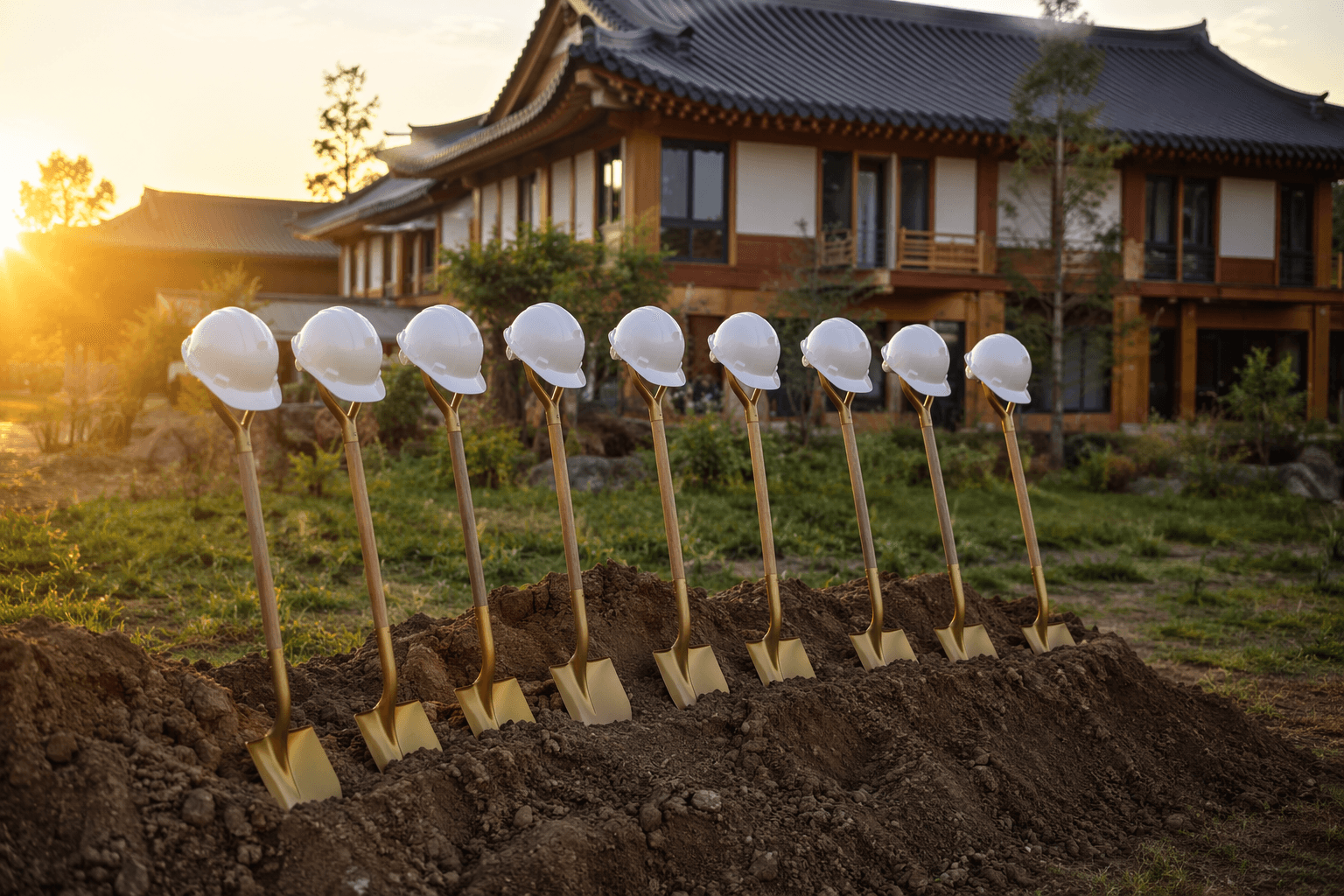
Concordia’s 2024 progress materials put the second phase at an estimated $7 million to $8 million and outlined additions that would deepen the site’s cultural reach: more villager residences, a cultural activities center, a sports activity center with a traditional Korean archery range and a Hanok-style pavilion. The architectural firm Archigroup MA in Seoul developed the vision, tying the project directly to Korean design rather than a generic campus model.
Kim immigrated to the United States, built BP Industries into a major importer of home decor products and later used that success to support the language-village mission.
This article was produced by Prism’s automated news system from verified source data, official records, and press releases, then run through automated quality and moderation checks before publishing. The system is built and supervised by the people who set the standards it runs under. Read our full AI policy.
Did this article answer your question?