DNR Warns Downed Timber, Insect Outbreaks Increase Wildfire Risk in Bemidji Area
DNR officials warn that 2025 wind damage and insect outbreaks left large areas of downed and dead timber near Bemidji, raising wildfire risk for residents for several years.
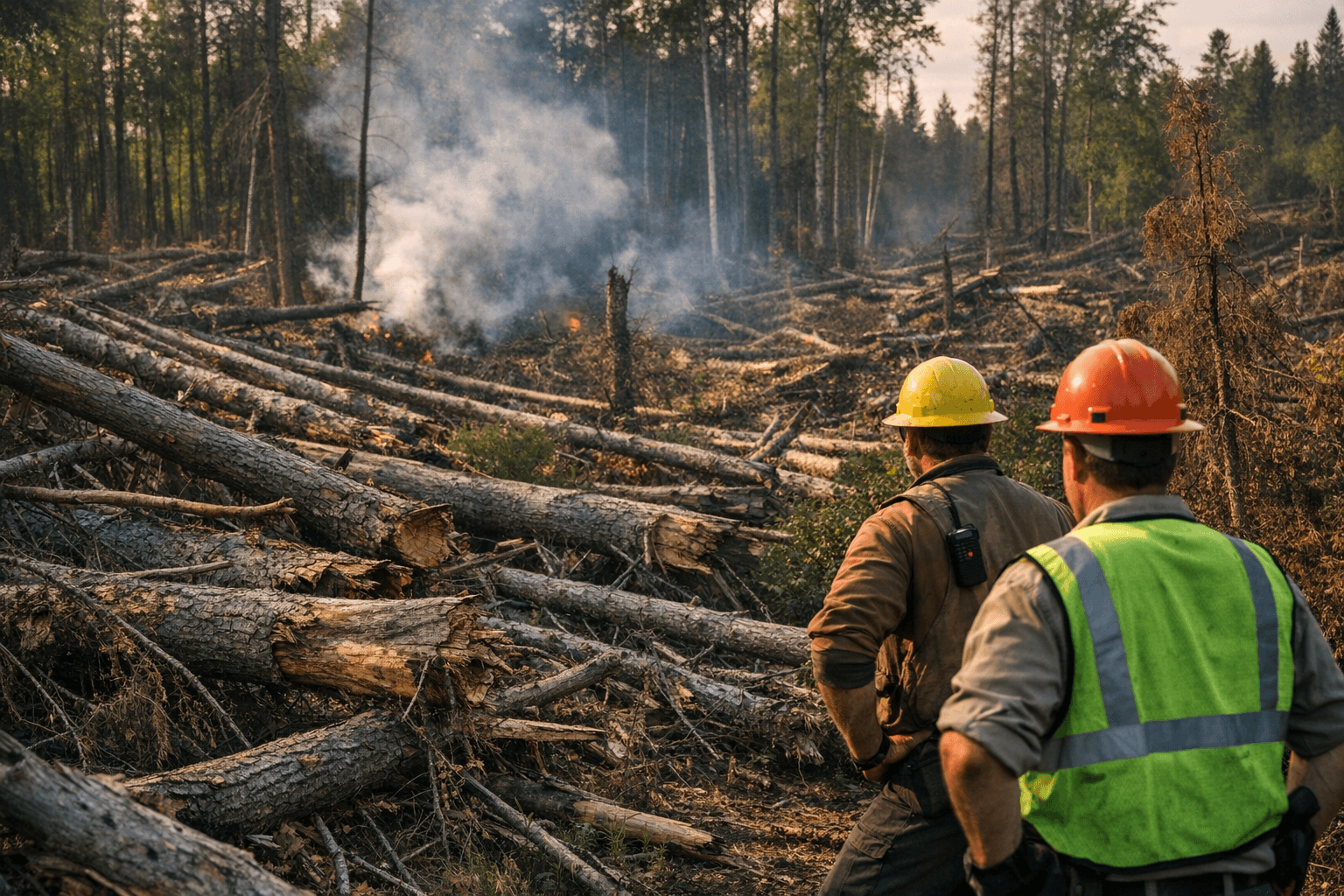
Downed timber and widespread insect damage across northern Minnesota have left the Bemidji area with elevated wildfire risk that could persist for several years, the Minnesota Department of Natural Resources says. The agency's 2025 forest health report attributes much of the damage to the June 2025 derecho and subsequent storms that produced tens of thousands of damaged acres, compounded by insect outbreaks including native caterpillar activity.
DNR officials say piles of blowdown or uncleared dead trees create heavy fuels that can make fires burn hotter and behave unpredictably, increasing the danger to woodlots, lake cabins, rural neighborhoods and infrastructure. The mix of fresh windthrow - trees snapped or uprooted by high winds - and standing dead trees from insect kill has created a fragmented landscape with concentrated fuel loads in some areas around Bemidji and throughout Beltrami County.
The department is prioritizing salvage of timber on state-managed lands to reduce near-term risk and recover value from damaged stands. Salvage operations aim to remove high-risk material in places where access permits and where removal will not cause greater resource damage. DNR officials also emphasize the need for continued monitoring; insect outbreaks can expand or linger, and new storm events could add more downed material before crews complete mitigation work.
Access challenges complicate the response. Many damaged acres are remote or have limited road access, and logistically complex conditions slow salvage and piling work. That leaves larger volumes of fuel in the landscape for the coming fire seasons, increasing reliance on local fire departments and state suppression resources if fires ignite near concentrated blowdown. The DNR report calls for sustained attention to both mechanical treatments and natural recovery processes to manage long-term forest health and wildfire risk.
For Bemidji area residents, the implications are practical and immediate. Homeowners should consider clearing piled blowdown and dead trees away from structures, maintaining defensible space around cabins and residences, and following Beltrami County burn permit rules and local fire restrictions. Property owners should also report significant insect infestations or new blowdown to DNR or county offices so monitoring can be updated.
Local fire and natural resource managers will continue to track fuel conditions and insect activity through the next several years. Salvage crews and monitoring efforts may change the look of some forests as damaged trees are removed, but the public should expect an extended period of elevated wildfire risk and plan accordingly.
This article was produced by Prism’s automated news system from verified source data, official records, and press releases, then run through automated quality and moderation checks before publishing. The system is built and supervised by the people who set the standards it runs under. Read our full AI policy.
Did this article answer your question?