Federal Reserve Report Highlights Tribal Leasing Tool for Native Community Facilities
A federal leasing provision grew from 2 leases in 2016 to 1,890 in 2024, generating $612.7 million annually for tribal facilities including those serving Leech Lake.
A once-obscure federal leasing provision has grown into a $612.7 million annual revenue stream for tribal governments, according to an analysis published March 18 by the Center for Indian Country Development at the Federal Reserve Bank of Minneapolis.
The provision, Section 105(l) of the Indian Self-Determination and Education Assistance Act, requires federal agencies to compensate tribes for using tribally owned facilities to administer federal programs. What began as just two leases in fiscal year 2016 expanded to 1,890 by fiscal year 2024, a growth driven in part by court rulings that clarified compensation requirements following 2016.
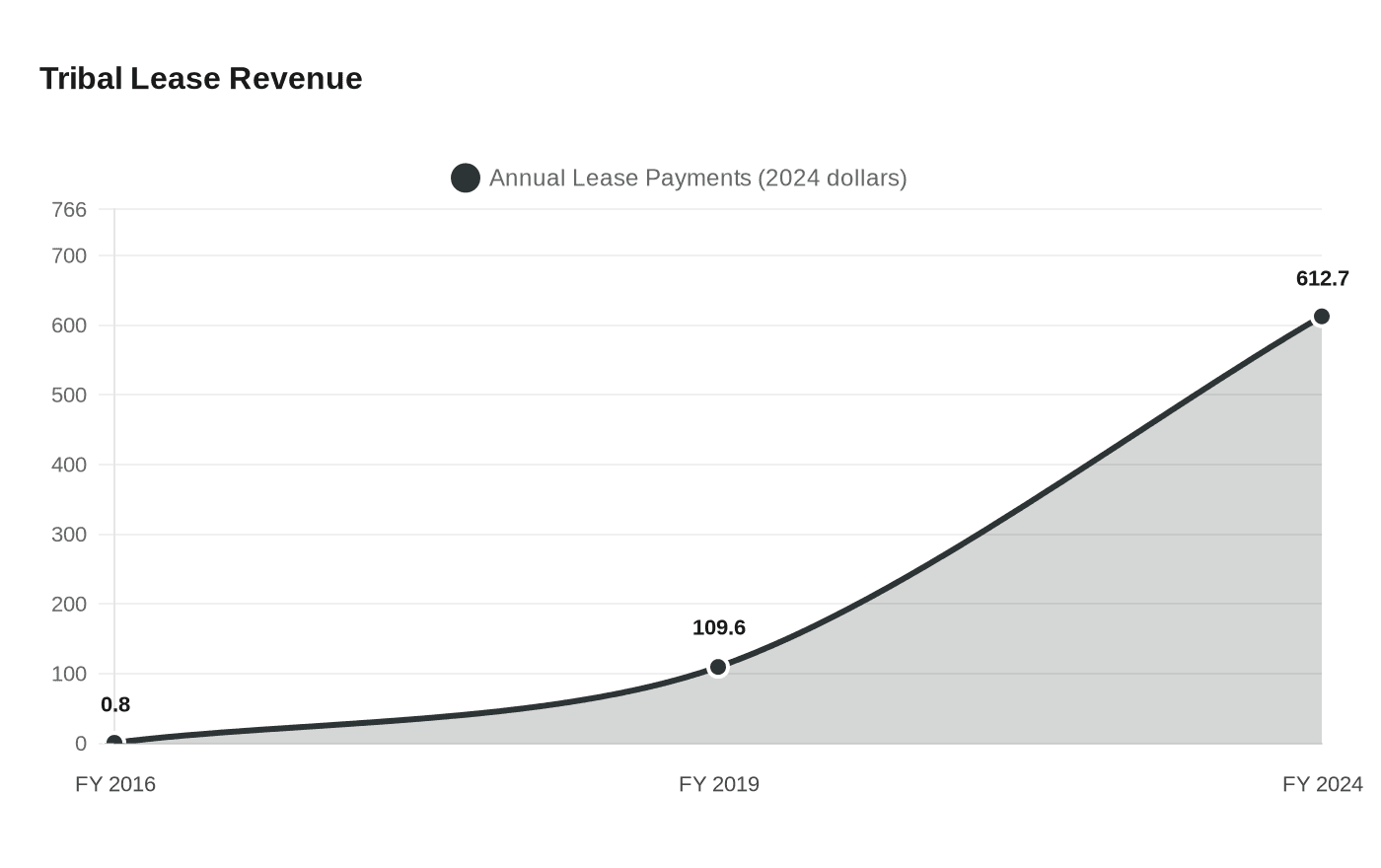
The revenue increase over that span was dramatic. Annual lease payments to tribal governments climbed from $800,000 in fiscal year 2016 to $109.6 million by fiscal year 2019, then reached an estimated $612.7 million in fiscal year 2024, with all figures adjusted to 2024 dollars. Cumulatively, tribes received roughly $1.81 billion in lease compensation between fiscal year 2016 and fiscal year 2024.
The Indian Health Service accounted for the largest share of that total, paying out approximately $1.37 billion, or 76 percent of all Section 105(l) compensation over the period. IHS leases, funded through the U.S. Department of Health and Human Services, typically cover health care facilities. Leases administered by the Bureau of Indian Affairs and Bureau of Indian Education, both funded through the U.S. Department of the Interior, cover a broader range of facilities including those tied to natural resource management, public safety, and education.
The discretionary nature of the revenue is significant. Tribes are applying lease payments toward facility construction, maintenance, and operations, and increasingly are pledging future lease revenue as collateral to finance larger capital projects. Health facility expansions and new construction that combine lease revenue with tax credits and private financing have emerged as common models. Financial institutions have begun underwriting loans against projected lease payments, creating financing pathways that were largely unavailable to tribal governments before this tool matured.
The Minneapolis Fed analysis, which drew on BIA, BIE, and IHS lease data, framed the growth of Section 105(l) leasing as part of a broader shift in tribal self-governance, as tribes assume greater responsibility for federal program delivery and channel associated funding into permanent community infrastructure.
This article was produced by Prism’s automated news system from verified source data, official records, and press releases, then run through automated quality and moderation checks before publishing. The system is built and supervised by the people who set the standards it runs under. Read our full AI policy.
Did this article answer your question?