Local Lions Club donates $700 to Bemidji Area Boys & Girls Club
Learn how a $700 Lions donation supports the Bemidji Area Boys & Girls Club and recent building renovations that freed up program space.

1. Donation presented by the Bemidji Lions Club
The Bemidji Lions Club presented a $700 donation to the Bemidji Area Boys & Girls Club at its Jan. 10, 2026 meeting. That cash contribution, while modest in dollar terms, represents a direct infusion of unrestricted support that the club can apply to immediate program needs or operational gaps, and it underscores the role of local service clubs in sustaining youth services between larger funding cycles.
2. Recipient: Bemidji Area Boys & Girls Club
The donation was made to the Bemidji Area Boys & Girls Club, the local nonprofit that provides after-school and youth development programming in the community. Contributions like this are part of the club’s revenue mix and help maintain continuity of programming for children and teens who rely on stable, affordable access to supervised activities and supports.
3. Update from Karl Mork on building renovation
Karl Mork of the Boys & Girls Club addressed the Lions Club and updated members on a partial renovation of the organization’s original building that freed up needed program space. The renovation demonstrates active asset stewardship by the club’s leadership, converting built infrastructure into usable program capacity and potentially reducing the need for costly off-site rentals or temporary solutions.
4. Program space implications for local services
Freeing up program space in the original building has direct operational consequences: more room can translate into expanded class sizes, additional workshops, or safer distancing during high-attendance periods. For residents, that means increased availability of local youth activities without forcing families to travel farther or pay higher fees, and it can improve continuity in services that support educational and social outcomes.
5. Meeting dynamics: update followed by Q&A
After the presentation and an opportunity for questions and answers, the club engaged directly with Lions members before the donation was presented. That Q&A element is notable because it shows a level of transparency and two-way accountability between a nonprofit seeking support and a civic organization providing funds, a practice that strengthens public trust and can guide future giving based on real community needs.
6. Presentation by First Vice President David Bahr
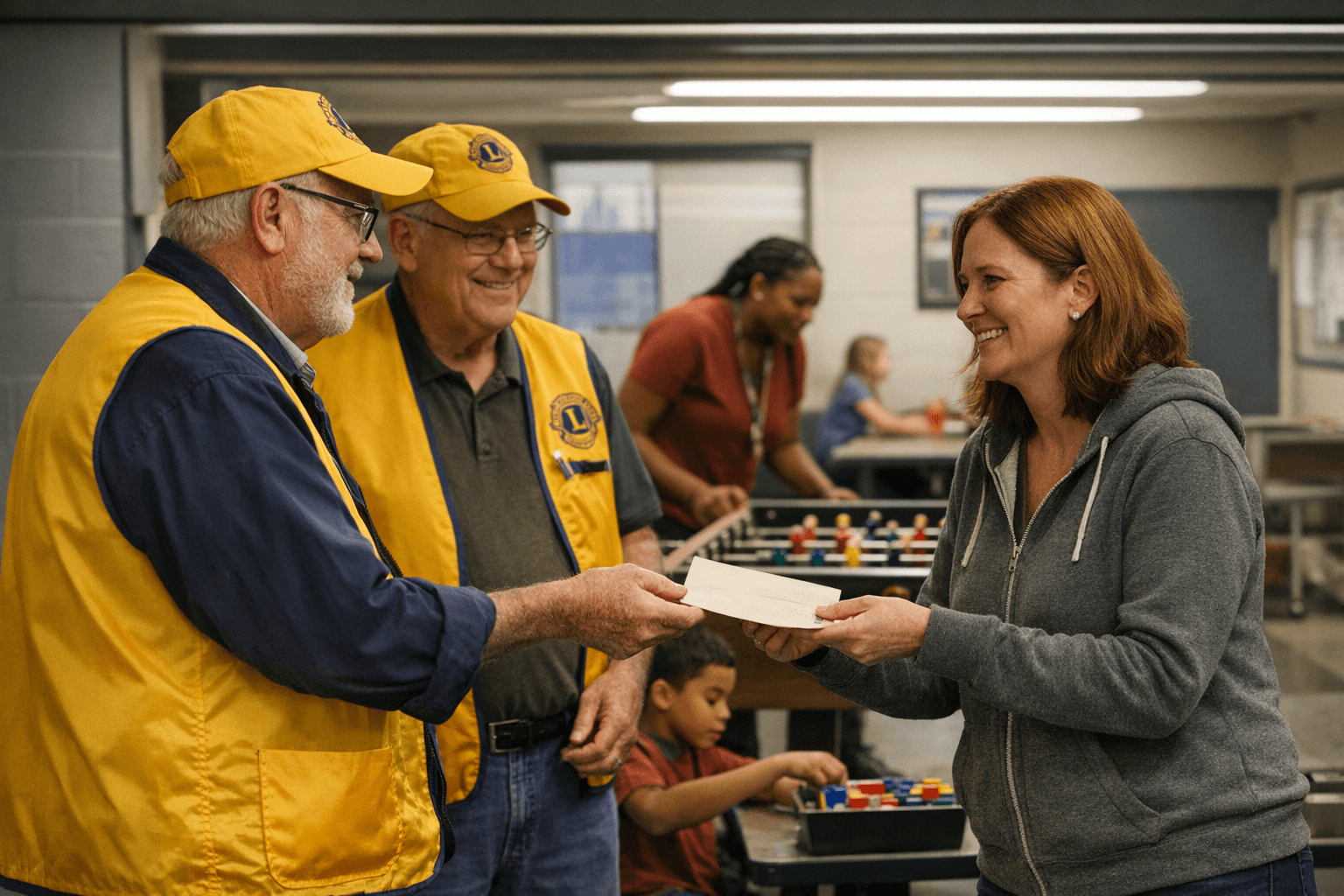
First Vice President David Bahr formally presented the donation on behalf of the Bemidji Lions Club, signaling institutional backing for youth programming in the community. The participation of club leadership in public presentations reinforces the visibility of local philanthropy, which can encourage others to give and demonstrates how civic groups marshal their membership and resources for targeted local impact.
7. The civic role of service clubs in Beltrami County
The transaction highlights the continued relevance of service clubs as intermediaries in the local civic ecosystem, connecting volunteer energy, fundraising capacity, and institutional credibility to community organizations. Small-to-medium donations from groups like the Lions can act as seed funding, match local grants, or fill timing gaps in cash flow, functions that are especially important when municipal or state funding is constrained or delayed.
8. Institutional and policy implications for youth services
From a policy perspective, the episode points to broader questions about sustainable funding for youth programs: how much can community philanthropy realistically cover, and where should public investment step in to secure long-term facility improvements and program growth? Local elected officials and county service planners should view these partnerships as complementary to, not substitutes for, predictable public funding and consider mechanisms, such as facility grants or maintenance budgets, to stabilize core youth services.
9. Accountability and transparency practices to watch
Residents should note the positive practice of presenting project updates and holding a Q&A before donations are accepted; that sequence fosters accountability and informed giving. As community members, tracking similar updates, reviewing nonprofit annual reports, and asking about how unrestricted gifts like the $700 are allocated helps ensure donations deliver measurable benefits to local children and families.
10. How community members can engage and support
You can amplify the impact of such donations by volunteering time, attending civic club meetings, or contributing financially, and by encouraging local leaders to prioritize youth-service infrastructure in budgeting decisions. Practical steps include asking nonprofits for clear updates on how donated funds were used, partnering with service clubs for joint fundraising, and urging county commissioners to incorporate facility maintenance into youth-program funding discussions.
Closing practical wisdom Small gifts move local needles when coupled with clear reporting and strategic planning; watch for transparency in how renovations and donations translate into program capacity, and use your volunteer time or voice at meetings to help turn modest donations into lasting community benefit.
This article was produced by Prism’s automated news system from verified source data, official records, and press releases, then run through automated quality and moderation checks before publishing. The system is built and supervised by the people who set the standards it runs under. Read our full AI policy.
Did this article answer your question?