Minnesota Moose Population Holds Steady, but Risks Remain
Minnesota's moose population rose to 4,470 animals in the DNR's 2026 winter survey, up from 4,075 last year, but climate change and parasites keep the herd at risk.
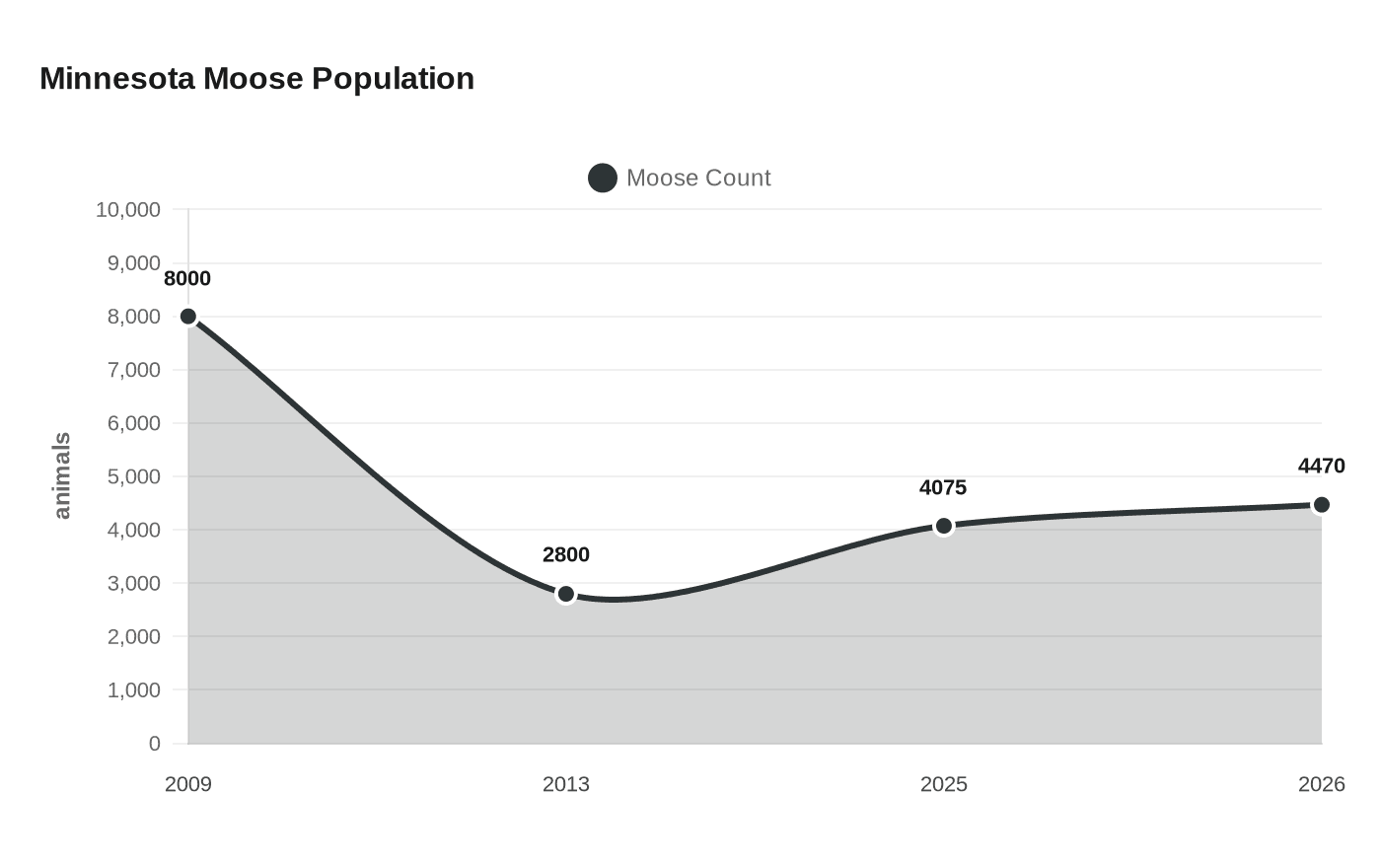
Minnesota counted approximately 4,470 moose in its northeastern range this winter, a meaningful uptick from the 4,075 animals recorded in the 2025 survey, according to the Minnesota Department of Natural Resources' 2026 aerial population survey. After a steep decline from a population estimate of 8,000 in 2009, the state's moose population appears to have somewhat leveled, fluctuating around 3,700 animals in recent years. The new figure clears that baseline by a notable margin.
The population sharply declined from some 8,000 animals in 2009, falling to an estimated low of about 2,800 in 2013. The partial rebound since then has been uneven, but the 2026 count adds to more than a decade of relative stabilization following the worst of the crash.
Stability, however, does not mean security. Despite recent estimates suggesting relative stability in the population and reproductive success, Minnesota DNR researchers point out that moose remain at risk. Climate change, parasites, habitat loss, and predator impacts on calf survival all play a part in the long-term survival of the population. Parasites include brainworm, transmitted from deer to moose, and winter ticks, which can be lethal to calves and weaken adult animals during harsh northern winters.
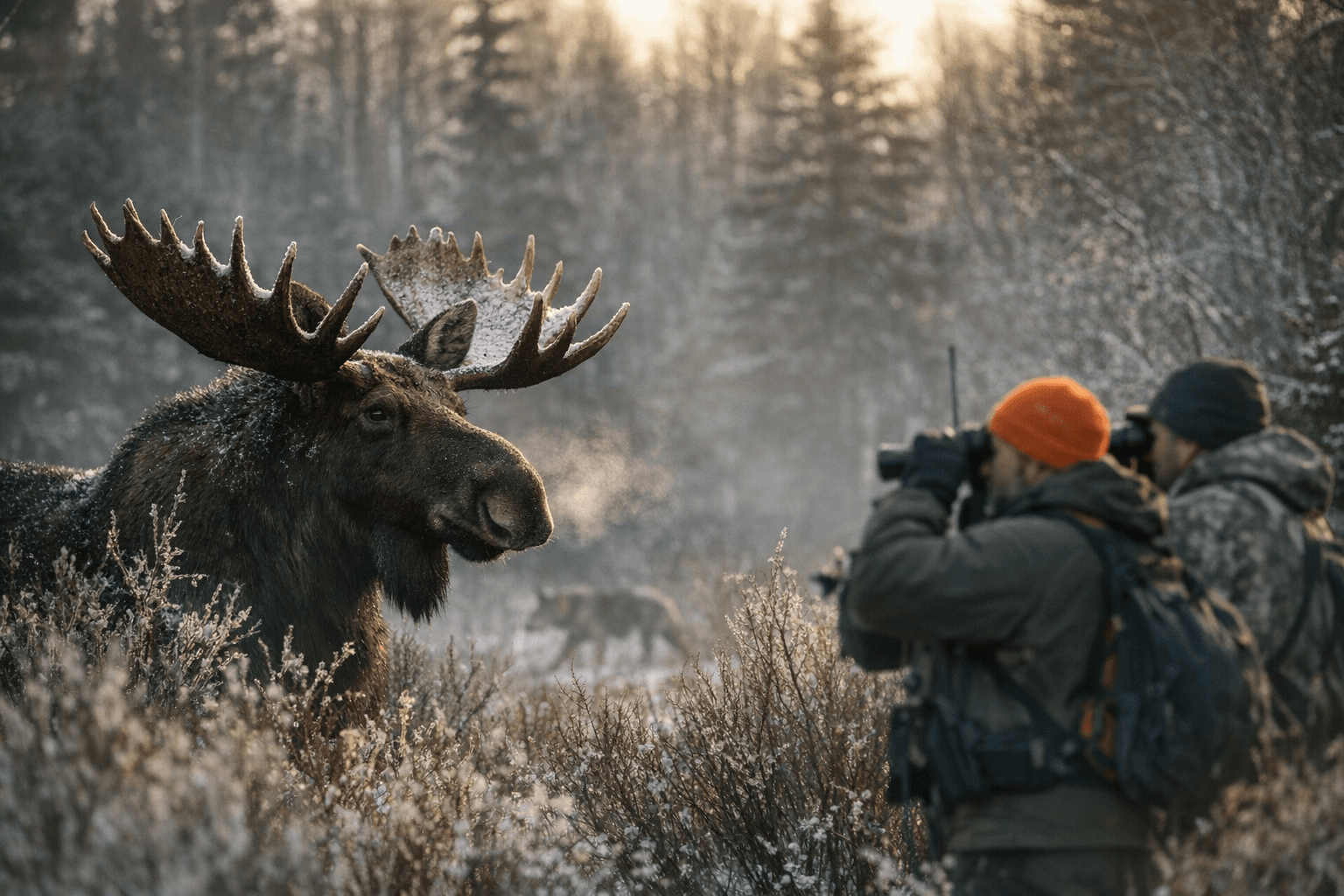
Michelle Carstensen, the DNR wildlife health program supervisor, noted that "the population has stabilized over the past decade or so, and while that's a good thing that it's not declining further, it's not also growing." Seth Moore, director of natural resources for the Grand Portage Band, said deer densities would need to remain low to reduce brainworm transmission and predator levels would need to stay low to allow higher calf and juvenile survival, adding: "If those can be maintained for a couple of years, I think we could see a bolus of moose increasing in northeastern Minnesota."
Ongoing research by the DNR, 1854 Treaty Authority, and Grand Portage Band of Chippewa aims to better understand reproduction and survival, with funding provided by the Environment and Natural Resources Trust Fund. Both the Fond du Lac Band of Lake Superior Chippewa and the 1854 Treaty Authority are full partners on the moose survey and contributed funding and personnel for the 2026 annual survey.
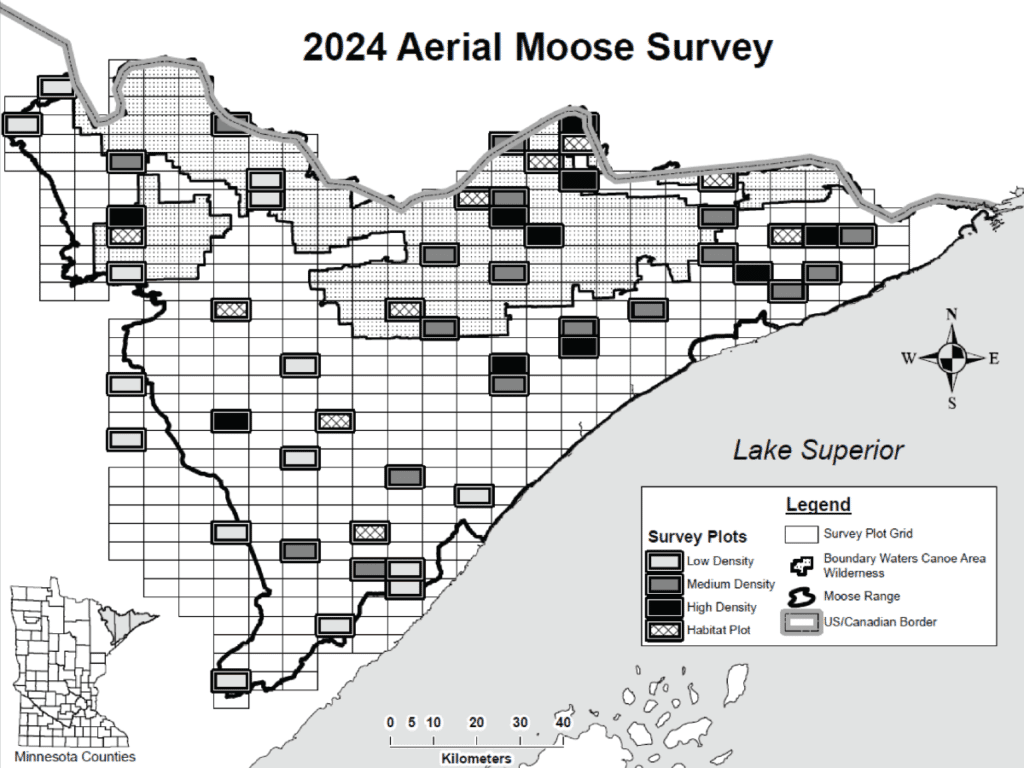
On the habitat front, the work is advancing from blueprints toward boots on the ground. Partners are completing the planning phase funded by the National Fish and Wildlife Foundation America the Beautiful Challenge, and will be transitioning into the implementation phase, with the goals of addressing barriers to habitat management and implementing habitat work within three core areas of approximately 50,000 acres each in St. Louis, Lake, and Cook counties.
This winter, a collaborative tribal-state research project launched to study survival rates and reproduction of juvenile moose, adding a new layer of data to the long-running monitoring effort. The full 2026 survey is available on the Minnesota DNR's moose management webpage.
This article was produced by Prism’s automated news system from verified source data, official records, and press releases, then run through automated quality and moderation checks before publishing. The system is built and supervised by the people who set the standards it runs under. Read our full AI policy.
Did this article answer your question?