White Earth artists highlighted in Watermark's new exhibit
An exhibit featuring Naytahwaush artists opened Jan. 9 at Watermark and is on display through March 28. A Feb. 14 reception will include a musical performance.
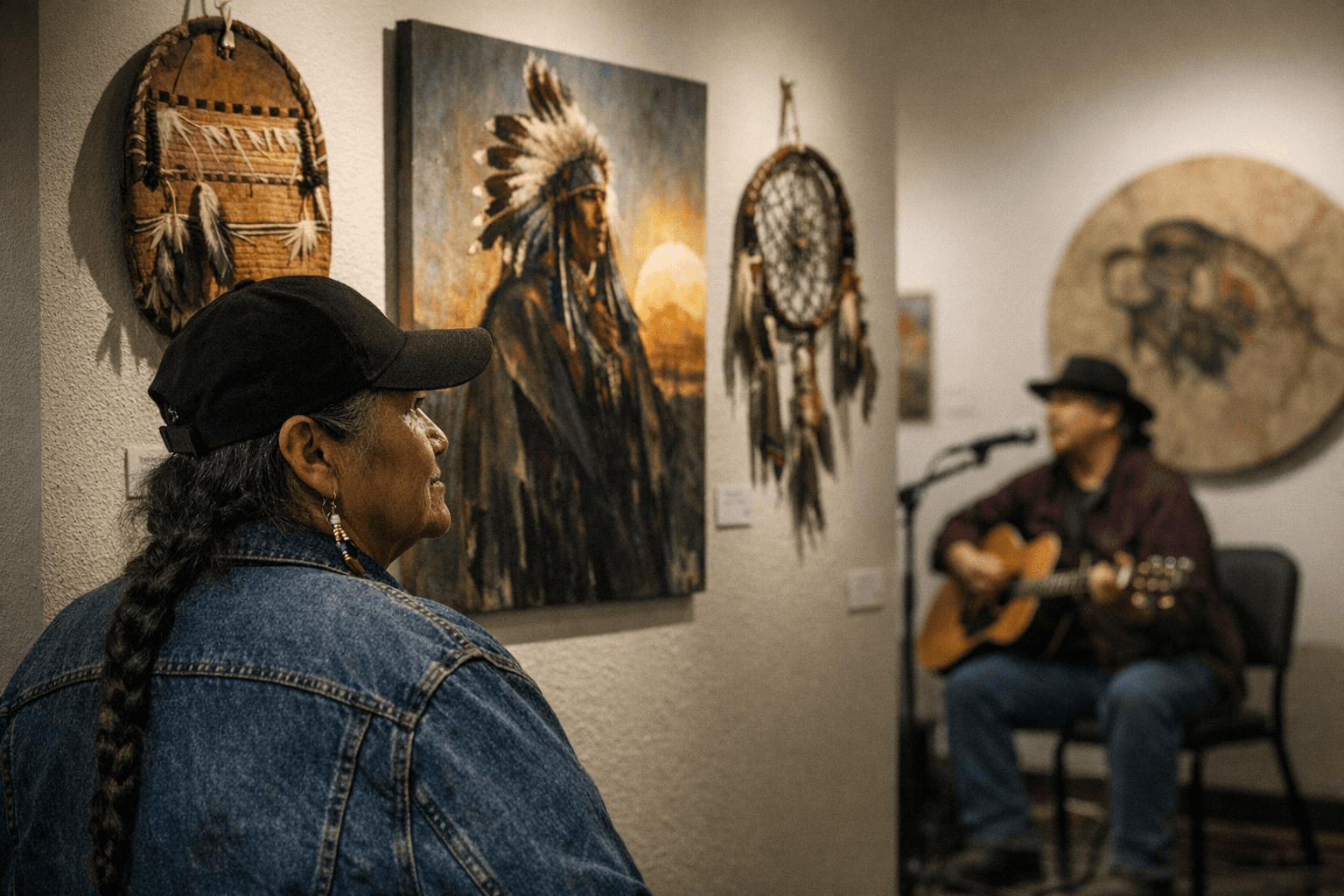
Watermark’s Kaul Gallery opened Minwaajimowinan - Good Stories on Jan. 9, putting the work of more than 30 artists with roots in Naytahwaush on the White Earth Reservation on public view through March 28. The exhibit brings basketry, beadwork, blankets, contemporary and traditional fashion, paintings and other media into a regional arts center, expanding visibility for artists whose work is often seen only inside their communities.
A reception is scheduled Saturday, Feb. 14, from 3 to 5 p.m., and will include a musical performance by Doyle Turner and a special guest. The event is positioned to draw both tribal and nontribal residents to Watermark’s downtown venue, creating a shared space for cultural exchange and economic activity tied to local art sales and programming.
Guest curator Kent Estey framed the exhibit as an effort to counter one-dimensional coverage of reservation life. “Oftentimes, the only news we hear about our little villages on the reservation is bad news. We are so much more than the bad things that happen to us. Our woods are full of amazing artists who do beautiful work, and their artistry deserves to be shown in galleries and art centers. Watermark is a place where we can show our artistry.”
For Beltrami County residents, the show matters on several levels. It increases access to Indigenous art without requiring travel to the reservation, provides educational opportunities for schools and civic groups, and creates sales and commission revenue for participating makers. The exhibit also tests how regional cultural institutions and county government can partner with tribal communities on programming that respects self-representation while broadening audience engagement.
Institutionally, Minwaajimowinan highlights the role of Watermark as a local hub that can lift community-led curation. The gallery’s decision to host a collection focused on Naytahwaush artists underscores a practical pathway for cultural inclusion: invite community curators, showcase a range of traditional and contemporary practices, and schedule public events that foreground Indigenous voices. Those are concrete steps county leaders, school administrators and arts funders can replicate to strengthen cross-government and civic relationships.
The immediate impact will be measured in visitorship, artist sales, and follow-on programming. Longer-term effects could include deeper collaboration between Beltrami County institutions and White Earth artists on public art, curriculum partnerships, and tourism promotion that respects tribal sovereignty and storytelling.
Our two cents? Go see the show, bring a friend from outside the reservation, and consider asking local officials and school boards how they plan to sustain direct partnerships with tribal artists. Supporting visibility today can turn good stories into lasting opportunities for artists and the wider community.
This article was produced by Prism’s automated news system from verified source data, official records, and press releases, then run through automated quality and moderation checks before publishing. The system is built and supervised by the people who set the standards it runs under. Read our full AI policy.
Did this article answer your question?