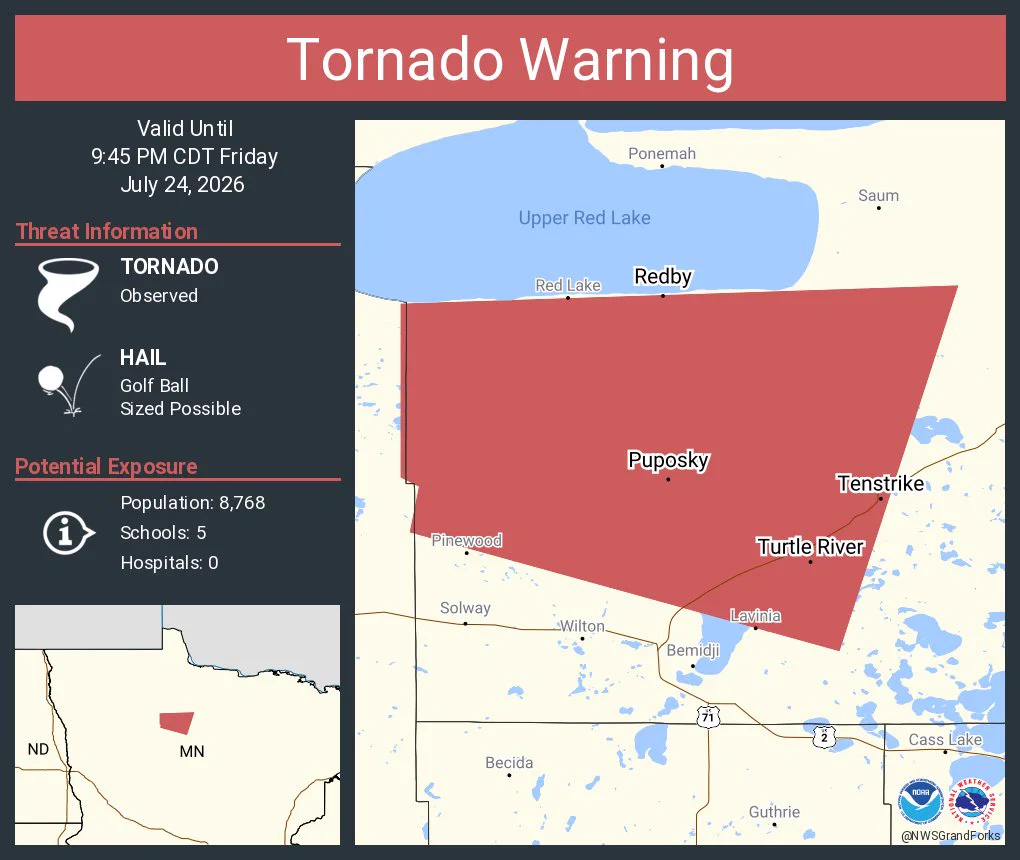
Woman convicted in fentanyl trafficking conspiracy tied to Bemidji area
A federal jury convicted Michaela McKinney on three fentanyl counts after jurors said she helped move more than 180 grams and nearly 500 pills into Bemidji.
A federal jury convicted Michaela McKinney of New Hope on three counts for her role in a fentanyl trafficking conspiracy that moved drugs between the Twin Cities and the Bemidji area. Jurors found that McKinney helped move more than 180 grams of fentanyl and nearly 500 pills, a scale that shows how far the pipeline reached into northern Minnesota.
The prosecution came out of the U.S. Attorney’s Office for the District of Minnesota and followed an earlier federal case that accused traffickers of moving fentanyl not only to Bemidji but also to the Red Lake Indian Reservation. That route matters in Beltrami County because Bemidji and Red Lake sit inside the same regional drug market, where a supply line can move from metro-area dealers into rural and tribal communities with few barriers in between.
McKinney’s conviction adds to a broader pattern of federal drug cases in Minnesota, where prosecutors and the FBI have targeted fentanyl, methamphetamine and large conspiracy networks tied to Minneapolis and other population centers. In one separate case, the FBI charged 41 defendants with conspiracy to traffic heroin and prescription opioids to Upper Midwest Indian reservations, underscoring how federal investigators have treated reservation communities and nearby towns as connected targets of the same trade.
For Bemidji and the rest of Beltrami County, the case lands in a region that spans the city of Bemidji and the Red Lake Indian Reservation. The verdict does not break the supply line on its own, but it shows how federal investigators are tracing fentanyl from the Twin Cities into communities where public health services, tribal governments and local law enforcement absorb the fallout.
This article was produced by Prism’s automated news system from verified source data, official records, and press releases, then run through automated quality and moderation checks before publishing. The system is built and supervised by the people who set the standards it runs under. Read our full AI policy.
Did this article answer your question?