Albuquerque program expands job training for deaf residents
Albuquerque’s deaf workforce push is serving 65 young adults as New Mexico ranks 49th for deaf employment, exposing a labor-market gap beyond enrollment counts.
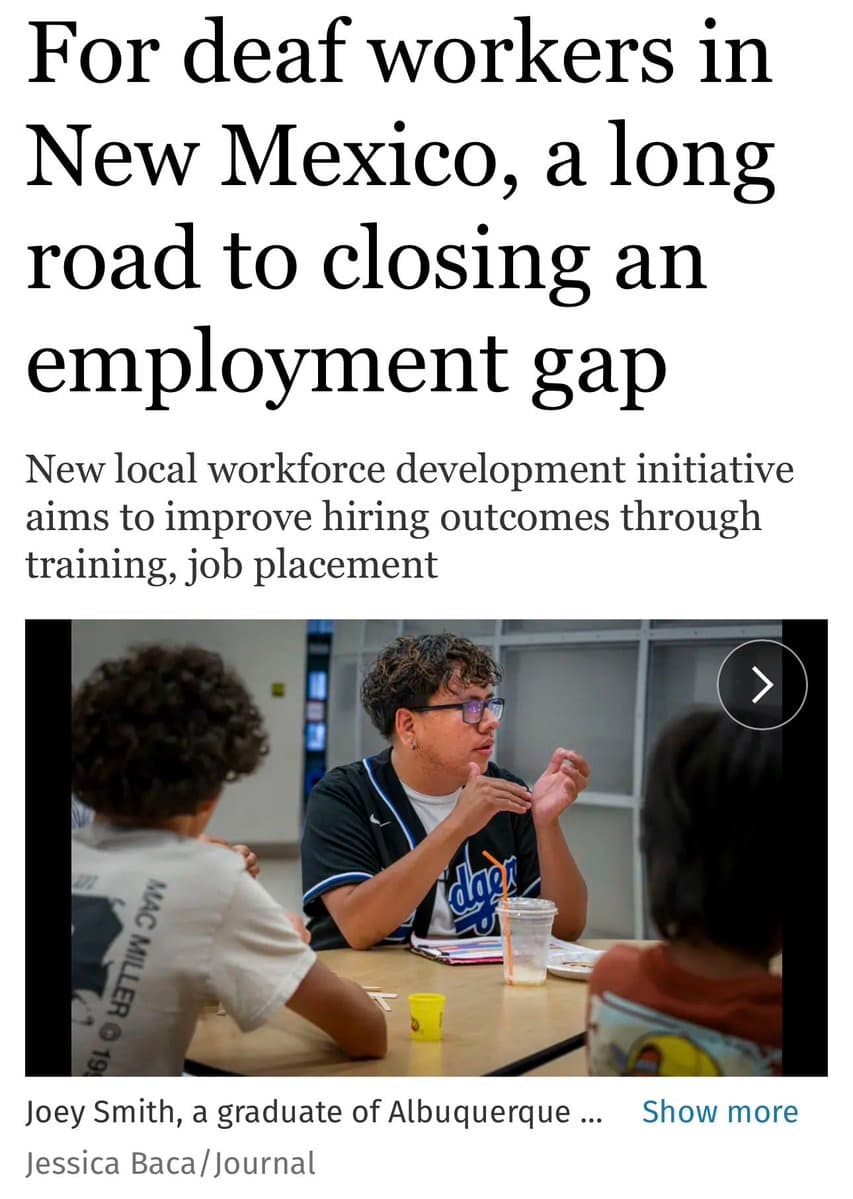
Albuquerque’s newest workforce effort for deaf and hard-of-hearing residents is trying to do more than fill classrooms. It is built to connect training, job placement and employer practices in a city where deaf workers still face steep barriers in hiring pipelines and where New Mexico ranks near the bottom nationally for deaf employment.
The Albuquerque Sign Language Academy’s first workforce development program is serving 65 young adults, and the effort is tied to the academy foundation’s push to revive the VSA North Fourth Art Center as a training center for adults with disabilities. Raphael Martinez, who co-founded the academy in 2009, built the school around his son’s experience with disabilities and a goal of bridging deaf and hearing communities. Now that mission is extending into the labor market, where access to the right training can determine whether a worker gets hired, stays employed and moves up.
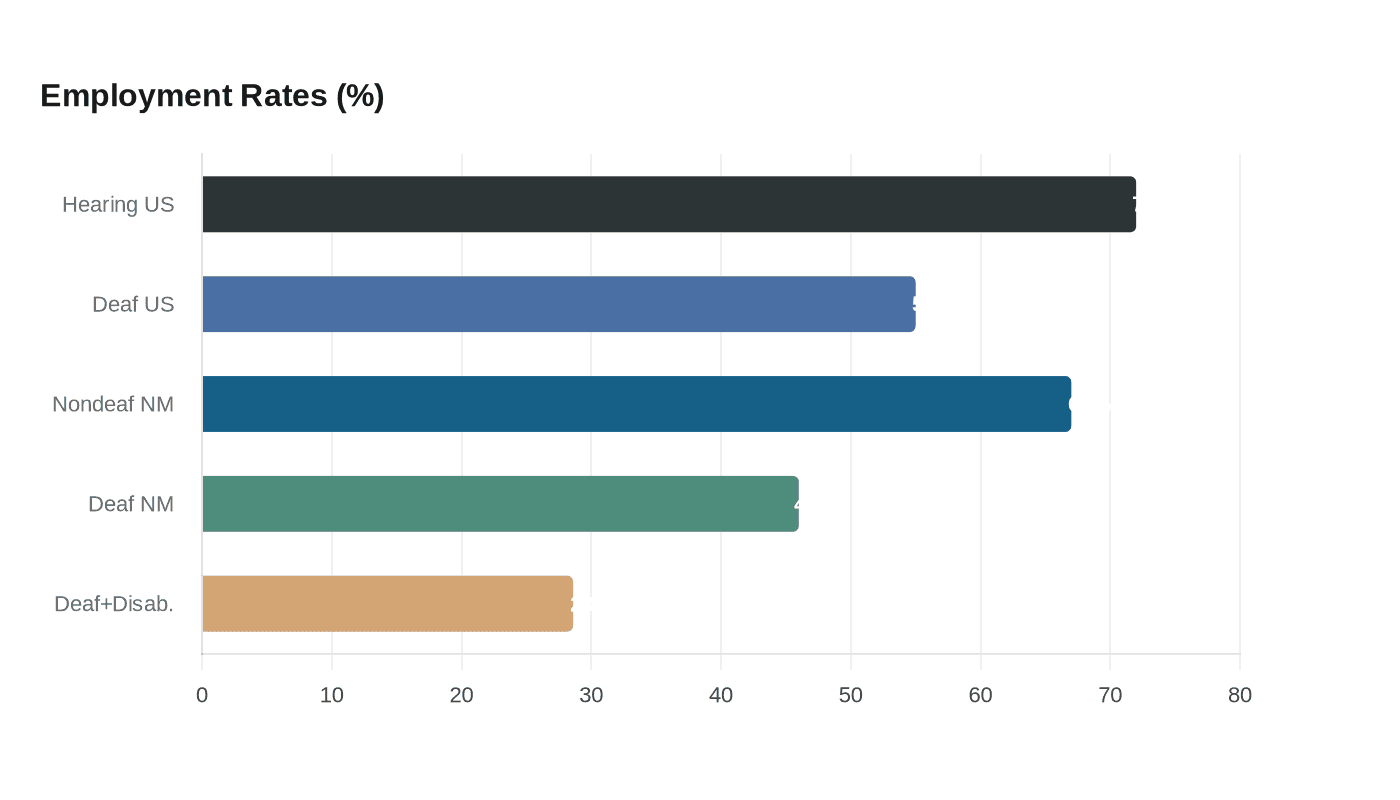
The need is clear in the numbers. National Deaf Center data for 2020 through 2024 show that about 72% of the hearing population nationwide was employed, compared with about 55% of deaf people. In New Mexico, the gap is wider still: 67% of nondeaf residents were employed, versus 46% of deaf residents. The National Deaf Center’s state report ranks New Mexico 49th for deaf employment and says 46.2% of deaf New Mexicans are employed. For deaf people with additional disabilities, the employment rate falls to 28.6%.

The report also shows that education alone has not erased the divide. About 54% of deaf people in New Mexico complete at least some college, and the state ranks 33rd out of 50 for bachelor’s degree completion among deaf people. The National Deaf Center says its state data come from the American Community Survey and that smaller sample sizes can make some estimates less detailed, which makes local employer data and community feedback essential for understanding where the hiring pipeline is breaking down.

Amanda Bolton’s career at Adelante Mailing Services shows both the progress and the limits of that system. Bolton has worn hearing aids since age 1 and received a cochlear implant five years ago after her hearing worsened in 2019. She began working at Adelante Mailing Services in 2019 and said New Mexico offered her more resources in two years than she had in her entire life before moving to the state in 1998.
For Bernalillo County, the test is not how many people enroll in a training program, but whether more deaf residents finish with real job placements, stronger employer supports and a clearer path into work at Albuquerque businesses. If the academy’s effort and the North Fourth Art Center revival succeed, they could help close a labor-market gap that has kept too many deaf New Mexicans on the sidelines.
This article was produced by Prism’s automated news system from verified source data, official records, and press releases, then run through automated quality and moderation checks before publishing. The system is built and supervised by the people who set the standards it runs under. Read our full AI policy.
Did this article answer your question?