Los Ranchos woman’s life traces a century of county change
Stella Chavez’s 100-year life maps Los Ranchos from farm country to a high-value village. Her memories show how housing, roads and development remade the North Valley.

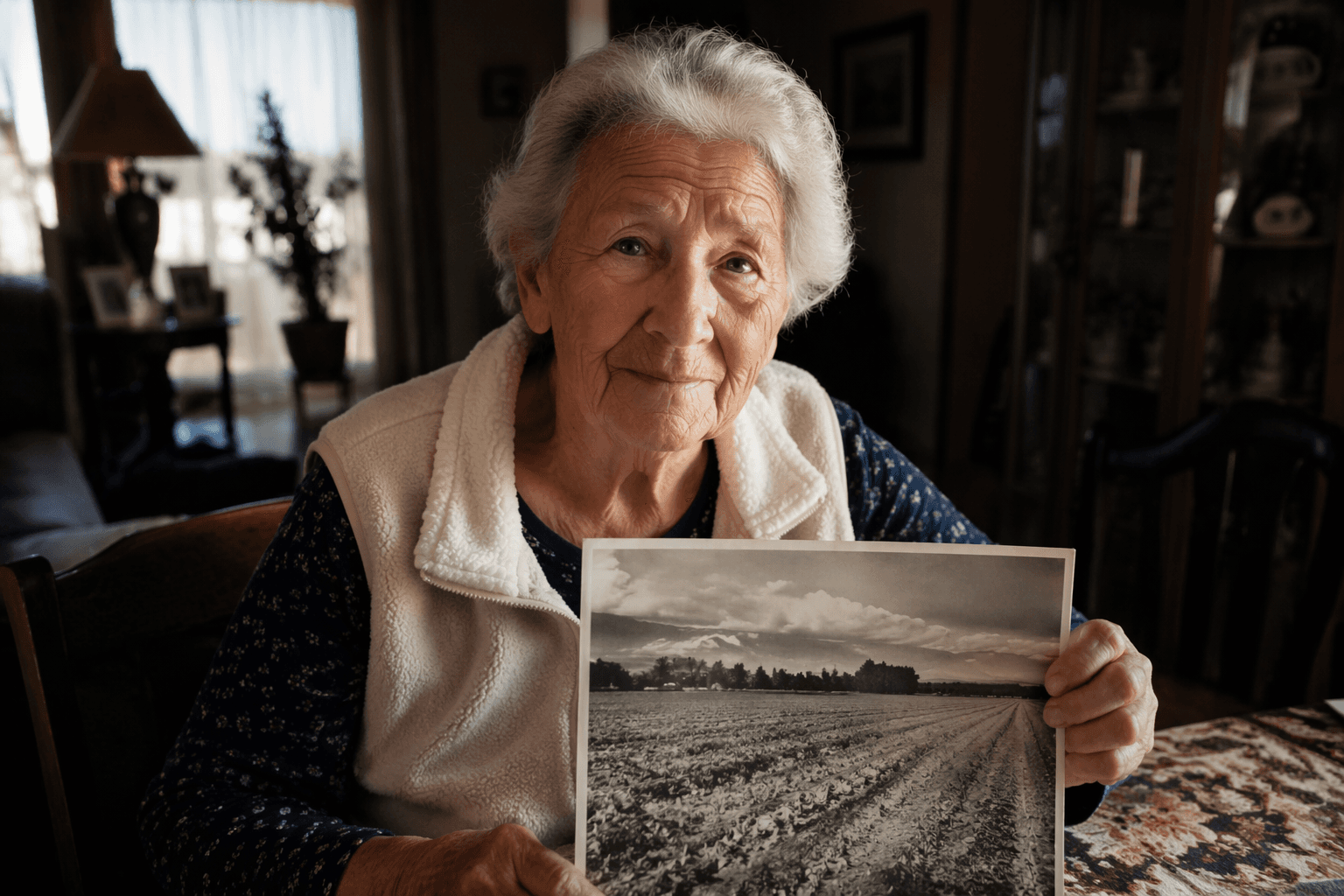
Stella Chavez was born in what is now Los Ranchos de Albuquerque on June 23, 1925, before the village incorporated and before Route 66 began reshaping the region. Her life tracks a county that moved from fields and family labor to a small, mostly owner-occupied community with a median home value near half a million dollars.
From farm child to witness
Chavez grew up helping on her family’s farm with eight brothers and three sisters, a childhood shaped by work, repetition and the practical demands of rural life. Her father raised the children on the farm, and that detail matters because it places her not just in a family story, but in the old economy of the North Valley, where land, labor and kinship were tightly bound together.
That childhood stands in sharp contrast to the Los Ranchos of today. The village now has 5,874 residents in the 2020 Census, an estimated 5,790 as of July 1, 2025, and 80.2% of its housing units were owner-occupied in the 2020-2024 estimates. The Census Bureau also puts the median value of owner-occupied housing at $492,400, a sign that the area’s residential identity has grown more expensive even as its population remains relatively small.
Chavez’s birth also places her at a turning point in the region’s transportation history. Route 66 had its official beginnings in 1926, only months after she was born, and the highway era helped pull northern New Mexico more firmly into the path of regional growth, tourism and suburban expansion. Her lifetime covers the shift from a landscape organized around farms and acequias to one increasingly defined by roads, home values and the pressures of metro growth.
A village built from rural ground
The Village of Los Ranchos de Albuquerque was formally incorporated on December 29, 1958. The village says the original town site sat between Guadalupe Trail and the Rio Grande, north of Chavez and south of Los Ranchos, and that the community in 1958 was largely homogeneous, rural and agricultural.
That description fits the older North Valley Chavez knew as a child. Regional history sources trace agricultural settlement in the area to the Spanish colonial era, with farms and ranches established after 1706, and the Albuquerque Regional Economic Alliance says the land around the village has been settled by humans for at least 2,500 years. Long before the postwar subdivision era, the area’s identity came from agriculture, irrigation and the rhythm of seasonal work.
The village’s own history makes clear how much that setting has changed. Over the past 40 years, it says, Los Ranchos lost considerable open expanses and agricultural usage to residential development. That is the basic tension at the center of Chavez’s story: the same place that once required children to help on a family farm now sits inside a modern metro where land is scarce, housing is costly and open space is no longer the default condition.
What the numbers say about the change
The figures help explain why Chavez’s memories land with unusual force. A village of fewer than 6,000 people is still small enough to feel intimate, but the housing market tells a different story from the farm community of her childhood. An 80.2% owner-occupied rate suggests a place where people plant roots, while the $492,400 median value shows how much that rootedness now costs.
The slight population dip from 5,874 in 2020 to 5,790 in the 2025 estimate points to a village that is not booming in the way fast-growing suburbs do, even though it sits inside a much larger metropolitan region. That combination, stable ownership and limited growth, helps preserve a sense of neighborhood identity while also making every acre of remaining open land more visible and more contested.
Chavez’s life gives that change a human scale. She is not simply a centenarian from Los Ranchos; she is a living record of the shift from farming families and broad fields to a historic North Valley community that still tries to hold onto its rural character. In Bernalillo County, that makes her story more than a biography. It is a map of how the county built itself, one generation at a time.
This article was produced by Prism’s automated news system from verified source data, official records, and press releases, then run through automated quality and moderation checks before publishing. The system is built and supervised by the people who set the standards it runs under. Read our full AI policy.
Did this article answer your question?


