Sandia Lab finds faster way to recycle battery cathodes
Sandia says a microwave process cut lithium-cobalt-oxide cathode recycling from seven days to two hours, a possible boost for Albuquerque’s battery economy.
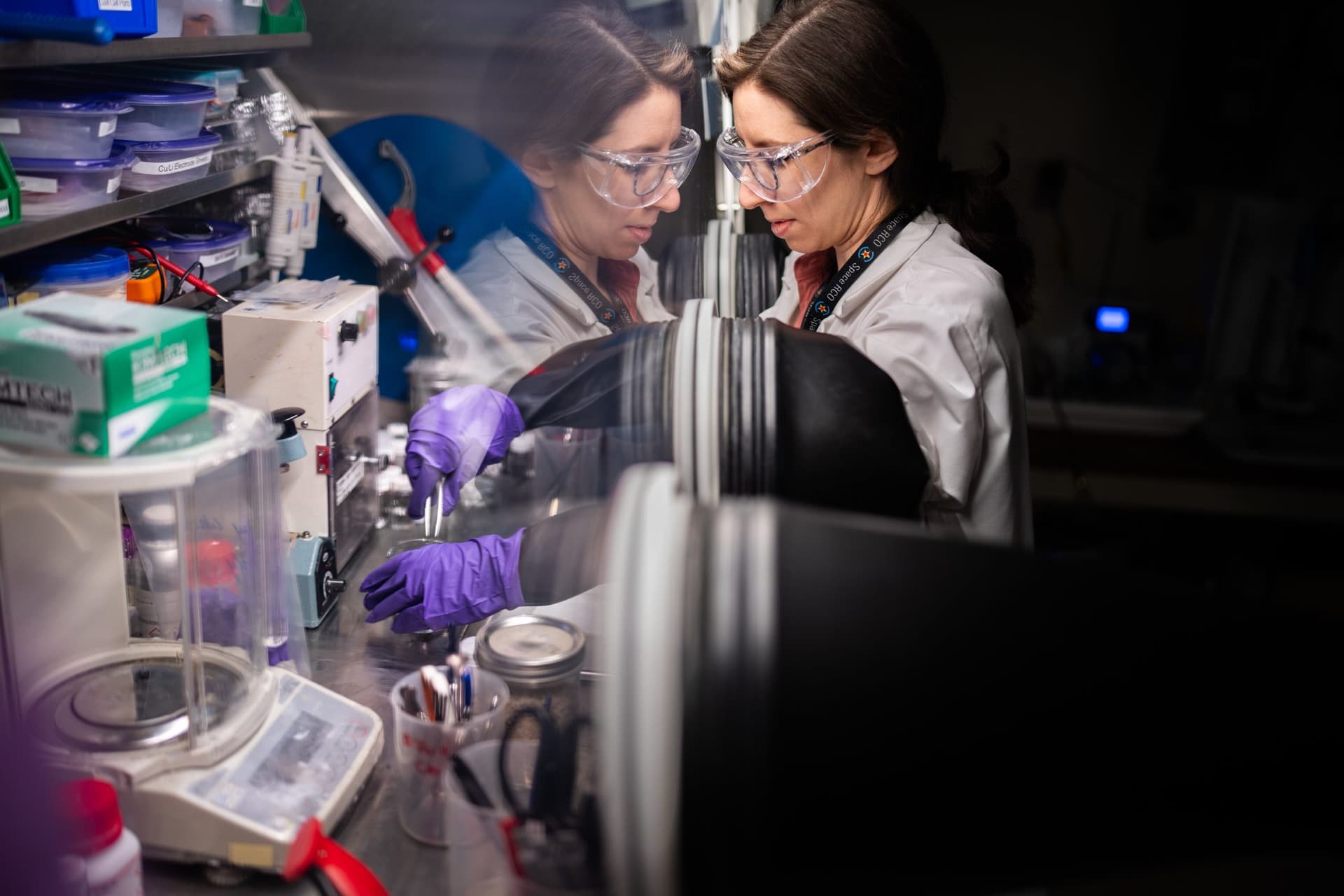
A Sandia National Laboratories microwave-based method recovers and remakes battery cathodes, cutting one lithium-cobalt-oxide processing step from seven days to two hours. The method could turn spent batteries into feedstock for new energy technologies instead of landfill waste, if it can be scaled beyond the lab.
The process focuses on cathodes, the positively charged part of lithium-ion batteries used in phones, earbuds, electric vehicles and grid storage. Cathodes are expensive to make and depend on minerals sourced from a small number of countries, leaving battery makers exposed to supply shocks and price swings. The Democratic Republic of the Congo supplies about 70% of the world’s cobalt, Sandia said in a June 16, 2026 release.
Sandia’s system uses a microwave reactor, about the size and power draw of a household microwave but more adjustable, to break old cathode powder into nanosheets. Clare Davis-Wheeler Chin, a Sandia staff nanomaterials chemist, said the goal is not only recycling but recovering critical materials in a form that can be reused in the United States and may have added value because the cathode composition can be changed during the process. Sandia researchers are still refining the method while working on ion exchange improvements and a technoeconomic analysis to test whether the recovered material can compete with imported cathodes and cathode inputs.

Cumulative utility-scale battery storage capacity topped 26 gigawatts in 2024, and another 19.6 gigawatts was planned for 2025, the U.S. Energy Information Administration said. Demand for electric vehicles and stationary storage could increase the lithium battery market as much as ten-fold by 2030, the Department of Energy has said. The Infrastructure Investment and Jobs Act allocates nearly $7 billion to strengthen the domestic battery supply chain, and its battery recycling, reprocessing and collection funding opportunity was a $125 million program.
This article was produced by Prism’s automated news system from verified source data, official records, and press releases, then run through automated quality and moderation checks before publishing. The system is built and supervised by the people who set the standards it runs under. Read our full AI policy.
Did this article answer your question?