250 gather on Hilo Route 11 to end deportations, oppose ICE funding
More than 250 people gathered peacefully along Route 11 in Hilo to honor two people killed by federal agents in Minneapolis and to demand an end to mass deportations and oppose increased ICE funding.
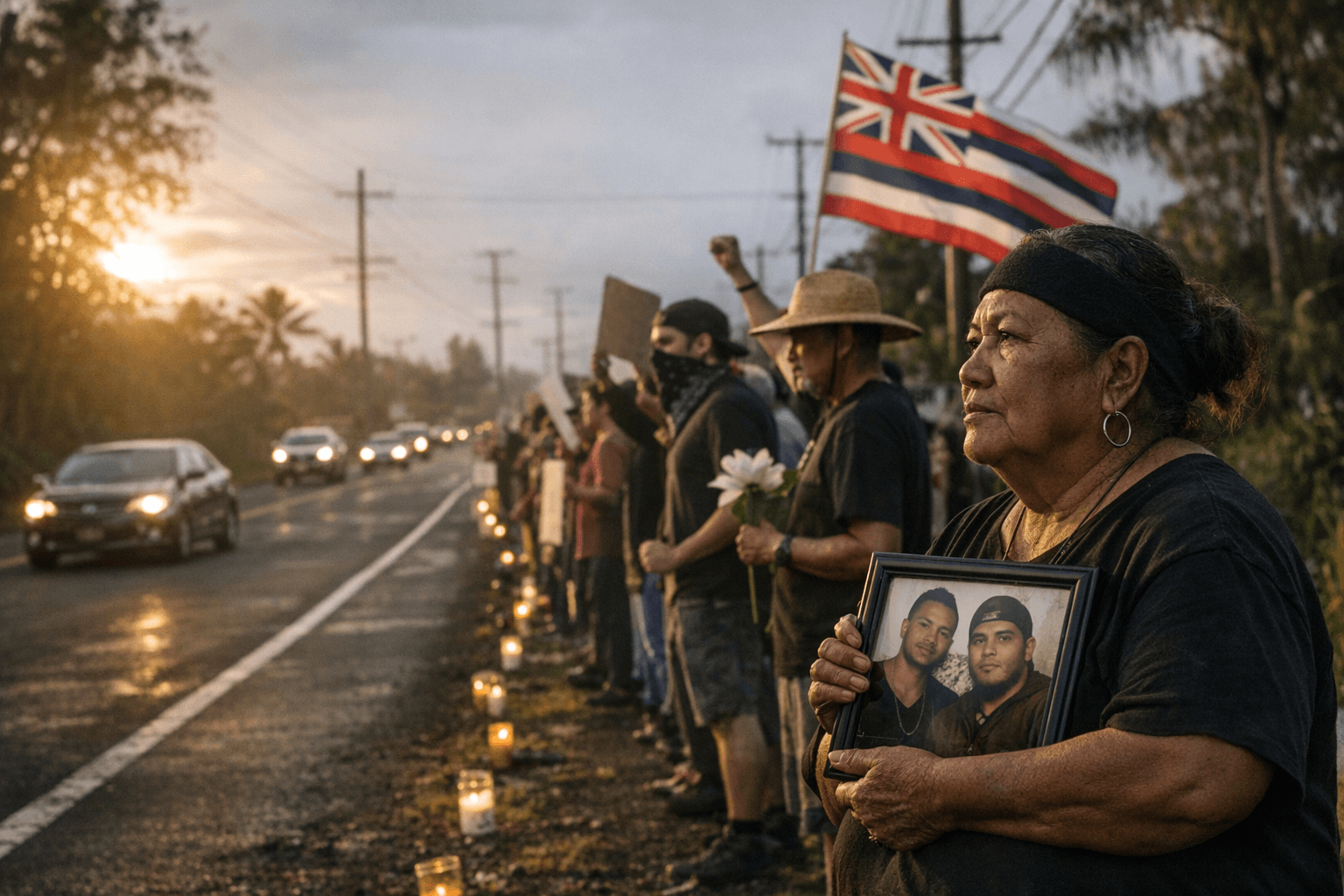
More than 250 people gathered peacefully along Route 11 in Hilo on Feb. 1 to honor the lives of U.S. citizens Renee Good and Alex Pretti and to press for changes to federal immigration enforcement, organizers said. The demonstration combined a vigil for the two people described by organizers as killed recently by federal agents in Minneapolis with a political protest calling for an end to mass deportations and opposition to increases in funding for U.S. Immigration and Customs Enforcement.
The East Hawaiʻi Indivisible chapter organized the event. Organizers framed the gathering as both a memorial and a policy statement, urging federal accountability for law enforcement actions and opposing proposed increases to ICE’s budget. Terry McDonald, co-lead of the East Hawaiʻi Indivisible chapter, accused federal immigration enforcement of wrongdoing, saying, “The actions of ICE in Minneapolis are incredibly cruel and inhumane, and probably criminal.”
The Hilo demonstration underscores how national debates over immigration enforcement and federal spending play out in local communities. Decisions made in Washington on ICE appropriations and enforcement priorities affect Hawaiʻi residents directly through family ties, immigrant communities, and the broader civic climate. Local activists said they intended the Route 11 vigil to amplify calls for policy change beyond the island.
Organizers did not include detailed information about the incidents in Minneapolis at the gathering, and no local or federal official statements were part of the event as described by the organizers. The press materials from East Hawaiʻi Indivisible did not announce follow-up actions at the time of the gathering. Photographs of the event were credited to Indivisible of East Hawai'i.
For Big Island residents, the demonstration is a signal of sustained civic engagement on federal issues that affect families across the islands. Elected officials in Hawaiʻi and members of Congress who oversee federal budgets and enforcement policy face renewed public attention when local communities mobilize on national matters. The turnout on Route 11 also highlights the organizational capacity of island advocacy groups to draw peers into public demonstration.
What comes next for residents concerned about deportation policy and ICE funding is a political and procedural path: Congressional appropriations and oversight hearings will determine budget levels and enforcement priorities. Residents seeking to influence those outcomes can contact their congressional offices and engage with local advocacy groups such as East Hawaiʻi Indivisible for information on future events and coordinated civic action.
This article was produced by Prism’s automated news system from verified source data, official records, and press releases, then run through automated quality and moderation checks before publishing. The system is built and supervised by the people who set the standards it runs under. Read our full AI policy.
Did this article answer your question?