Big Island Emergency Guide: Prepare for Volcanic Eruptions, Earthquakes and Tsunamis
Kīlauea, Mauna Loa and frequent quakes put Big Island residents at ongoing risk; assemble supplies, plan routes and sign up for official alerts to protect families and property.
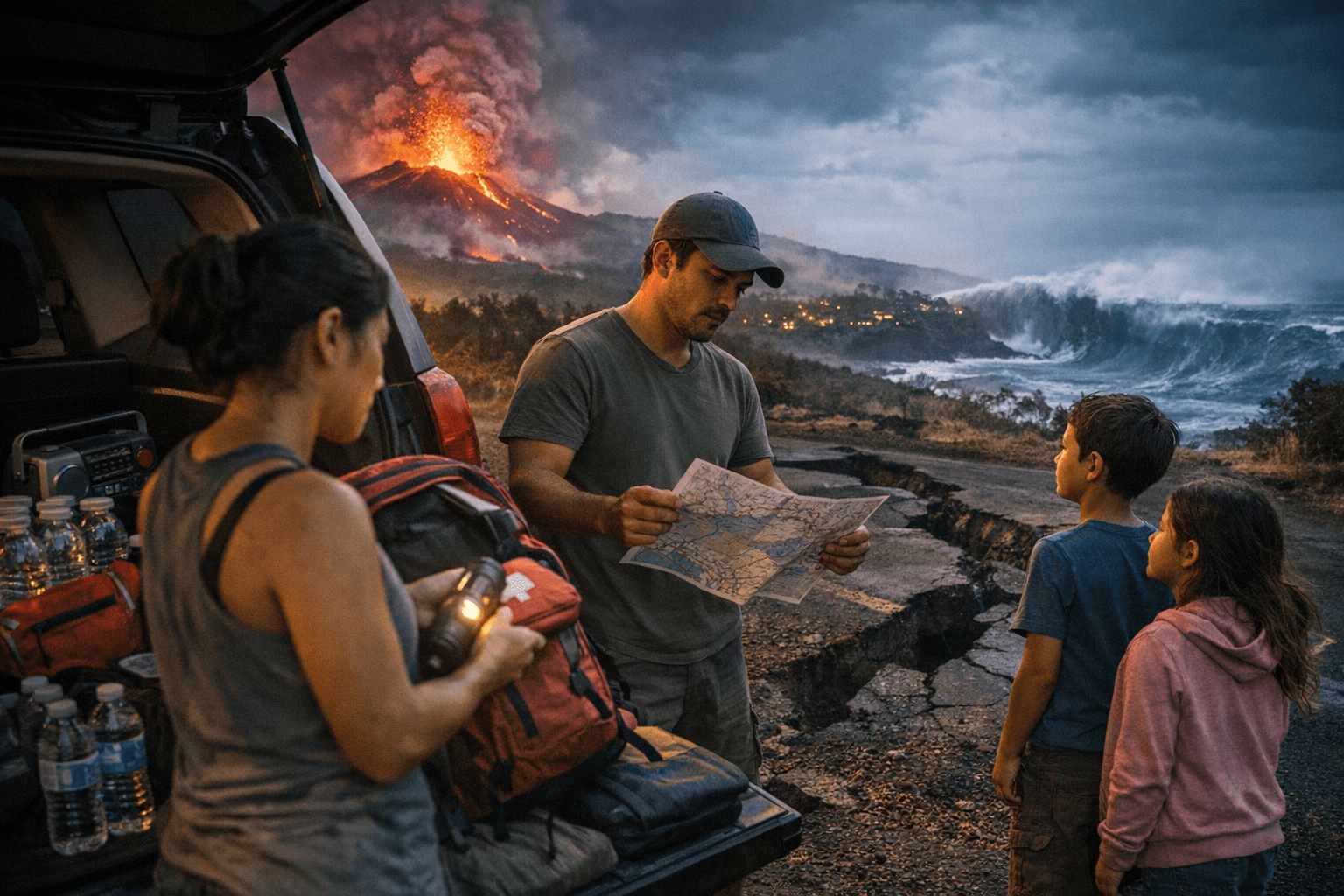
Kīlauea and Mauna Loa volcanic activity, frequent seismicity and the potential for Pacific tsunamis mean Hawaiʻi Island households should treat preparedness as a routine part of island life. Start by making a clear family plan that names local and out-of-area meeting points, emergency contacts and multiple routes out of neighborhoods at risk from lava flows, lahars or tsunami inundation. Include pets, livestock and neighbors with access needs, and identify mauka evacuation routes to higher ground in coastal communities.
Build or refresh an emergency kit with supplies to sustain your household for 3 to 7 days. Store 1 gallon of water per person per day, nonperishable food, a battery-powered or hand-crank radio, spare batteries, a flashlight, a basic first-aid kit and medications for 7 to 14 days. Keep copies of identification and important documents in waterproof bags, plus N95 or equivalent masks, sanitation supplies and a whistle. Keep a go-bag by the door and maintain at least a quarter tank of gas in vehicles; know alternate walking routes if roads become impassable.
Mitigate hazards at home by securing heavy furniture and water heaters, strapping bookshelves and storing hazardous materials high and in locked cabinets. Learn how to shut off gas, water and electricity safely. For volcanic events, protect rain catchment systems with covers, expect ashfall to damage electronics and contaminate water, and avoid running vehicles in heavy ash to prevent engine damage. When cleaning ash, wet it first to reduce airborne dust and avoid vacuuming dry ash, which can clog or damage vacuums and HVAC systems.
Sign up for official alerts through Hawaiʻi County Civil Defense, enable Wireless Emergency Alerts on mobile devices and follow the Hawaiian Volcano Observatory for real-time updates on summit and rift-zone activity and seismic swarms. For tsunami information, monitor the Pacific Tsunami Warning Center and heed county civil defense announcements. If you receive an official tsunami warning or feel a strong earthquake, move inland and to higher ground immediately; do not wait for confirmations if you sense imminent danger. Coastal communities should expect multiple tsunami waves over several hours.
Neighborhood-level preparedness strengthens response. Form neighborhood response teams, map people with access or functional needs, and inventory shared resources such as generators, water supplies and vehicles. Hawaiʻi County Civil Defense and the County emergency operations center coordinate shelter openings, road closures and damage assessments when incidents occur. Report downed power lines and utility hazards to utility providers immediately and ensure battery backups for medical devices and mobile charging solutions.
Economically, interruptions to tourism, agriculture and local businesses can produce sharp short-term losses and raise insurance claims and rebuilding costs. Preparing households and community infrastructure reduces those disruptions and speeds recovery. Keep careful records and photos of damage for insurance and potential state or county disaster assistance; check official county and state emergency management websites for application guidance.
Families should review and update emergency plans at least annually and after major household changes. Practicing routes, securing critical supplies and staying connected to Hawaiʻi County Civil Defense, the Hawaiian Volcano Observatory and the Pacific Tsunami Warning Center will help protect lives, limit economic damage and keep Big Island communities resilient when the next event occurs.
This article was produced by Prism’s automated news system from verified source data, official records, and press releases, then run through automated quality and moderation checks before publishing. The system is built and supervised by the people who set the standards it runs under. Read our full AI policy.
Did this article answer your question?