Big Island Nonprofit Works to Improve Safety, First-Responder Outreach for Autism Community
Since 2021, Big Island nonprofit ASDC has built emergency ID cards and first-responder training to prevent the dangerous miscommunications that can turn a 911 call into a crisis for autistic families.
When Rosalinda Larkin founded the Autism Support and Disabilities Center, Inc. in 2021, the Big Island had no centralized resource line connecting families of autistic people to emergency services, crisis intervention, or trained first responders. ASDC has spent the years since building exactly that.
The Hawaii-registered nonprofit operates as both a call center and a community connector, linking individuals with autism and other developmental disabilities to professional assistance, crisis resources, and partner organizations. Larkin, ASDC's president and founder, has anchored the work in her experience as a parent, pursuing systemic change alongside small, tangible tools that can reshape the outcome of a 911 call.
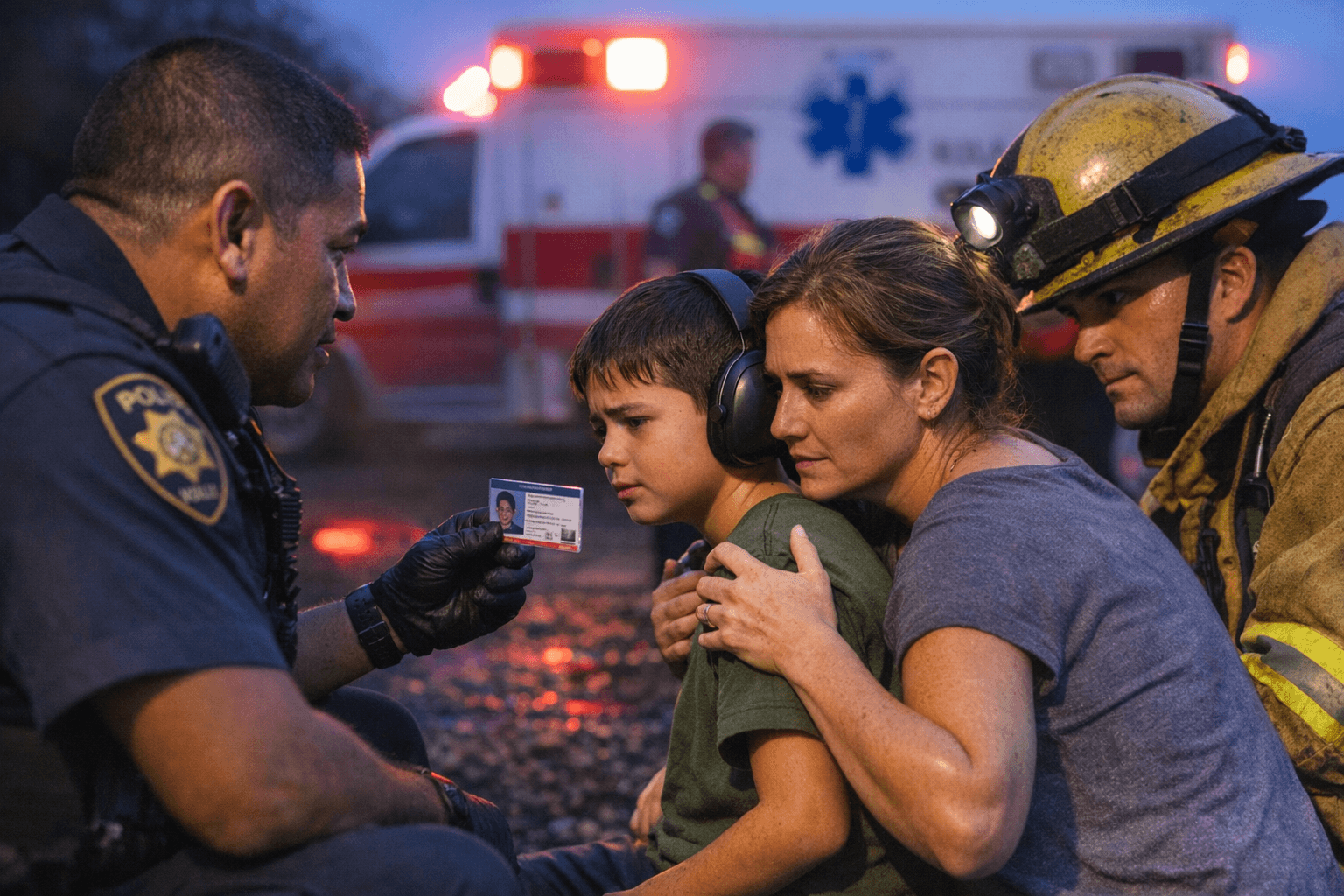
Chief among those tools are emergency alert and identification cards that ASDC develops and distributes to families. Designed to help first responders quickly understand a person's communication needs and accommodation requirements before a situation escalates, the cards address a specific and dangerous gap: for someone who is nonverbal or hypersensitive to sensory input, the difference between an informed and an uninformed first responder can determine whether a call ends safely or spirals into a confrontation.
ASDC has also coordinated and delivered training for police and emergency medical personnel on Hawaiʻi Island, with an emphasis on de-escalation techniques and communication approaches specific to people with developmental disabilities. That training targets a pattern with documented consequences in communities across the country, where behaviors rooted in autism or other developmental disabilities are misread by untrained responders, producing escalations that endanger the very people emergency services are meant to protect.
The nonprofit also runs community awareness events and maintains a resource line that caregivers can call to navigate available services, making ASDC one of the few organizations on the island functioning as a direct connector between families and both the emergency and social-service infrastructure.
ASDC's stated mission holds that "people with autism and other developmental disabilities deserve the same right, respect and dignity like any human being," a principle that shapes both its direct services and its push for formalized training standards. At a policy level, the model being built on Hawaiʻi Island strengthens the case for codifying those standards across county and state responder agencies; replicated statewide, that framework would extend the island's grassroots approach to communities that currently lack any equivalent infrastructure.
Families seeking alert cards or resource referrals, and agencies looking to request first-responder training, can reach ASDC through the organization's website.
This article was produced by Prism’s automated news system from verified source data, official records, and press releases, then run through automated quality and moderation checks before publishing. The system is built and supervised by the people who set the standards it runs under. Read our full AI policy.
Did this article answer your question?