Big Island residents given a checklist to prepare for public-safety power shutoffs
Hawaiian Electric warns a PSPS could shut power to North and South Kohala within 12–24 hours as east winds 25–35 mph, gusting up to 60 mph, increase wildfire risk.
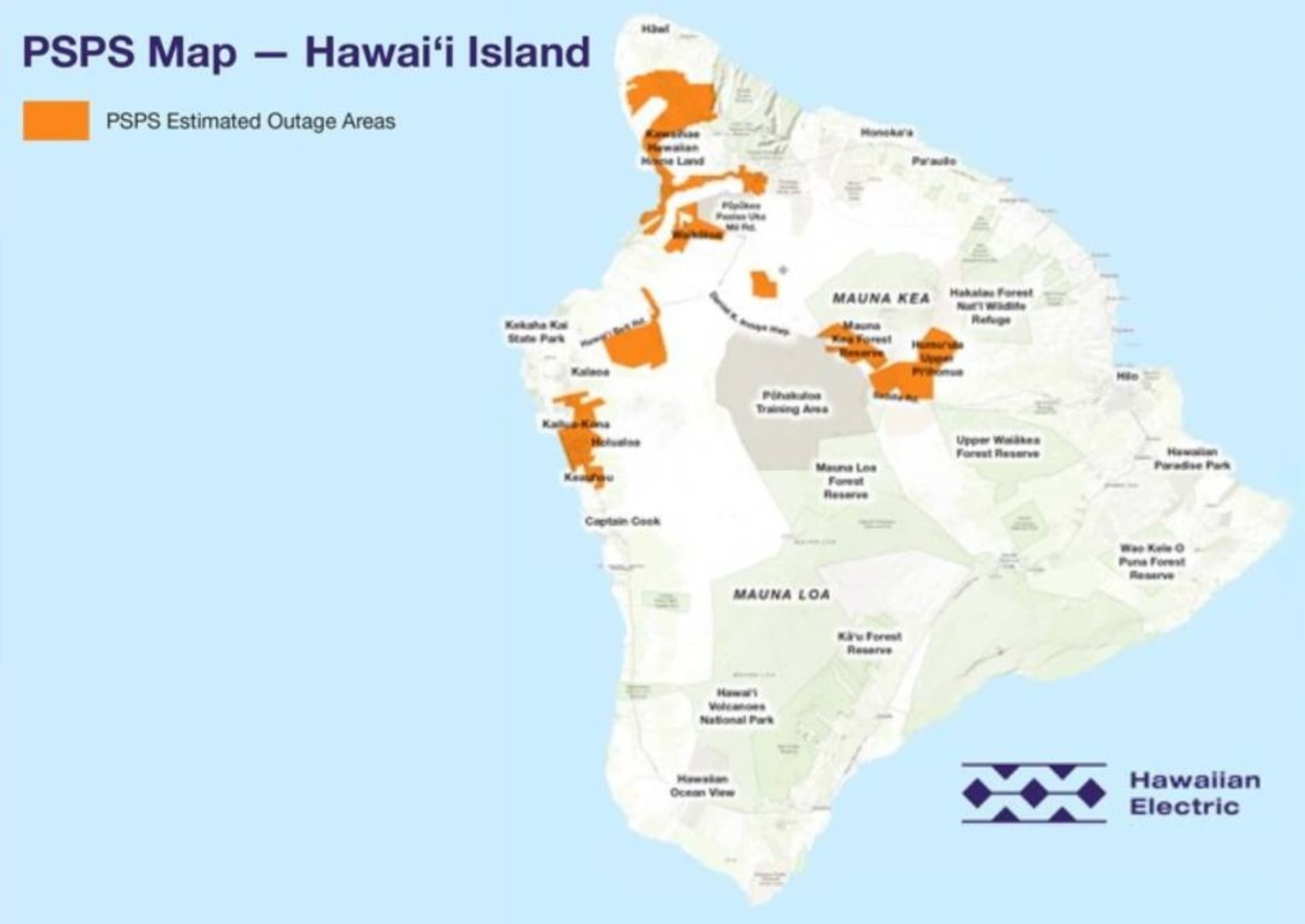
Hawaiian Electric and county emergency officials say a Public Safety Power Shutoff (PSPS) may be required in parts of the Big Island as high winds, low humidity and persistent drought raise wildfire risk. Multiple outlets reported that a PSPS could be initiated for North and South Kohala within the next 12 to 24 hours; BIVN recorded east winds of 25 to 35 mph, gusting up to 60 mph, while HECO reiterates its operational criteria and resources.
1. Understand HECO’s PSPS criteria
Hawaiian Electric’s official standard is explicit: “Hawaiian Electric’s criteria for determining a Public Safety Power Shutoff calls for the following criteria to be met concurrently: persistent drought conditions, wind gusts 45 mph and higher, and relative humidity below 45%.” The company also states it “analyzes data from weather stations and cameras near its infrastructure in high-risk areas with potential for fire spread,” and warns that “wind gusts can be stronger in higher elevations than in residential areas.” Know these thresholds so you understand why your community may be targeted for a shutoff.
2. Note the immediate timing signals and conflicting advisory end times
HECO’s Feb. 17, 2026 5 p.m. update said a PSPS “may require a Public Safety Power Shutoff within the next 12 to 24 hours,” and BIVN echoed that same 12–24 hour window for North and South Kohala. Other reports vary: Big Island Now cited a wind advisory “through 6 a.m. Thursday (Feb. 19),” while an Island News video noted a civil defense wind advisory that “expires tonight” for North and South Kohala. Because the published end times differ across sources, check current official feeds, National Weather Service, county civil defense, and Hawaiian Electric, for the latest advisory expiration before making time-sensitive decisions.
3. Treat current outages separately unless HECO says otherwise
Multiple sources made the same explicit point: “Any current outages are not related to the company’s PSPS program.” Strong winds are already causing weather-related outages, “Thousands of customers have lost power as strong winds knock down trees and send debris into power lines,” an Island News clip noted, but PSPS is a distinct, preventative action to reduce wildfire risk. If your power is out, confirm the cause with Hawaiian Electric before assuming it is a PSPS.
4. Initiate your emergency plan now, HECO urges action
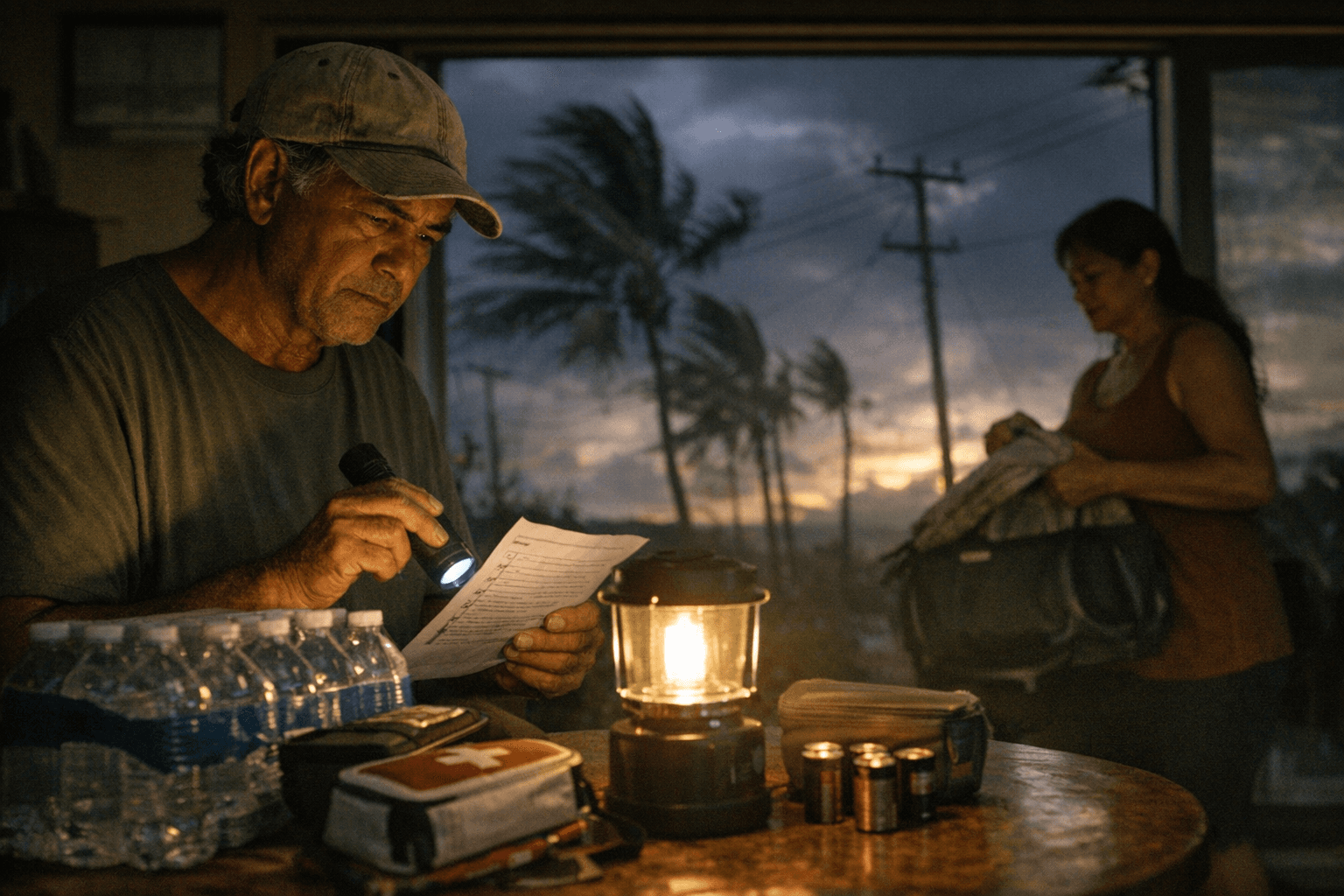
Hawaiian Electric’s messaging is direct: “Customers in these areas are urged to initiate their own emergency plans and prepare for the possibility of extended power outages.” That instruction appears across HECO, Big Island Now and BIVN reporting. An emergency plan should identify where you will get information (official feeds and the HECO hotline), who in your household has special needs, and whether alternative arrangements are needed if power is turned off with little or no notice.
5. Prepare your water supply per Department of Water Supply guidance
The Department of Water Supply emphasizes water first: “Customers should have alternate sources of potable water and enough supply to meet their essential needs during a prolonged power outage that disrupts DWS service.” DWS also points readers to its Water Emergency Preparedness guide for “ways to safely store drinking water” and provides a PSPS map of Hawaii to identify at-risk areas. Because DWS warns outages “may last hours to days,” plan a minimum potable-water reserve that covers drinking, cooking and basic hygiene needs.
6. Expect critical services and businesses to be affected
DWS explicitly warns that traffic signals, grocery stores, restaurants, gas stations, banks and ATMs “will most likely be affected by a PSPS.” That means a shutoff can reduce access to fuel, food, cash and controlled intersections; drivers should be alert for non-functioning signals and increased congestion. If you rely on any of these services for daily routines or health care, identify alternates now and confirm hours/operational plans with local businesses.
7. Follow county civil defense safety instructions while traveling
Civil defense advisories reported in Island News advised residents to “prepare for outages, drive with caution, and be aware of debris down trees and utility lines.” Leeward slopes and valleys, including North and South Kohala, often see accelerated winds and drier vegetation where gusts can intensify. If you must travel, slow down, watch for downed lines or branches, and treat any downed power line as live; report hazards immediately to emergency dispatch and Hawaiian Electric.
8. Use HECO resources: hotline, PSPS map and mobile updates
Hawaiian Electric directs customers to its PSPS web page and provides a toll‑free PSPS hotline for immediate information and maps; the PSPS hotline number is 1-844-483-8666. HECO also said it “will provide updates through the news media and the following mobile-friendly resources” as conditions evolve. If you live in or near the named risk areas (North and South Kohala, and the West Maui areas HECO cited), keep the hotline and official HECO channels handy to determine whether your neighborhood is on a PSPS list.
9. Remember the company considers PSPS a last resort, but it can happen with little notice
Officials captured in reporting stressed intent and urgency: “We really look at shutting off power as a last resort in the interest of protecting the community and ensuring the safety of our customers,” an Island News transcript quoted. HECO also warns: “If conditions suddenly become hazardous, the company may have to shut off power with little or no notice.” That combination, last-resort framing plus the possibility of rapid activation, is why the utility and county urge early planning rather than waiting until a shutoff is announced.
10. Know local geography and who is most exposed
Reports name specific at-risk locations: North Kohala and South Kohala on Hawaiʻi Island were repeatedly cited as areas that “may require a Public Safety Power Shutoff,” and HECO singled out West Maui and Kohala as zones where high wind gusts and low humidity may increase wildfire risk. Big Island Now noted the strongest gusts have been recorded along leeward slopes and valleys in Upcountry, Central and West Maui and in North and South Kohala, where winds “tend to accelerate and dry out vegetation as they rush downslope.” If you live on a leeward slope or valley, treat your exposure level as higher.
11. Verify advisory end times and service impacts before acting
The available sources disagree about advisory expirations, HECO’s Feb. 17 statement referenced a wind advisory “in effect through 6 p.m. tomorrow,” Big Island Now’s feed cited “through 6 a.m. Thursday (Feb. 19),” and Island News reported a civil defense notice “expires tonight” for Kohala. Because those end times conflict in the public reports, confirm the current advisory expiration and specific PSPS geography with the National Weather Service, county civil defense, and Hawaiian Electric before making irreversible plans.
Conclusion Hawaiian Electric’s PSPS program is an explicit, criteria-driven wildfire-prevention tool intended for communities with the highest exposure to wildfire risk. With current reports tying gusts and low humidity to elevated danger and multiple outlets warning PSPS could be needed within 12–24 hours for Kohala, residents should act now: initiate emergency plans, secure potable water per DWS guidance, heed civil defense travel warnings, and monitor HECO’s official updates and hotline 1-844-483-8666. Swift, informed preparation is the practical safeguard against an outage that could arrive with little or no notice.
Know something we missed? Have a correction or additional information?
Submit a Tip