EA Ecoversity Wins Grant for Tech-Driven Hawaiian Language Revitalization Program
A Hilo-based nonprofit won a 3-year federal grant to build LEO, a mobile-first ʻōlelo Hawaiʻi program open to island residents from age 10 to 60+, no grammar textbook required.
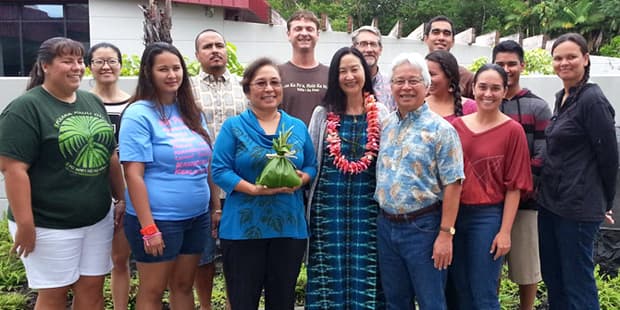
While most Hawaiian language programs lean heavily on grammar drills and classroom structure, a Hilo nonprofit secured federal funding to try something different: a mobile-first, asynchronous course built around culture and conversation, not conjugation tables.
EA Ecoversity was awarded a three-year grant from the Administration for Native Americans to create the Hawaiian language project LEO, a name that carries weight. LEO means "voice," "advice," or "verbal expression" in ʻōlelo Hawaiʻi. That framing is intentional: the program treats language not as an academic subject but as a living inheritance that generations of Native Hawaiians have been cut off from.
At the helm is Pōlanimakamae Kahakalau-Kalima, raised in the rural and culturally rich Waipiʻo Valley and now serving as executive director of EA Ecoversity. The organization itself traces its roots to Kū-A-Kanaka, a native Hawaiian women-owned and operated social enterprise headquartered in Hilo on Hawaiʻi Island. Its founder, Dr. Kū Kahakalau, is an award-winning Native Hawaiian educator, researcher, cultural practitioner and expert in Hawaiian language and culture residing in Kukuihaele on Hawaiʻi Island and the first person in the world with a Ph.D. in Indigenous Education.
"We are designing much more than just another Hawaiian language app — we are creating a pathway to reclaim Hawaiian language, identity, and connection in an organic, culturally congruent way," said Pōlani Kahakalau, executive director of EA Ecoversity. "By using asynchronous, highly interactive, mobile-friendly technology to teach Hawaiian language, culture, and traditions, we accommodate the realities of today's busy learners."
The project builds on decades of research and responds directly to ongoing Native Hawaiian community requests seeking accessible, flexible, culturally grounded, non-grammatical approaches to reconnect with ʻōlelo Hawaiʻi. That "non-grammatical" distinction separates LEO from university-based offerings that structure ʻōlelo Hawaiʻi instruction around formal linguistic rules, which research suggests can discourage adult and youth learners seeking cultural connection rather than academic credit.
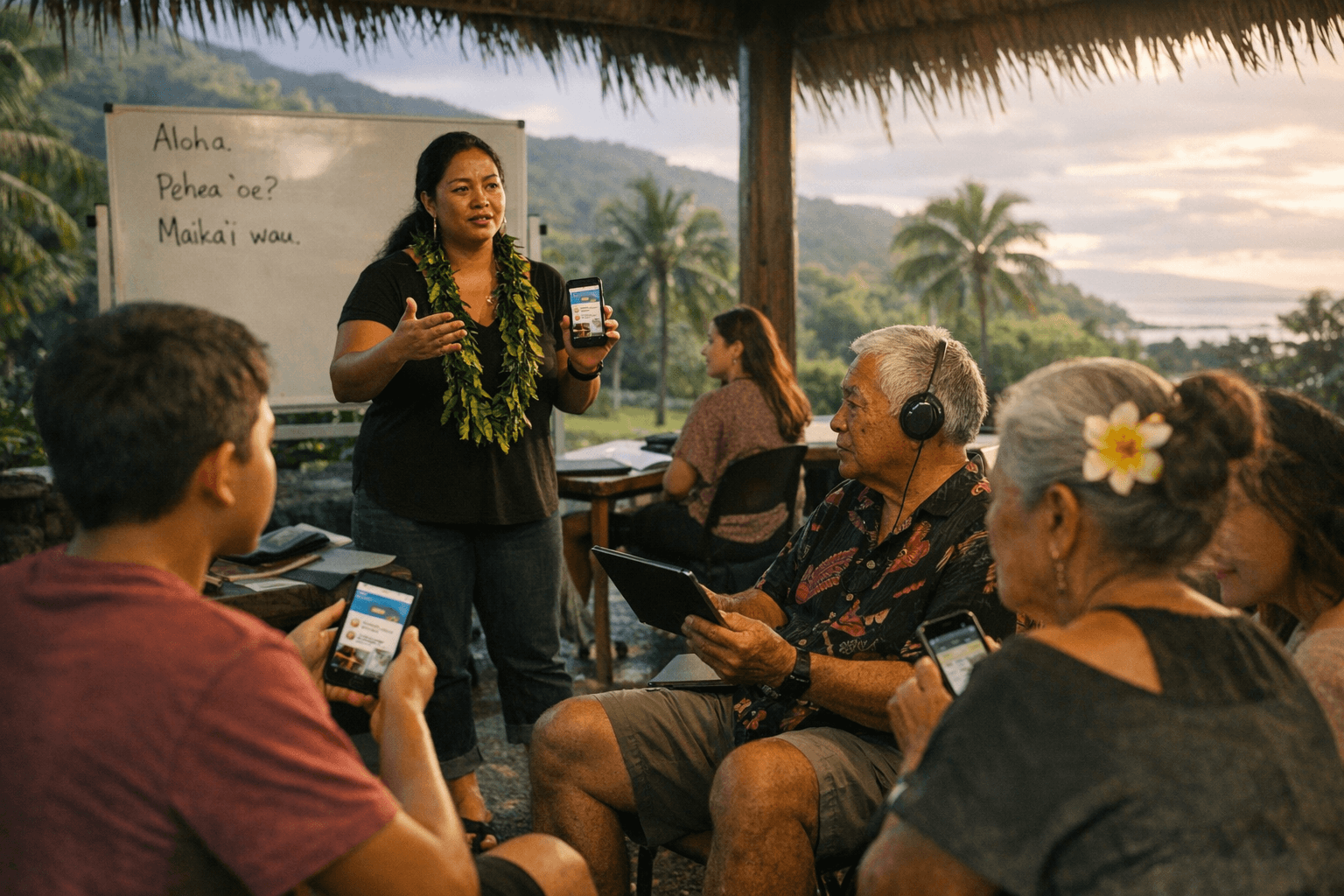
The program is now recruiting. EA Ecoversity is currently seeking pilot testers from Hawaiʻi, ages 10 to 60 and over. They must be residents of Hawaiʻi and have access to dependable Wi-Fi and a digital device such as a computer, laptop, tablet, or smartphone. The courses are free to access during the pilot phase. Learners who successfully complete all four courses will earn a micro-credential, which can be used for job applications or promotions. To inquire about becoming a pilot tester, complete the interest form on the EA Ecoversity website.
The micro-credential pathway matters for the Big Island's economy as well as its cultural identity. EA Ecoversity's goal is to provide young Hawaiians ages 15 to 30 with culturally-driven, community-based educational experiences and opportunities, including career exploration and training, by integrating modern technologies and initiatives with ancient ʻike kūpuna and land-based practices. A completed LEO credential signals demonstrated language proficiency to employers in education, health care, and government sectors where Hawaiian fluency increasingly carries real hiring weight.
"This grant affirms the recognition of the importance of our work," Kahakalau said. For a program built from the valleys of the Big Island's Hamakua Coast, the federal recognition represents more than funding: it signals that an ʻōlelo Hawaiʻi revival built in Hilo, designed for the pace of modern life, and rooted in the voices of Waipiʻo and Kukuihaele is now being treated as a national model.
This article was produced by Prism’s automated news system from verified source data, official records, and press releases, then run through automated quality and moderation checks before publishing. The system is built and supervised by the people who set the standards it runs under. Read our full AI policy.
Did this article answer your question?