East Hawaii drenched as June rains far exceed normal totals
East Hawaii’s June rain is already nearing twice normal at Hilo airport, with Hakalau and Pahala far wetter still. The damp start is reshaping commutes and streamwatching.

East Hawaii is opening June under a sky that looks more like the heart of the wet season than the start of the dry one. Hilo International Airport had already recorded 4.13 inches of rain by 8 a.m. Tuesday, June 9, a pace that would put the airport on track for 13.77 inches this month if it continued.
That would amount to nearly twice the normal June total, but several windward gauges were even wetter. Laupahoehoe had collected 12.24 inches so far in June, Hakalau 12.67 inches, Glenwood 10.94 inches and Pahala 8.4 inches. Hakalau was already near five times its average June rainfall, while Pahala had more than four times its typical June total in the opening stretch of the month.
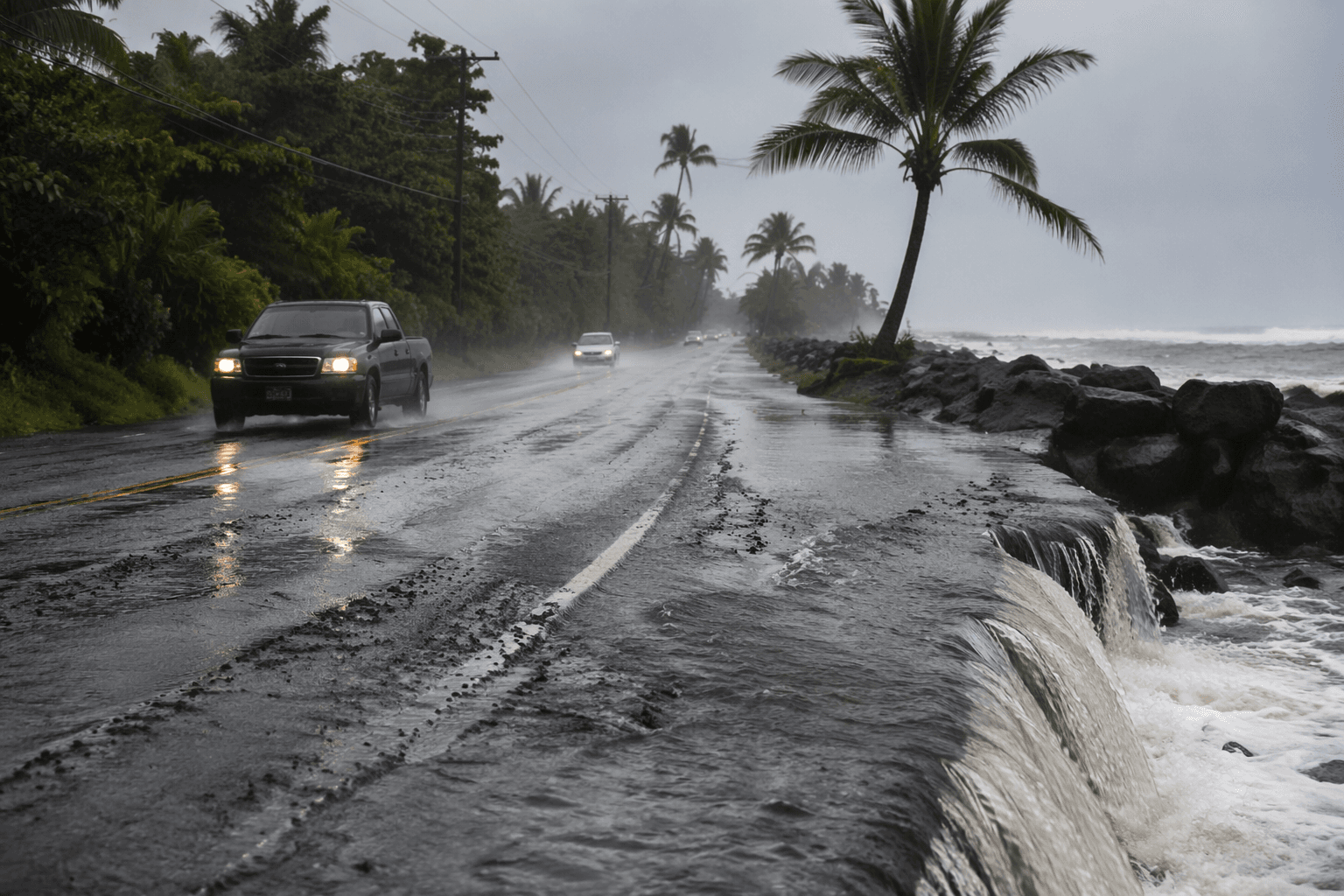
The soaking came after a stretch of moisture that has helped chip away at drought conditions that had gripped much of Hawaii Island for the past five years. Some locations are still abnormally dry, but the June pattern has been enough to change the feel of daily life in East Hawaii, where residents are already watching drainage ditches, low-water crossings and stream levels more closely than they normally would this time of year.

National Weather Service hydrologist Tina Stall said the start of the dry season is not abrupt. “The arrival of the dry season is not like a light switch,” Stall said, underscoring that trade wind weather can still bring frequent showers early in the season even after June 1, when most of Hawaii expects the wetter months to fade.
Stall also said the recent East Hawaii rainfall was not tied to the Kona low storms in March that caused flooding and damage. Instead, the rain reflected more typical trade wind conditions over the past several weeks, a pattern that has kept showers coming to Hilo, upper Puna, Hāmākua and Kaū.
For commuters, that means extra caution on slick roads and around stream crossings, especially in the wetter windward corridors. For farmers, the persistent rain can keep fields and access roads soggy at a time when dry-season work usually becomes easier. And for wildfire expectations, the heavy early-June moisture should keep immediate fire danger lower than a parched dry-season start, even as pockets of the island remain dry enough to warrant watchfulness when heat and wind return.
This article was produced by Prism’s automated news system from verified source data, official records, and press releases, then run through automated quality and moderation checks before publishing. The system is built and supervised by the people who set the standards it runs under. Read our full AI policy.
Did this article answer your question?