East Hawaiʻi Records Wet Month, Long-Term Drought Deficits Persist
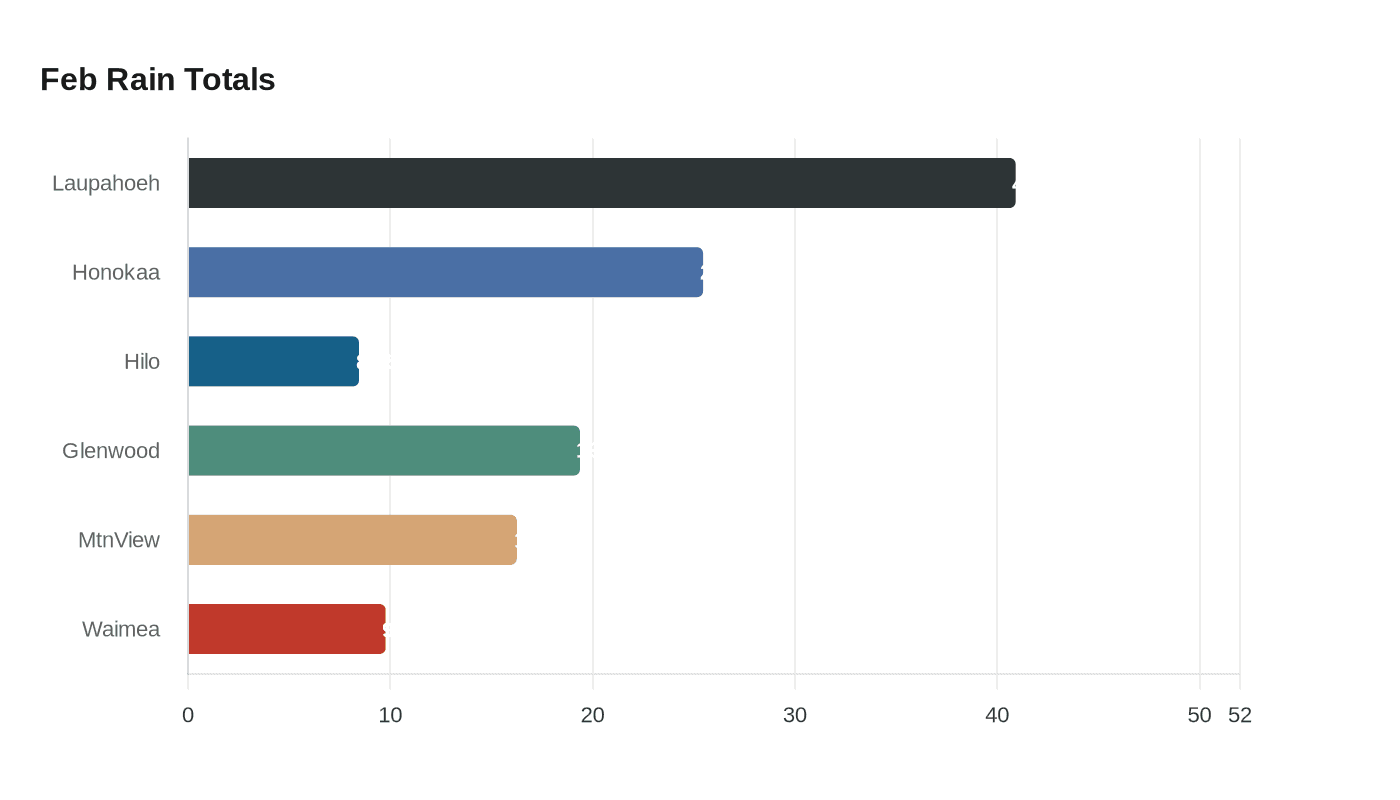
Hilo Airport has logged 8.45 inches for February as of 8 a.m. Thursday, Laupahoehoe has 40.91 inches month-to-date (22.28 on Feb. 9), yet officials say drought still persists.

Hilo International Airport received 8.45 inches of rain for the month as of 8 a.m. Thursday, closing in on its normal February average of 10 inches, even as Laupahoehoe has recorded 22.28 inches on Feb. 9 and a month-to-date total of 40.91 inches. Those large February totals across East Hawaiʻi have produced record daily readings but have not erased longer-term deficits that officials and managers continue to track.
“It’s been raining nearly daily in East Hawaii since the deluge on Feb. 8 and 9.” Other month-to-date totals as of Thursday morning include Honokaa at 25.46 inches, Glenwood at 19.37 inches, Mountain View at 16.25 inches and Waimea at 9.77 inches, reflecting the concentrated, heavy pattern across windward and upland communities.

On Feb. 9 the airport recorded 3.11 inches, setting a new daily record for that date and breaking the old Feb. 9 mark of 2.3 inches set in 1972. The airport set a new daily rainfall record on the Jan. 3 with 3.24 inches as a result of that front. A kona low moved in on Jan. 4 and 5, producing the heaviest showers between Hilo and Ka‘u and contributing to an unusually wet start to the year at several monitoring sites.
January totals also ran above normal at many gauges. Hilo International Airport received 9.07 inches for January, 115% of its normal January total, while Piihonua reported 19.71 inches, or 150% of its average January rainfall. Pahala and both Kapapala Ranch gauges measured more than 10 inches of rain, well above their January averages. Kealakomo in southern Puna recorded 11.62 inches in January, 158% of its norm for the month and its wettest January since the NWS installed a remote automatic weather station there in 2010. That recent wetness stands in stark contrast to drought-stricken February 2025, when the airport received just 0.75 inches for the entire month.
“Tina Stall, hydrologist for the National Weather Service in Honolulu, attributed the wet weather in East Hawaii to trade wind weather that disappeared for most of the two-year drought period.” Local climatologists, the National Weather Service (NWS) and Hawaii County water managers, as well as farmers, reservoir managers, and residents across East Hawaiʻi, are referenced as parties observing and responding to recent rainfall and drought conditions as they assess whether these short-term gains will affect aquifers and reservoir storage.
Despite record days and month-to-date totals in Hilo, Laupahoehoe, Honokaa and other sites, drought persists in the region. The pattern of heavy, episodic rain that produced 22.28-inch and double-digit month totals underscores variability: powerful storms can set daily records but may not immediately refill groundwater or erase two-year deficits that have shaped water management, farming and community planning across East Hawaiʻi. Local water managers and stakeholders remain on watch as they track whether continued trade-wind rains translate into sustained recovery.
Know something we missed? Have a correction or additional information?
Submit a Tip