Emergency roadwork begins on Saddle Road to reduce crash risk
A single lane on Saddle Road closed for roadwork meant to cut hydroplaning risk, with contraflow, a 45 mph limit and about a month of delays ahead.
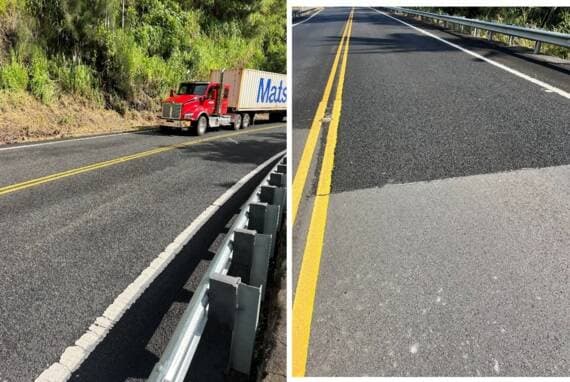
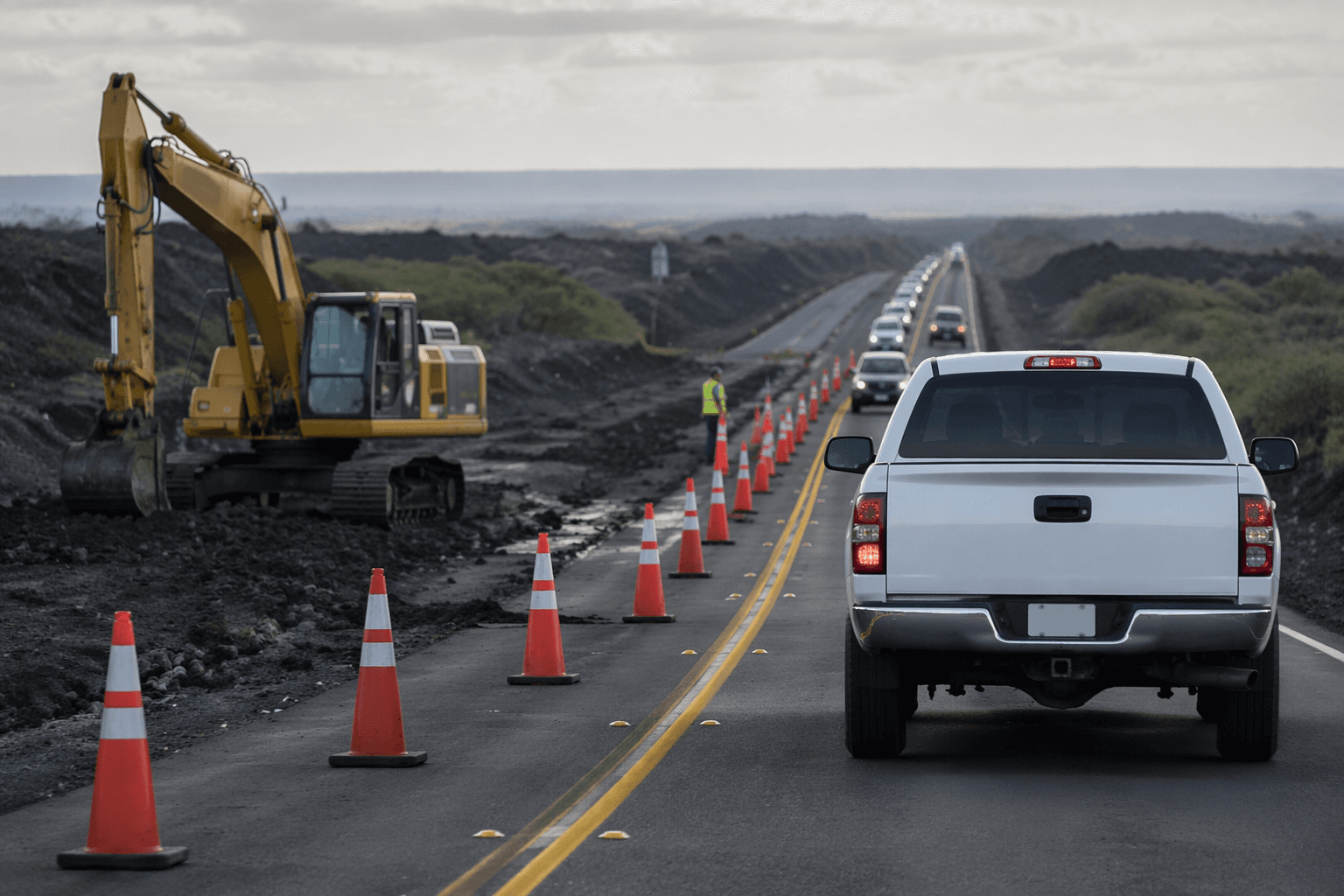
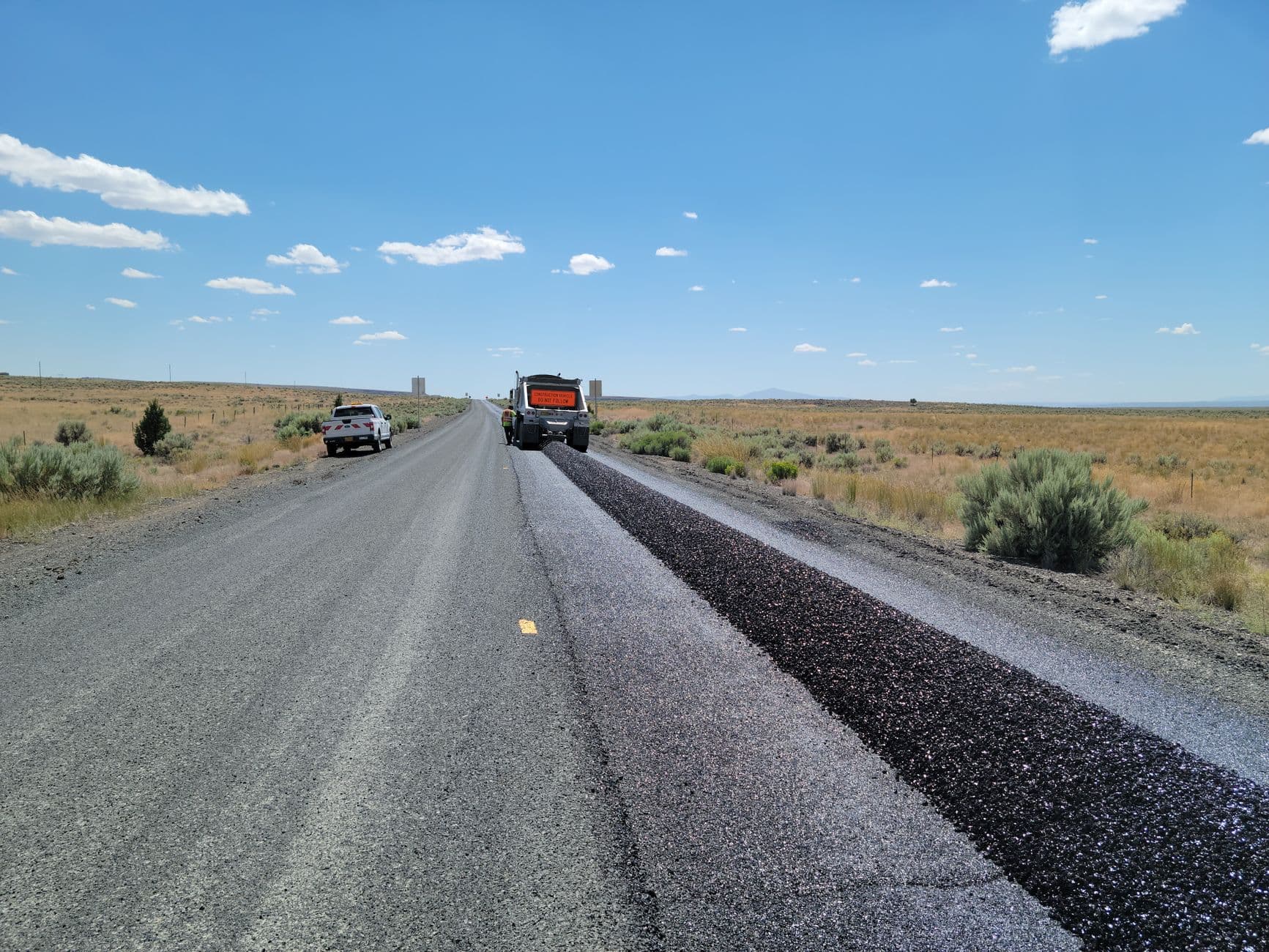
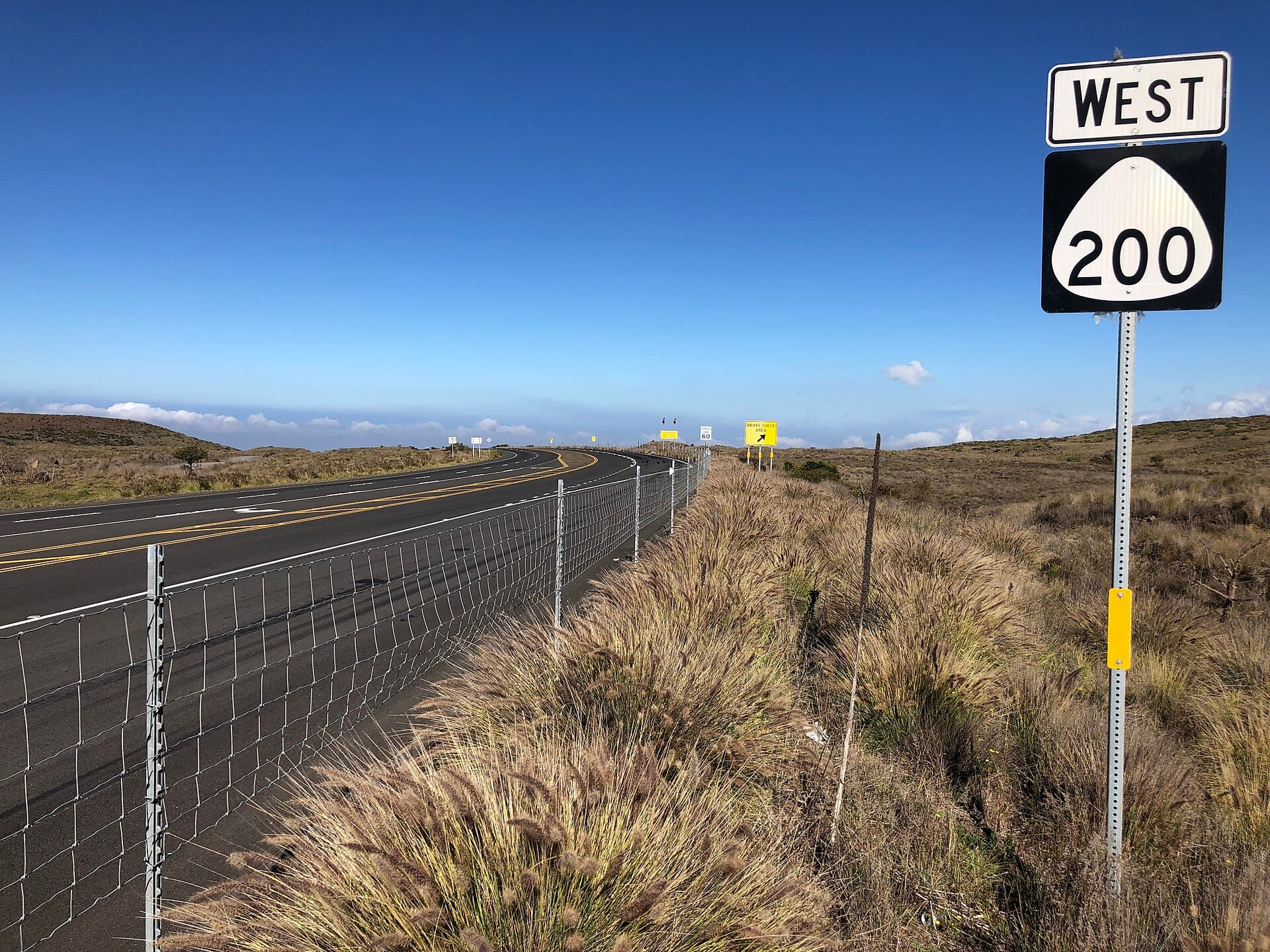
Emergency roadwork began on Daniel K. Inouye Highway, or Saddle Road, with crews closing a single lane between mileposts 10 and 19 to mill the pavement and lay new friction-course asphalt meant to shed water faster. The work is part of the state’s response to a traffic emergency declaration on one of the Big Island’s most heavily used east-west routes, where officials say crash risk has become urgent.
The Hawaii Department of Transportation said the project started at 7 a.m. at milepost 16 and was scheduled to run Monday through Friday from 7 a.m. to 5 p.m. While crews work, traffic in both directions is being squeezed into the open lane under alternating traffic control, also called contraflow. The speed limit has been reduced to 45 mph, and a pilot car may be used when needed to move vehicles safely through the work zone.
HDOT said the open-graded friction course is being installed in places where surface water runs across the highway, including the stretch from mileposts 16 to 19 and the lower section between mileposts 10 and 16. Crews were first moving Kona-bound, then switching to the Hilo-bound lanes after reaching milepost 19 before returning to the earlier segment. The agency said the job should take about 30 days, weather permitting, and that any future closures will be listed in the weekly lane-closure schedule.
The roadwork is tied to a broader safety push after HDOT declared a traffic emergency zone covering mileposts 5.5 to 28 under HRS §264-1.5, a step that lets the state accelerate procurement and waive certain permitting requirements. In a June 5 hearing notice, the department said 10 fatal crashes on the highway from 2021 through June 4, 2026, had caused 13 deaths. That same presentation listed short-term countermeasures already in place or planned, including closed passing zones between mileposts 8.3 and 27.25, electronic safety messages, thermoplastic curbs and delineators between mileposts 16.7 and 19, in-lane rumble strips, chevron signs, wet-weather striping and speed safety cameras that would warn drivers traveling more than 11 mph over the limit.
The Hawaii Police Department and the State Department of Law Enforcement are also expected to increase enforcement along the corridor. HDOT said it is still studying long-term changes such as fully dividing the highway, adding lanes, installing medians or barrier systems, or creating alternate passing lanes. For drivers who use Saddle Road every day, the message is immediate: expect slower trips, active construction and a corridor the state is treating as a live safety problem, not routine maintenance.
This article was produced by Prism’s automated news system from verified source data, official records, and press releases, then run through automated quality and moderation checks before publishing. The system is built and supervised by the people who set the standards it runs under. Read our full AI policy.
Know something we missed? Have a correction or additional information?
Submit a Tip