Farmers, Ag Groups Urge State Action After Kona Storm Flooding Devastates Hawaii Crops
A live damage tracker tops $23M as Kona storm floods wiped out 24,000 coffee trees at Kealakekua's Greenwell Farms and ag groups demand faster state relief.
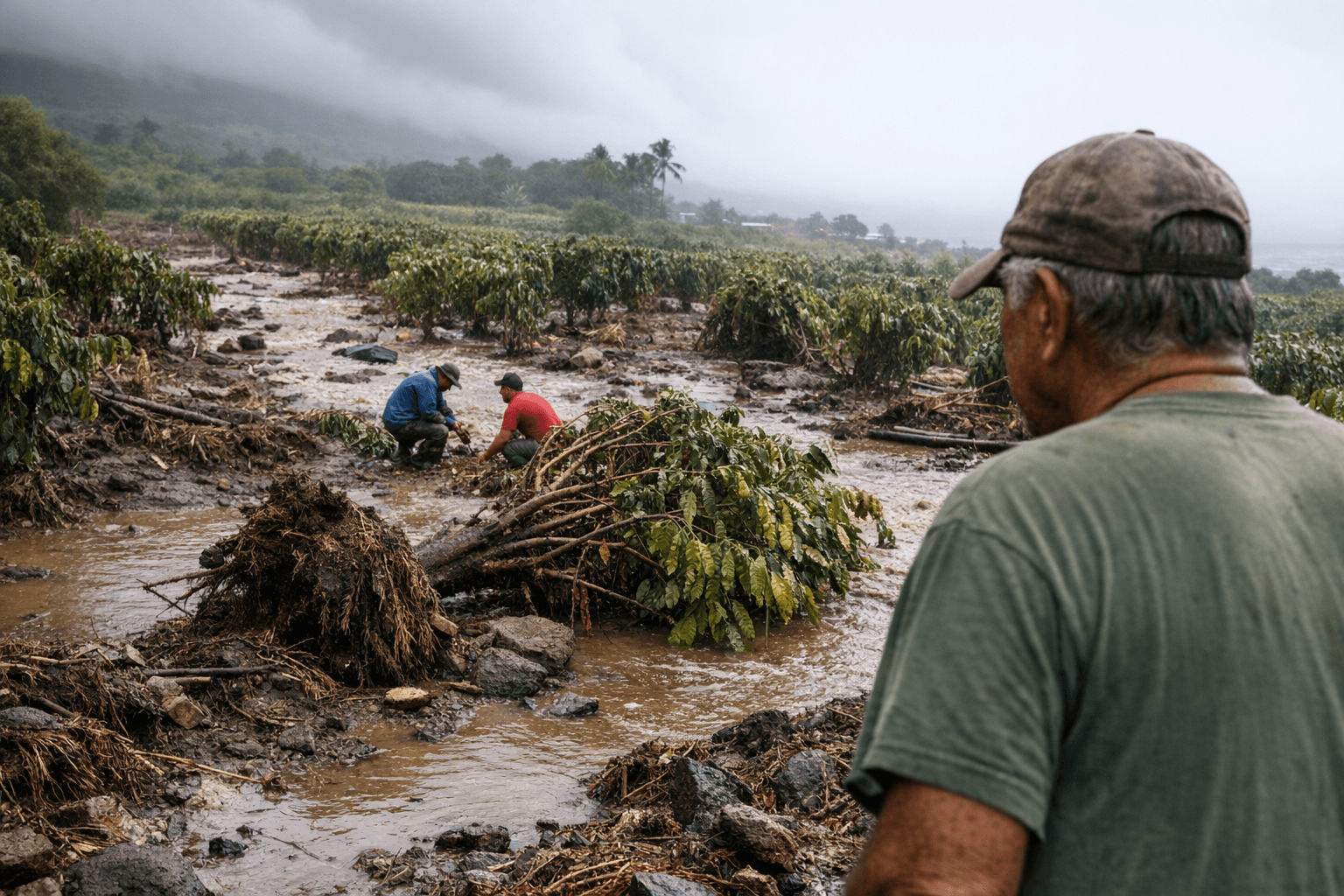
Agriculture advocates pressed state lawmakers for faster, more flexible relief on April 2, warning that a live online damage dashboard had already topped $23 million in statewide agricultural losses from the two back-to-back Kona low storms, with assessments still ongoing and the true toll expected to run higher.
On the Big Island, the storms hit Kona coffee country with particular force. At Greenwell Farms in Kealakekua, one of the oldest continuously operating coffee operations in the state at 176 years, owner Tom Greenwell said floodwaters carved three deep trenches through his South Kona land and destroyed his entire nursery. "We lost about 24,000 trees in our nursery," Greenwell said. "That's our future planting that is gone, and trees that I grow and give to farmers to grow." He estimated 20 percent of his current crop was already lost and warned that he expected to "lose half our crop."
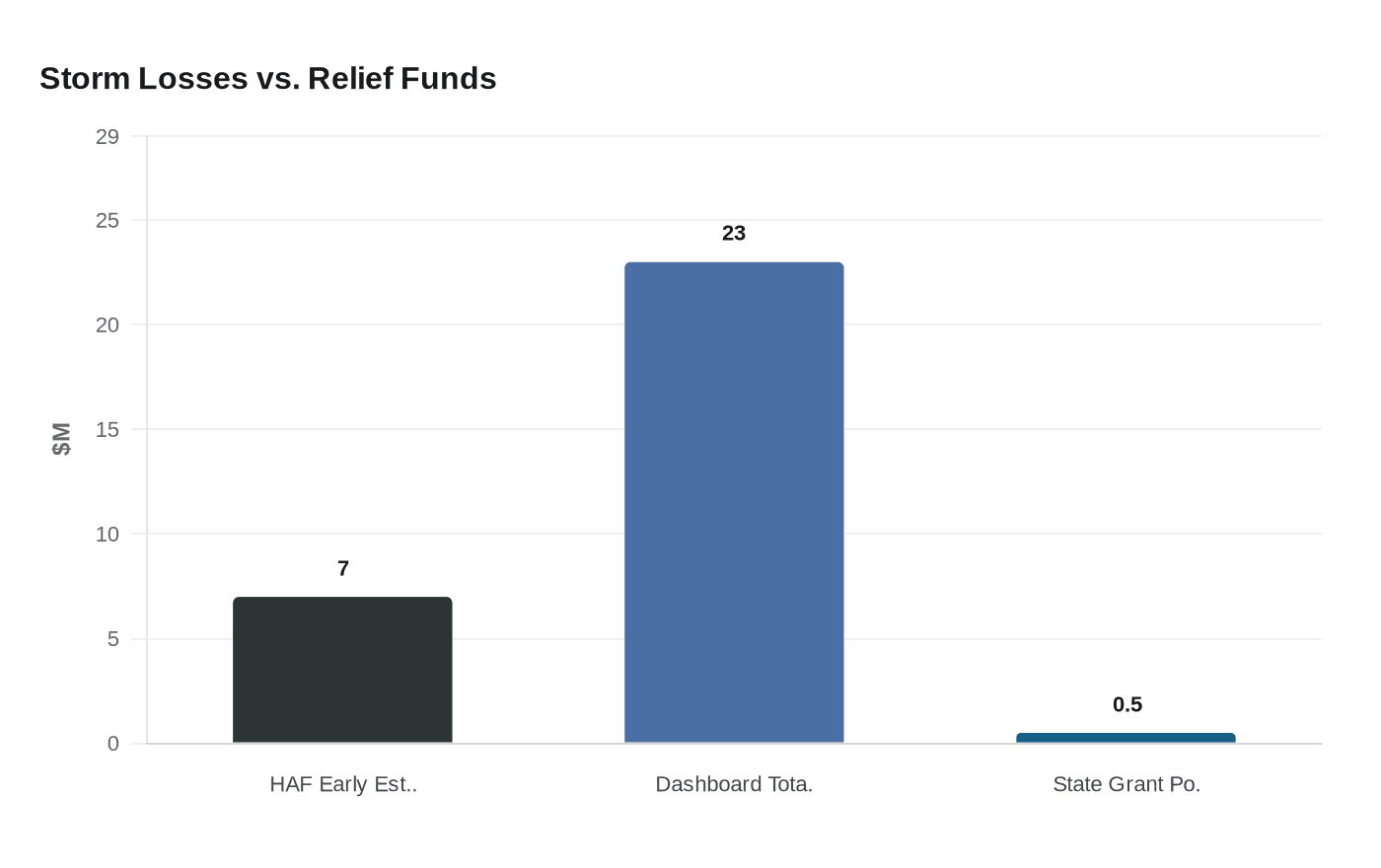
The Hawaiʻi Agricultural Foundation (HAF), in partnership with the Hawaiʻi Farm Bureau Federation, launched a relief effort to support farmers and agricultural producers impacted by the storms. Early estimates placed more than $7 million in agricultural losses and over 1,000 acres of farmland affected, with additional impacts expected as assessments continued. HAF Executive Director Brian Miyamoto described the scale of need as especially acute for smaller operations. "The damage we're seeing across the state is significant, especially for small and family-run farms," Miyamoto said. Advocates noted that many Hawaiʻi growers lack federal-style crop insurance and operate on margins too thin to absorb a weather shock of this magnitude, leaving them uniquely exposed when critical production windows are wiped out.
State and federal programs are available, but the gap between committed funding and confirmed losses is stark. The Hawaiʻi Department of Agriculture and Biosecurity's Emergency Farmer Relief Program received over 1,600 eligible applications for one-time $1,500 grants, and the department is actively pursuing more funding for priority applications. The total pool authorized is $500,000. Communities that experienced damage from the Kona Low storms are also eligible to receive assistance through the USDA Natural Resources Conservation Service and the Farm Service Agency's Emergency Conservation Program, which provides cost-share and technical help for restoring farmland to pre-disaster condition. If approved, emergency loans of up to $100,000 are available at 3 percent interest for qualified agricultural producers. Producers can reach the state Agricultural Loan Division at 808-973-9460 or dab.agloan@hawaii.gov.
To apply for the state grant, producers visit dab.hawaii.gov/emergencyfarmerrelief. Applicants must hold a Hawaiʻi General Excise Tax license and demonstrate losses from Kona Low 1 or Kona Low 2. Agricultural damage can be reported at report.agstewardshiphawaii.org, which feeds the live statewide tracking dashboard that advocates cited before lawmakers.
Streamlining those documentation requirements is precisely what ag groups say is missing. With the storms striking during active production windows, the losses translate directly into depleted farm-stand tables, thinner CSA boxes, and reduced supply for island restaurants through the season. Long-term recovery will also require soil remediation, irrigation repair, and debris clearing that a $1,500 grant alone cannot address. The distance between a $500,000 state appropriation and a $23 million damage total is, advocates warned lawmakers, the clearest measure of how much faster public programs need to move.
This article was produced by Prism’s automated news system from verified source data, official records, and press releases, then run through automated quality and moderation checks before publishing. The system is built and supervised by the people who set the standards it runs under. Read our full AI policy.
Did this article answer your question?