Flood advisory issued for Kona districts amid heavy rain on Hawaii Island
Heavy rain kept Kailua-Kona, Captain Cook and other Kona communities under a flood advisory as runoff threatened low-lying areas before 4:45 p.m.
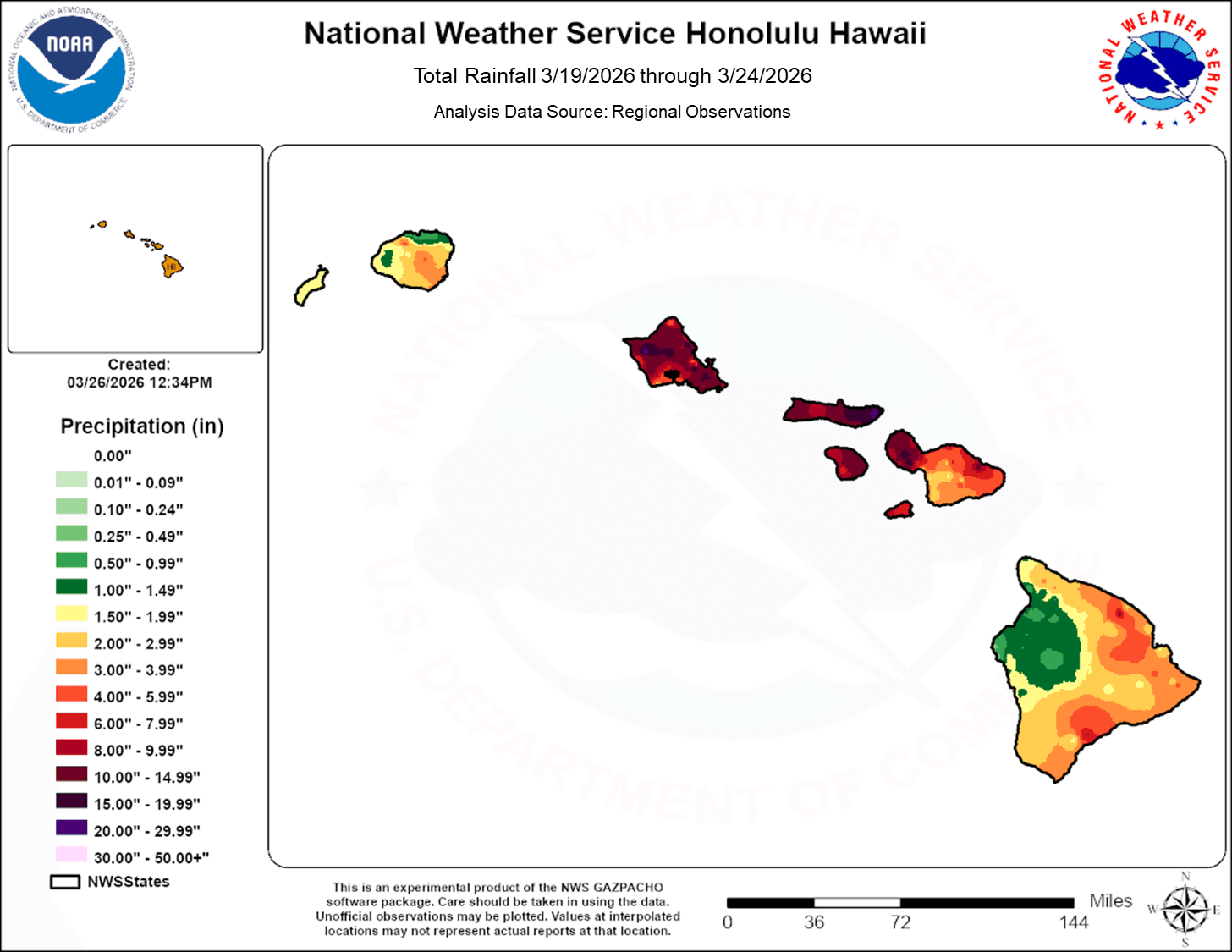
Heavy rain over the Kona districts pushed Kailua-Kona, Captain Cook and nearby communities under a flood advisory as runoff threatened low-lying areas across Hawaii Island before the alert was set to expire at 4:45 p.m. HST.
At 1:33 p.m., radar showed heavy rain over the Kona districts, with rainfall rates running from 1 to 2 inches per hour. By 3:11 p.m., radar still showed moderate to occasionally heavy rain, and rain was still falling at 0.5 to 1.5 inches per hour, enough to keep conditions primed for quick street flooding and poor drainage in the hardest-hit pockets.

The National Weather Service said a flood advisory means minor flooding is imminent or occurring. The areas identified as potentially affected included Kailua-Kona, Captain Cook, Honalo, Kainaliu, Kealakekua, Holualoa, Kahaluu-Keauhou, Honaunau, Kalaoa, Puuanahulu, Pohakuloa Training Area, Kona International Airport, Milolii and Hawaii Volcanoes Park Kahuku Unit.
That list pointed to trouble spots stretching from coastal neighborhoods and commercial areas to upland and interior sections of the Kona side, where heavy rain can send water across roads, through yards and into low-lying drainage channels quickly. In places such as Kona International Airport, Kahaluu-Keauhou and Kailua-Kona, even short bursts of intense rain can turn into standing water, while smaller communities like Milolii and Honaunau can see runoff collect in the lowest ground first.

The flood advisory also landed alongside a separate coastal hazard message that warned peak monthly high tides and water levels running higher than predicted could produce minor flooding along shorelines and low-lying coastal areas through Monday, May 19, 2026. For Big Island residents watching the weather stack up across the Kona side, the combination of inland rainfall and higher coastal water levels widened the concern from nuisance flooding to a broader water problem that could linger into the evening along exposed shorelines and drainage-prone areas.
This article was produced by Prism’s automated news system from verified source data, official records, and press releases, then run through automated quality and moderation checks before publishing. The system is built and supervised by the people who set the standards it runs under. Read our full AI policy.
Did this article answer your question?