Hawai'i County Mayor Declares Emergency as Second Kona Low Threatens Saturated Island
Mayor Kimo Alameda declared a state of emergency March 20 as a second Kona low bears down on an island where Naalehu, Waiohinu, and Puna are still reeling.
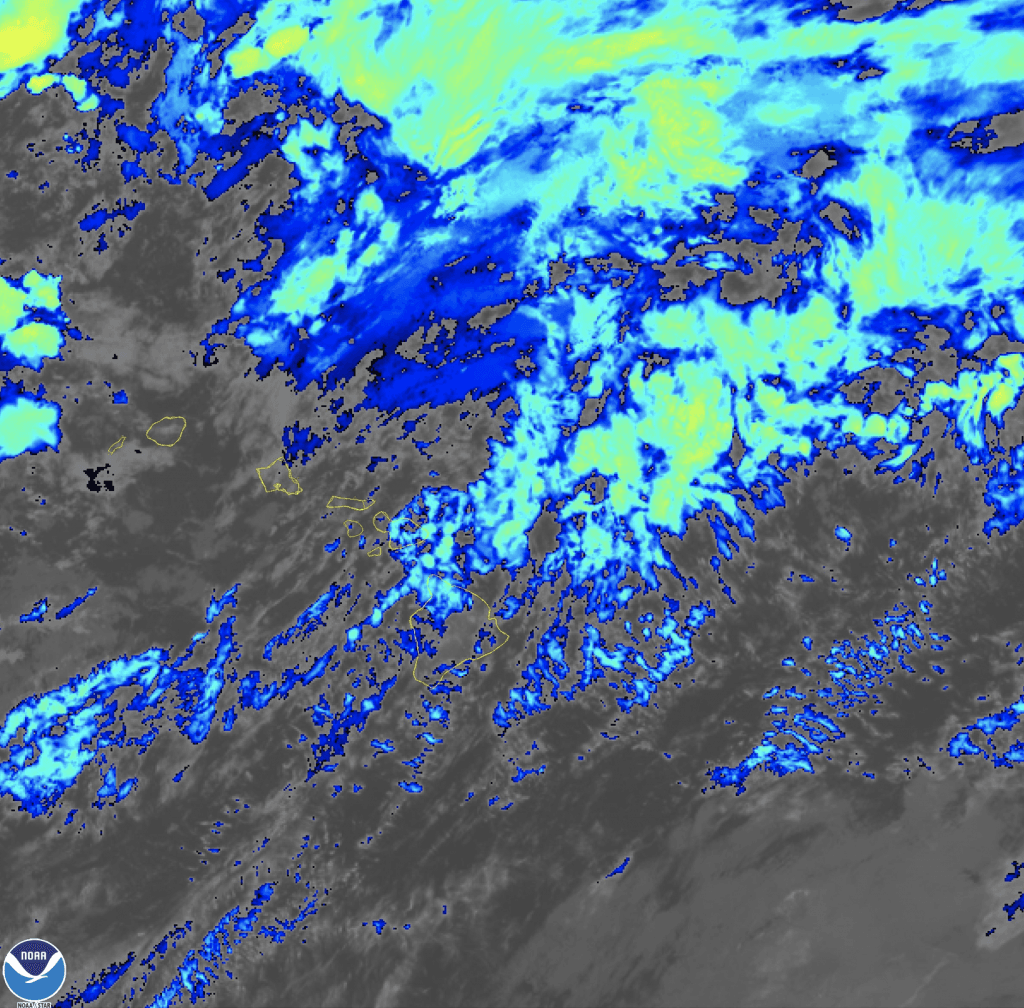
County crews exhausted from three to four days of nonstop barricade work and damage assessments barely had time to rest before Mayor C. Kimo Alameda declared a local state of emergency March 20, warning that a second Kona low is bearing down on ground already too saturated to absorb much more.
Alameda's proclamation, posted to the Hawai'i County website at 2:00 p.m. that day, formally invokes HRS § 127A-14(b), CCH § 13-23, and HCC § 7-1-7(a), citing "the forecasted severe weather event, compounded by the already-saturated ground conditions resulting from the recent Kona low weather event" as posing "an imminent danger or threat of an emergency or disaster to the County of Hawaiʻi." The county's Civil Defense Agency, established under HRS Chapter 127A and HCC Chapter 7, is operating under the Mayor's direct authority as emergency management responsibilities shift to full emergency footing.
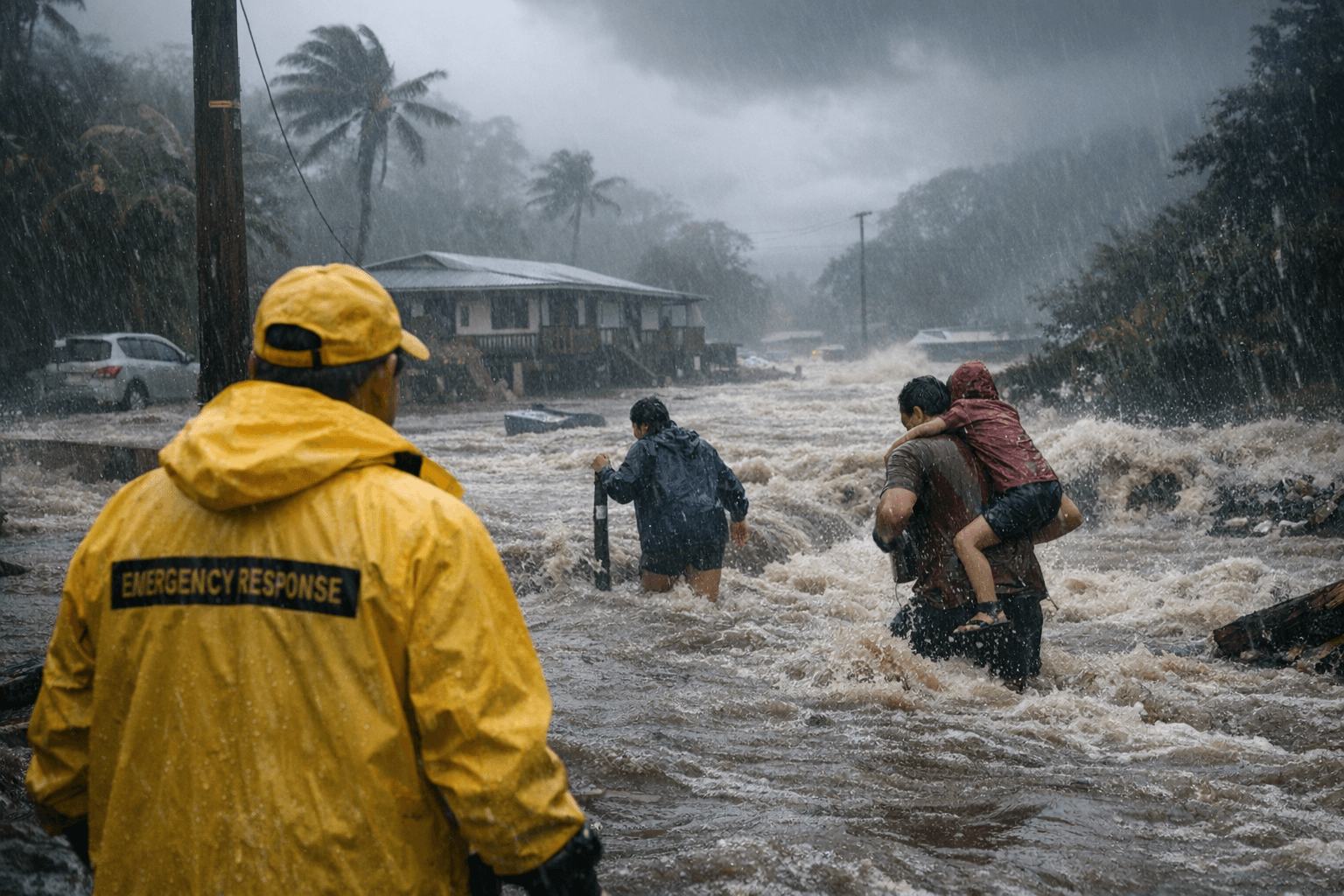
The first Kona low, which generated storm coverage across the island from March 13 through 16, hit the south and west sides hardest. Severe flooding struck Naalehu and Waiohinu, while wind damage across Puna knocked out power to an unknown number of customers still waiting for HECO to restore service. "A lot of our residents are still waiting for power," Alameda said. "HECO is working as fast as they can to restore the electricity."
The west side remains the mayor's sharpest concern heading into the new system. "We just took a big hit, especially on the south side, the west side, and Kau," he said. "The west side, it's so saturated. It's gonna be a concern if this new system takes shape into a larger system." Downed trees and loose debris compound that risk, with Alameda warning that landslides remain possible: "We have loose debris still, very saturated. It still could be a possibility for landslides."
The approaching storm's exact strength is uncertain. "It doesn't look as strong as the previous storm, but who knows?" Alameda said. The county is coordinating with the National Weather Service to track the system as it develops.
Alameda was candid about the toll on county personnel. "Our crews are tired. They've been out for the past three to four days, just preparing with barricades and then the damages that we sustained yesterday, and we're just doing our damage assessments now." He said he instructed his team to stand down briefly before the next round: "I just told everybody, please go get some rest. We may be at it again. We're hoping not, but we've got to be prepared."
The full text of the emergency measures authorized under the proclamation has not been released, leaving open questions about road closures, shelter activations, evacuation orders, and whether the county has requested a state or federal disaster declaration. Alameda's warning to the public was blunt: "Although in some areas on the Big Island, it might look nice, you still got to really be careful because the impacts are still with us.
Know something we missed? Have a correction or additional information?
Submit a Tip