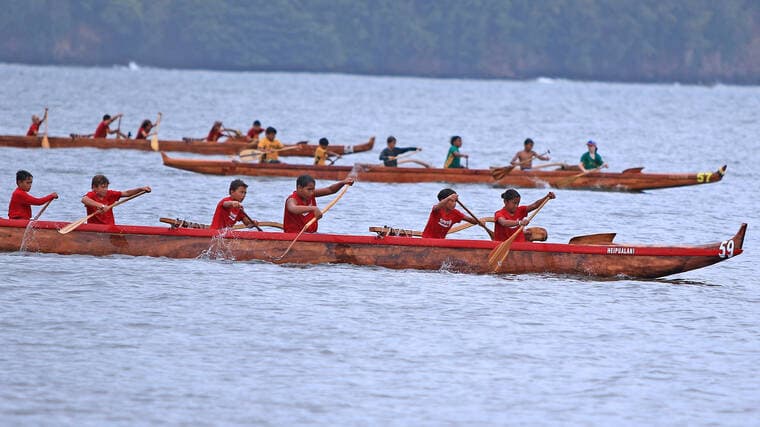
Hawaii Kuauli festival, Food and Wine event headline local calendar roundup
Kona’s summer calendar leans into culture and commerce, with a three-day Hawaii Kuauli festival, a major food and wine preview, and a free marketing workshop.

Hawaii Kuauli brings culture and place to Kona
The Hawaii Kuauli Pacific & Asia Cultural Festival gives Kailua-Kona a three-day anchor event, set for June 5-7 at the King Kamehameha Kona Beach Resort. More than a standard community fair, the festival is tied to the Island of Hawaii’s own history: Hawaii Kuauli is one of the traditional names for the island and honors Chief Hawaii Nui Kuauli, whose legacy is associated with effective land-use management and stewardship.
That deeper framing matters because the festival is built around the values that shape island life now as much as they did in the past. Official festival material says Hawaii Kuauli symbolizes prosperity, stewardship, cultural pride, aloha, sustainability and cultural unity, which puts place and identity at the center of the weekend. The event is designed as a celebration of Pacific and Asian cultural expressions, with food, fashion, live music, a hula hōike, a fireknife competition and cultural workshops all part of the draw.
For local families, students and visitors alike, that mix turns the Kona resort corridor into a cultural showcase with a distinct Big Island sensibility. The Go Hawaii listing names Leināala Fruean as the contact and confirms the resort venue, which gives the festival the kind of clear logistical footing that helps people plan ahead. In a county where residents often balance work, school and travel between districts, a compact event with a strong identity can carry more weight than its calendar slot suggests.
Hawaii Food & Wine Festival points to the island’s food economy
Looking farther ahead, the Hawaii Food & Wine Festival brings a different kind of local payoff, one that is as economic as it is culinary. The 16th annual festival runs Oct. 16-Nov. 8, 2026, across Hawaii Island, Maui and Oahu, with Big Island events planned for Mauna Kea Golf Course and Mauna Kea Beach Hotel. This year’s theme, Traditions and Heritage, is a reminder that the island’s food scene is no longer just about dining out; it is a broader ecosystem linking chefs, growers, ranchers, fishers, wine professionals and mixologists.
The festival says its 2026 lineup will bring together more than 20 global tastemakers, including Michelin-starred chefs, celebrated winemakers, master mixologists and industry experts. That matters locally because high-profile culinary events can create spillover demand well beyond the tasting tents and plated dinners: hotel bookings, transportation, catering, agricultural purchases and media attention all move through the island economy when a festival of this scale lands here. For Big Island producers, the presence of farmers, ranchers and fishers in the festival’s orbit signals a chance to position local ingredients in front of buyers and influencers who shape what gets served far beyond Hawaii County.
The festival’s own history reinforces that connection. It was co-founded in 2011 by James Beard Award-winning chefs Roy Yamaguchi and Alan Wong, and its mission is to showcase Hawaii’s culinary excellence while connecting global talent with local culture and ingredients. That is why the Big Island dates are not just another stop on a multi-island circuit. They help place Hawaii Island’s agricultural story, resort dining and culinary tourism in the same conversation, with Mauna Kea once again serving as a visible stage for that exchange.
A 2025 preview also noted that Alan Wong was set to host the Cuisines of the Sun Golf Classic at Mauna Kea Golf Course, a detail that helps explain why golf-course programming remains part of the island slate. On the Big Island, that kind of venue choice is not incidental. It links tourism, hospitality and food culture in one place, and it shows how the county’s high-end food economy keeps expanding through events that are both social and commercial.
Free marketing workshop and scholarship winners round out the practical side
The most immediately useful item in the roundup may be the free marketing workshop scheduled for June 11, presented by Hawaii Food Hub and Hawaii Commercial Kitchens. The session is aimed at helping participants build a brand, sharpen a message and identify customers, making it especially relevant for the island’s small food businesses, homegrown startups and entrepreneurs trying to move from concept to consistent sales.
Hawaii Commercial Kitchens describes itself as a resource for commercial kitchen facilities and food businesses in Hawaii County, and it says food businesses operating since March 1, 2020 are eligible for free business support and technical assistance. It also offers free workshops and resources for Hawaii food businesses, which gives this June 11 session a practical place inside a broader support network. For anyone trying to get a packaged product, prepared-food business or market-ready brand into circulation, the value is not just in the workshop itself but in the continuing assistance behind it.
The roundup also notes scholarship winners, a small but important reminder that these community calendar items are not only about entertainment or dining. They also reflect the island’s investment in education, workforce development and the next generation of local talent. In a county where opportunities can be spread across districts and industries, those notices matter because they point readers toward both immediate event options and longer-term pathways.
Taken together, the three items show how much of Big Island life runs through a calendar like this one: culture in Kona, culinary tourism on the Kohala Coast and practical business support for people building something of their own. For residents watching the island’s economy and identity evolve at the same time, that is the kind of roundup that still earns a close look.
This article was produced by Prism’s automated news system from verified source data, official records, and press releases, then run through automated quality and moderation checks before publishing. The system is built and supervised by the people who set the standards it runs under. Read our full AI policy.
Did this article answer your question?