Hawaii police officer gets supervision, community service in perjury case
Noah Serrao got four years of supervision and 400 hours of community service after admitting lies tied to an unlawful Hilo Police Station search.
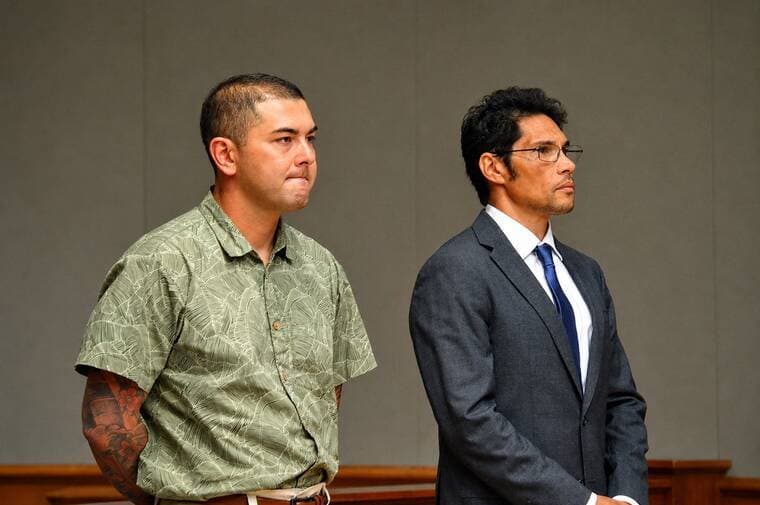
Noah Serrao was sentenced Tuesday to four years of supervision and 400 hours of community service after lying about an unlawful search at the Hilo Police Station.
Serrao entered a no-contest plea on March 17 to perjury, false swearing in official matters and tampering with a government record. The charges grew out of a May 24, 2023 search of an arrestee’s belongings at the Hilo station that the Attorney General’s Office called unconstitutional. Serrao later made false statements about the search in a judicial filing, including a Riverside affidavit, putting sworn court records at the center of the case.

In the companion case, Blaine K. Kenolio, also a six-year Hilo Patrol officer, searched a closed container inside the arrestee’s handbag without a warrant, then sprayed an alcohol solution on it and wiped it down to remove trace evidence of the search. He pleaded no contest in February and was sentenced May 28 to one year of supervision, with deferred acceptance available if he stays out of trouble for a year.
The Hawaii Police Department opened criminal and administrative investigations in 2023 after learning of the incident. Its internal process ended in April 2024 with Serrao suspended for 50 days without pay and Kenolio suspended for 24 days without pay, and both officers were reassigned from patrol while the court cases moved forward. The county’s 2024 legislative disciplinary report also documented the misconduct.
At sentencing before Hilo Circuit Judge Henry Nakamoto, Serrao received deferred acceptance of his plea, so the conviction can be erased if he remains trouble-free during the four-year supervision period. He remained on full-duty status and was allowed to possess and carry a firearm. Deputy Attorney General Kyle Mesa opposed deferred acceptance, arguing the offense mattered because it damaged trust in the criminal justice system.
This article was produced by Prism’s automated news system from verified source data, official records, and press releases, then run through automated quality and moderation checks before publishing. The system is built and supervised by the people who set the standards it runs under. Read our full AI policy.
Did this article answer your question?