Hawaiian Electric launches drone inspections to boost wildfire safety on Hawaii Island
Drone crews are starting a months-long sweep of Hawaii Island power lines to catch flaws before dry brush can feed a fire. Hawaiian Electric says the work will not cut power.
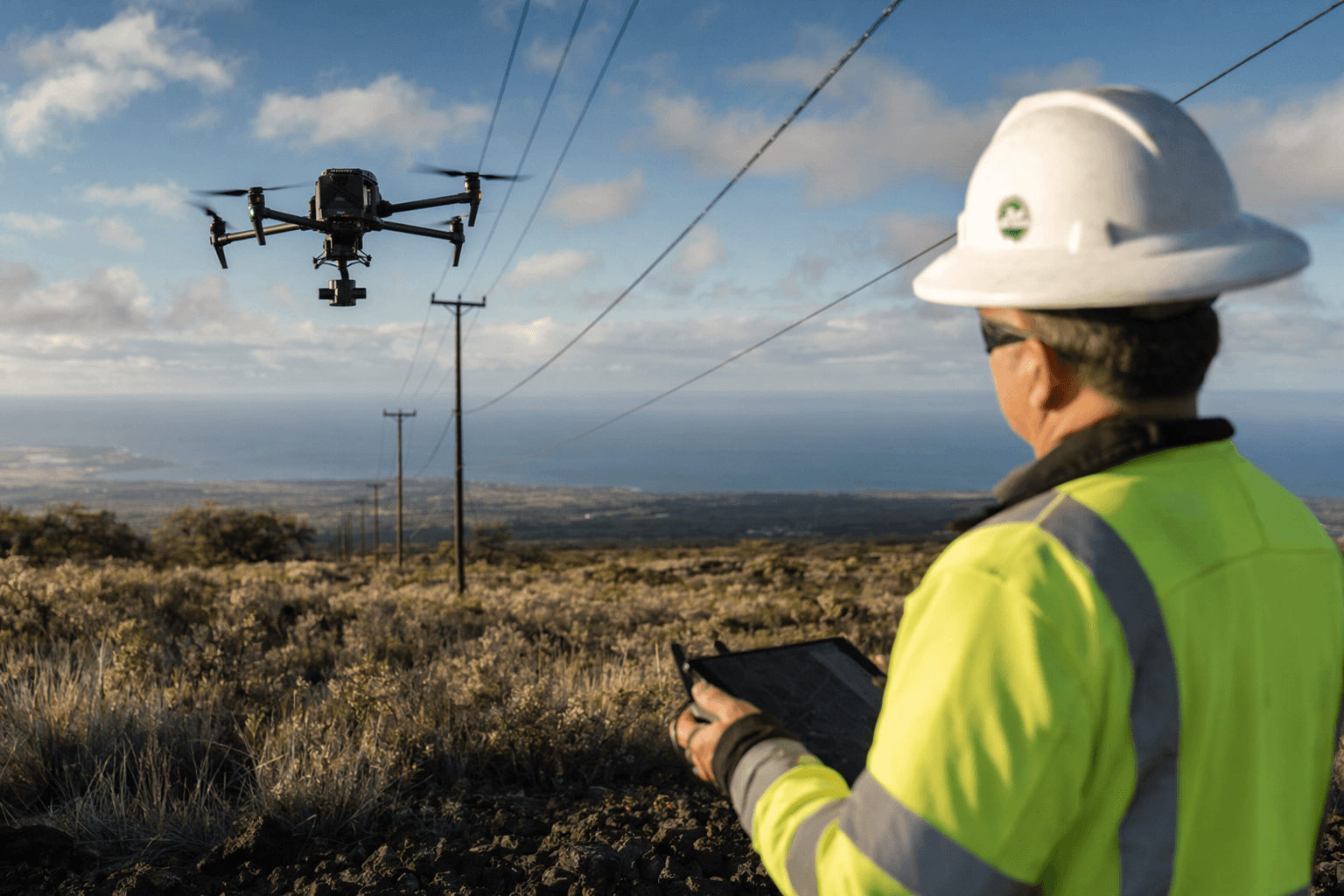
Hawaiian Electric has started using drones over high-risk wildfire areas on Hawaii Island, sending the aircraft to inspect poles and power lines from April through June as the island heads into a drier part of the year. The utility says the work is meant to catch defects before they become ignition points, and it will not interrupt electric service for nearby homes, ranch land or businesses.
The company has hired Cyberhawk to work alongside its own staff, with inspections typically scheduled on weekdays from 7:30 a.m. to 5 p.m., weather permitting. Hawaiian Electric said crews may sometimes need to step onto private property, such as a yard, to reach a utility pole, but no one should ask to enter a home or business. Workers will use Hawaiian Electric or contractor-marked vehicles, and on foot the operator will wear a Cyberhawk hard hat and vest and carry company identification.
Hawaiian Electric said its unmanned aircraft system program follows Federal Aviation Administration rules and includes safety, training, operating and privacy procedures. The company has not said how many poles or miles of line will be covered in the current round, a figure that would show how much of Hawaii Island’s grid is being examined beyond the broader warning that some of the island’s most exposed areas are getting extra attention.
The drone program is part of Hawaiian Electric’s 2025-2027 Wildfire Mitigation Plan, which the Hawaii Public Utilities Commission approved on Dec. 31, 2025. The plan covers Oahu, Hawaii Island, Maui, Molokai and Lānai and pairs drone inspections with grid hardening, vegetation management, situational awareness tools, operational safety measures and public safety power shutoff protocols. The commission said the plan can reasonably be expected to reduce wildfire risk, but it also ordered the utility to improve wildfire risk modeling, timelines and targets, workforce planning, support for vulnerable populations and critical facilities, and monitoring and auditing.
The stakes are higher after the Aug. 8, 2023 Maui wildfires, which killed 102 people and destroyed most of Lahaina. Hawaiian Electric has pointed to that disaster as a reason for expanding drone use after one of its contracted drones was purposely targeted and damaged while inspecting overhead lines on Maui in 2024. Shayna Decker, a company spokesperson, said at the time that the utility had increased drone use as part of its wildfire mitigation efforts.
The timing also reflects conditions on the ground. Heavy rains earlier in 2026 boosted vegetation growth statewide, and forecasters warned of a possible El Niño pattern that could bring drier weather later. A University of Hawaii report has said the state has seen almost a fourfold increase in the total area affected by wildland fires over recent decades, a reminder that lines once seen as routine infrastructure are now part of the island’s fire defense system. Hawaiian Electric said questions about the work on Hawaii Island can be directed to 808-969-6999 on weekdays from 7:30 a.m. to 4 p.m., and Cyberhawk can be reached at 805-298-2694.
This article was produced by Prism’s automated news system from verified source data, official records, and press releases, then run through automated quality and moderation checks before publishing. The system is built and supervised by the people who set the standards it runs under. Read our full AI policy.
Did this article answer your question?