Hawaiian Electric Replaces Poles Jan. 20-21, Kīlauea Avenue Lane Closed
Hawaiian Electric replaced two poles in downtown Hilo, closing the mauka lane of Kīlauea Avenue near Aupuni Street and temporarily restricting parking and traffic.
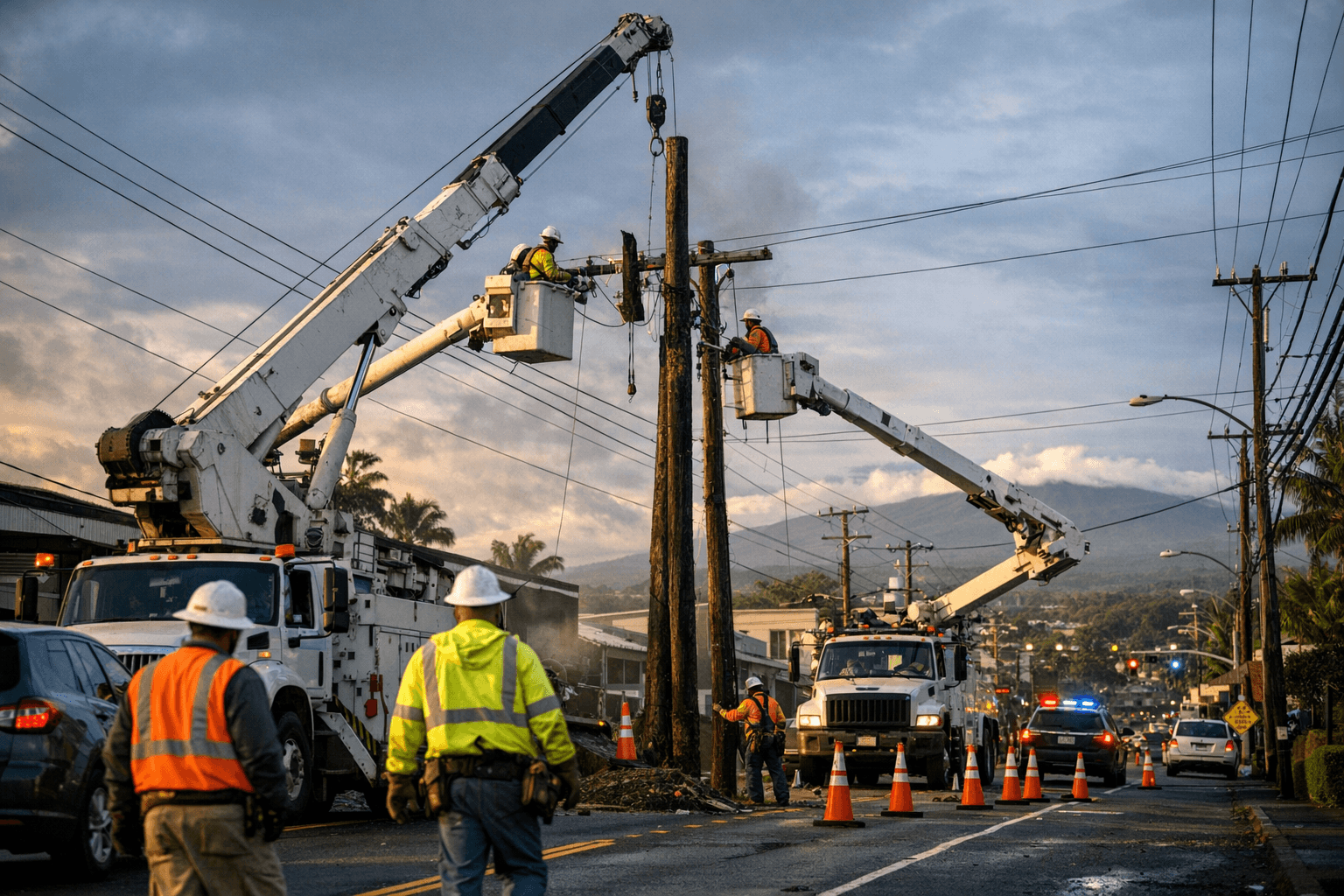
Hawaiian Electric crews replaced two power poles in downtown Hilo, prompting a temporary lane closure and parking restrictions that affected access near the Aupuni Street intersection. The work took place Jan. 20 and 21 and ran each day from 8 a.m. to 2 p.m., during which the mauka lane of Kīlauea Avenue was closed and on-street parking in the immediate area was temporarily limited.
Traffic flaggers were on site to direct vehicles and maintain safety around the work zone. Drivers were encouraged to plan ahead, use alternate routes, and exercise caution when traveling through downtown Hilo while the crews completed the pole replacements. The stoppages were limited in duration, but they created predictable short-term congestion during morning and midday hours in a busy section of town.
The maintenance work is part of routine utility upkeep necessary to maintain reliable electric service. For residents and businesses in downtown Hilo, however, even short closures can disrupt deliveries, customer access, and parking for employees. The closure of the mauka lane near Aupuni Street intersected with a stretch of road that sees steady local traffic, so the county and Hawaiian Electric’s coordination on traffic control was central to keeping the area moving and emergency access open.
This event highlights the balance local officials and regulated utilities must strike between infrastructure maintenance and community impacts. Scheduling work during daylight hours on weekdays minimizes overnight complications but concentrates effects on commerce and commuters. Clear, timely public notice and coordination with downtown stakeholders can reduce friction when planned work affects shared public space.
For civic accountability, residents affected by utility operations can track notices from Hawaiian Electric and raise concerns with county transportation or elected representatives if recurring or poorly coordinated closures become a pattern. Infrastructure decisions and service reliability are part of broader local policy discussions that influence public trust in providers and can factor into community priorities for elected officials.
Short-term, the pole replacements should contribute to more reliable service in the affected circuit. Longer term, the episode serves as a reminder for downtown users to allow extra travel time when routine utility work is scheduled and for decision-makers to keep communication channels open so residents and businesses can prepare for temporary but concentrated disruptions.
This article was produced by Prism’s automated news system from verified source data, official records, and press releases, then run through automated quality and moderation checks before publishing. The system is built and supervised by the people who set the standards it runs under. Read our full AI policy.
Did this article answer your question?