Hilo High graduate Mark Turner builds pro ultimate career with Houston Havoc
From Bayfront soccer fields to the Houston Havoc, Hilo High’s Mark Turner shows how a Big Island endurance base can reach pro ultimate’s biggest stage.
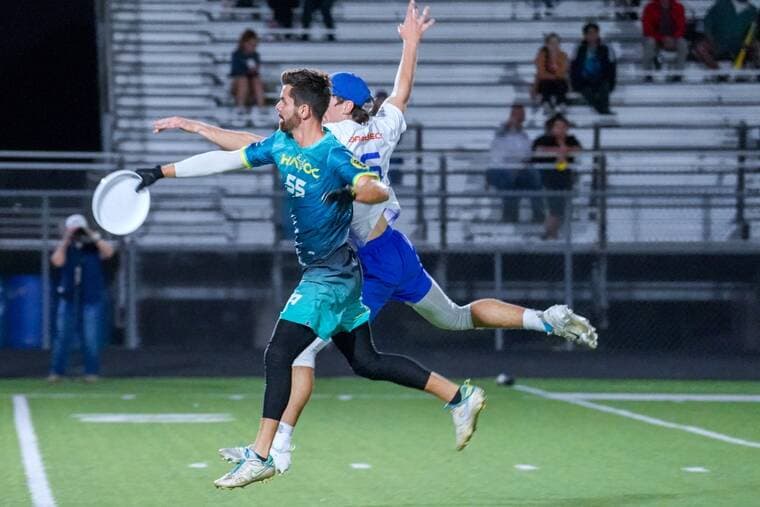
A Hilo path to pro ultimate
Mark Turner’s route into professional ultimate frisbee started on the Big Island, not in a mainland development system. At age 9, he found Hilo’s ultimate community at the Bayfront soccer fields, and that local start now sits at the center of a career that has carried him into the Ultimate Frisbee Association with the Houston Havoc. For Big Island readers, that matters because Turner is not just succeeding far from home. He is doing it with the same mix of speed, stamina, and discipline that Hilo High and BIIF competition have long rewarded.
That foundation was already obvious before he ever picked up a pro disc. Turner, a 2009 Hilo High graduate, was a BIIF champion in both track and cross country, and he still holds the school record in the 1,500 meters. He also wrote that he won the BIIF cross country title in 2008 under coach Bill McMahon, and that he won BIIF track titles in the 1,500 and 3,000 meters. Those results explain why a non-contact, high-mileage sport like ultimate fit so naturally.
Why Hilo High track mattered
Ultimate looks different from track, but Turner’s athletic profile translates cleanly. The sport is played 7-on-7 on a field with end zones, and players cannot run while holding the disc. That means space, timing, and repeated bursts matter as much as raw speed, and endurance is a premium asset over long points and long games. A runner who spent years chasing BIIF titles and holding a school record in the 1,500 meters arrives with a clear advantage.
Turner’s rise also says something larger about the Big Island’s athletic pipeline. Hilo does not produce many pro ultimate players, but it does produce competitors who know how to train, adapt, and keep going when the pace spikes. The Bayfront fields gave Turner an early entry point, Hilo High gave him a competitive framework, and McMahon’s coaching helped shape a runner who could later convert that endurance into a professional team-sport role.
What a hybrid does on the field
Turner’s current role helps explain why he has stood out so quickly in the UFA. He is a hybrid, a position that bridges handlers and cutters by both moving the disc and stretching the field. In practical terms, that means he can help start an offense, keep it moving, and still threaten downfield when space opens up. It is a role built for a player who can think and run at the same time.
That versatility showed up in a big way against Austin Sol on May 2, when Turner posted seven assists, four goals, 333 throwing yards, 376 receiving yards, and a plus/minus of +8. That line was not just productive, it was balanced across nearly every major offensive category. It also earned him a spot on the league’s Honor Roll, where only seven players each week receive the distinction, a sign that his performance was one of the best in the league that round.
Through the available 2026 stats page, Turner had compiled 33 assists, 29 goals, 5 blocks, and 44 plus/minus in regular-season play. That stat profile fits the hybrid label: a player who is not limited to one side of the offense and can influence a game in multiple ways. For a local athlete from a sport-light market, that kind of all-around production is what turns a promising story into a legitimate pro career.
Houston Havoc, a new stage
Turner is in his second season with the Houston Havoc, one of the UFA’s newer franchises. The league announced the Havoc on Dec. 14, 2022 for the 2023 season, placed them in the South Division, and set them up to call AVEVA Stadium home. The stadium opened in 2019 and has an overall capacity of 4,000, giving the club a compact venue that fits the sport’s fast pace and close-up feel.
The Havoc also launched with the Houston Ultimate Community as a stated partner, part of the league’s effort to build the team locally and broaden access to the sport. That detail matters because ultimate has long grown through community fields, pickup networks, and youth participation, not just through big-ticket pro pipelines. Turner’s own history mirrors that model almost exactly: a kid finds the game at Bayfront, keeps running through Hilo High, and eventually ends up on a pro roster in Houston.
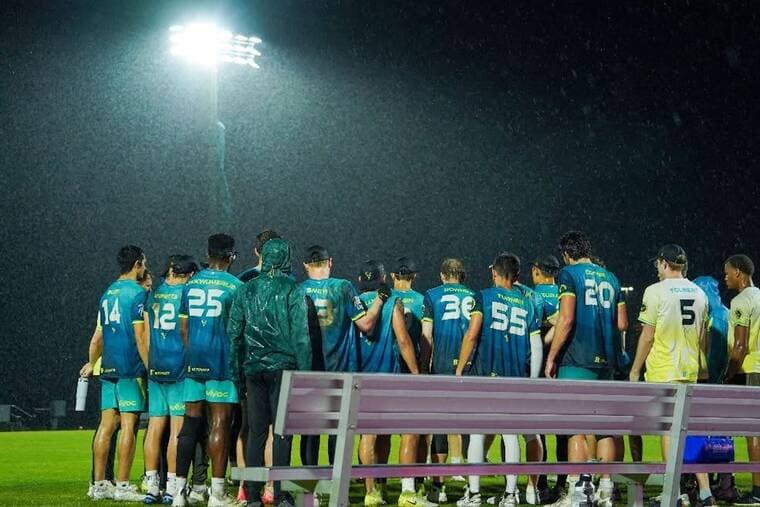
The league itself describes the UFA as the top professional ultimate league in the world, with teams playing across North America from April through August. That schedule creates a wide geographic footprint, but it also makes roster spots hard to earn and even harder to keep. For Turner to move from a local Hilo introduction to a league that spans the continent shows how much his base in Big Island endurance sports has mattered.
A broader Hawaii connection
Turner is not alone in carrying Hawaii into the UFA, but the list is short. He is one of two Hawaii residents in the league, alongside Nicholas Dunbar. Dunbar is rostered with the Los Angeles Aviators, which adds another clear link between the islands and the professional game.
That small number makes Turner’s success more than a personal achievement. It gives younger players in Hilo, Puna, Waimea, Kona, and everywhere in between a more visible route to higher-level competition. The path still requires uncommon speed, conditioning, and consistency, but it is no longer invisible. A Big Island athlete can point to Bayfront soccer fields, Hilo High, BIIF titles, and a pro role in Houston and see a real progression from local fields to national relevance.
Turner’s career is still building, but the outline is already clear. A runner trained in Hilo’s school-sport culture learned how to cover ground, read space, and compete under pressure, then carried those habits into one of the strongest pro ultimate leagues in North America. For the Big Island, that is the real takeaway: overlooked athletes can still emerge from small places, and when they do, they can open the door a little wider for the next one.
This article was produced by Prism’s automated news system from verified source data, official records, and press releases, then run through automated quality and moderation checks before publishing. The system is built and supervised by the people who set the standards it runs under. Read our full AI policy.
Did this article answer your question?