Hilo Zonta award helps UH marine biologist win international STEM honor
A $2,000 Hilo Zonta award helped Danielle Bartz reach a global STEM honor, lifting Hilo Bay shark research onto an international stage.
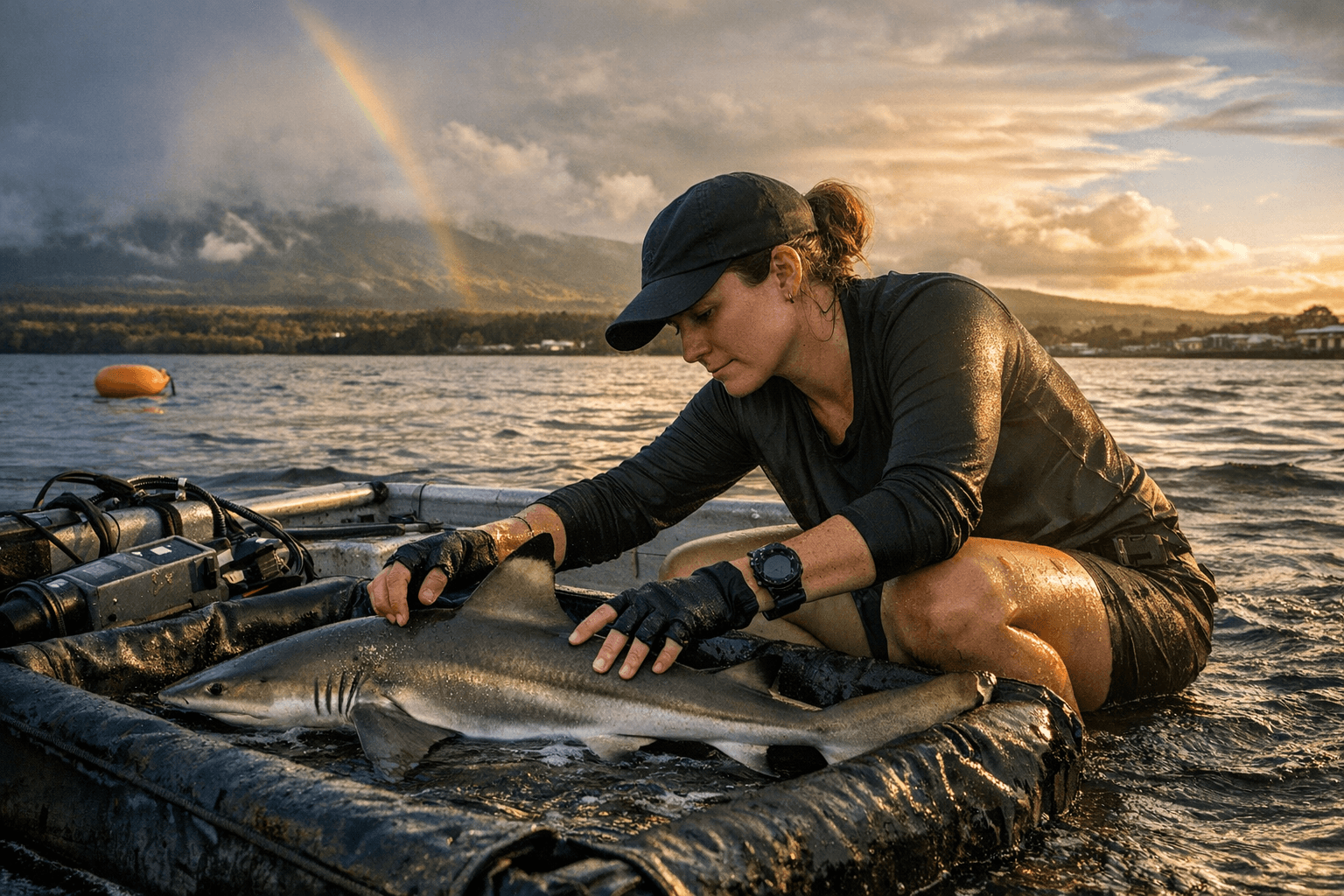
A $2,000 local award from the Zonta Club of Hilo became the first step in a global jump for Danielle Bartz, a marine biology doctorate candidate at the University of Hawaiʻi at Mānoa. Bartz was named one of only 16 women worldwide to receive the Zonta International Women in STEM Award, which carries a US$10,000 prize and a one-year supporting membership in the organization.
The Hilo connection mattered. Zonta International’s award is open to women ages 18 to 35 and recognizes groundbreaking research, pioneering discoveries and other major contributions in STEM. Bartz advanced from the Hilo club’s local recognition to the 2026 international recipient list as the District 9 honoree, representing the United States and nominated by Hilo, USA.
Her work is rooted in Hawaiʻi Island waters, not an abstract lab problem. Bartz has focused on environmental DNA, or eDNA, and on building a low-cost water filtration system that could make marine biodiversity monitoring more accessible in places with fewer resources. University of Hawaiʻi materials describe her research as a blend of cutting-edge eDNA and local ecological knowledge shared by the community to monitor marine biodiversity and assess critical habitats.
That local knowledge has been central to her dissertation, which examines the disappearance of a culturally and ecologically significant shark species in Hawaiʻi. In UH descriptions, Bartz’s project used both scientific methods and indigenous knowledge systems to reconstruct historical abundance patterns of juvenile sharks in Hilo Bay over the last 75 years. The work drew on information from fishers and community members, and an eDNA conference abstract said her team spent more than a year pilot sampling 30 coastal embayments across Hawaiʻi before identifying a need for site-specific optimization.
The Hilo Bay study has already changed the scientific record. UH says Bartz’s research confirmed a shark nursery habitat in Hilo Bay, helping produce the area’s first formal recognition as a vital shark habitat by the International Union for Conservation of Nature. The species commonly discussed in the work are scalloped hammerhead and blacktip sharks.
The project was supported by the Patents2Products Fellowship through the UH Office of Innovation and Commercialization, another reminder that the path from a Big Island institution to international recognition often runs through local investment. For Hilo, the story is bigger than one award: it shows how a community-based research pipeline can carry Hawaiʻi science, culture and stewardship onto a world stage.
This article was produced by Prism’s automated news system from verified source data, official records, and press releases, then run through automated quality and moderation checks before publishing. The system is built and supervised by the people who set the standards it runs under. Read our full AI policy.
Did this article answer your question?