Huge volcanic tephra and rocks rain down on Big Island motorists
Massive lava fountains at Kīlauea lofted tephra and large rocks across Puna and South Hilo, creating hazardous driving and park conditions and prompting temporary closures.
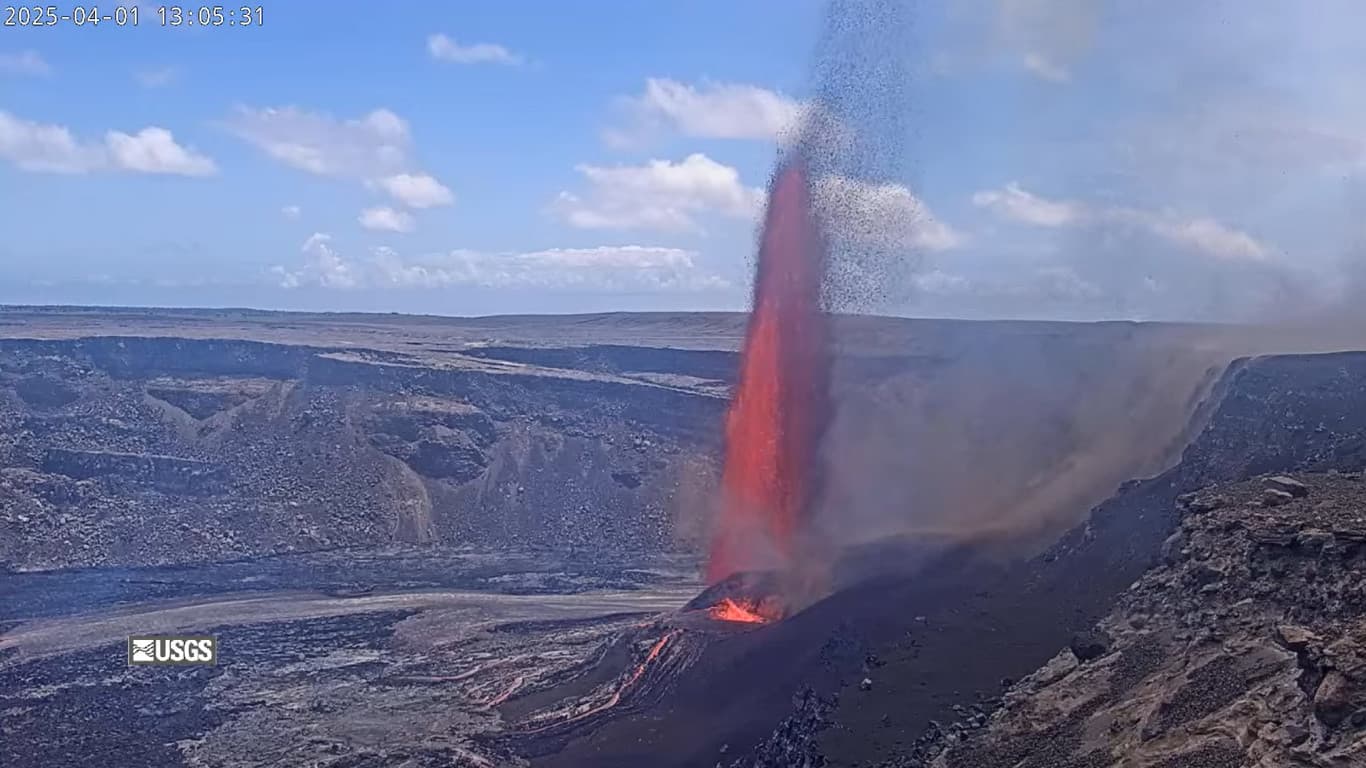
It was a day of raining rocks this past Saturday on the Big Island. Episode 41 of Kīlauea’s summit eruption produced dual lava fountains that sent tephra and large fragments downwind, striking motorists, closing park overlooks and forcing short-term road closures.
Episode 41 began at 11:10 a.m. on January 24, 2026, and lasted just over eight hours, ending at 7:29 p.m. Lava fountaining from both the north and south vents inside Halemaʻumaʻu Crater reached heights of at least 1,475 feet (450 meters). The most intense tephra fall occurred in the hours immediately after the episode began; lighter fallout continued through the evening.
USGS Hawaiian Volcano Observatory scientists explained the mechanics: "Strong updrafts coupled with light winds blowing to the east and north sent lava fragments from the fountains, called tephra, over much of the District of Puna and into South Hilo and the eastern edge of Kaʻū." Big Island Now noted there were no trade winds at ground level and reported that lightweight clasts encountered stronger upper-level winds blowing to the east and northeast, which transported material broadly across the island.
Local impacts were immediate. Tephra and rocks fell onto Highway 11 while vehicles were driving, prompting the County of Hawaiʻi to temporarily close Highway 11 in two locations on either side of the entrance to Hawaiʻi Volcanoes National Park. Park visitors were pelted by falling fragments and rangers temporarily closed public overlooks around the caldera. Cleanup efforts on roadways and roofs have been underway in the days following the event, and Hawaiʻi County Civil Defense Agency resources remain available to affected residents.
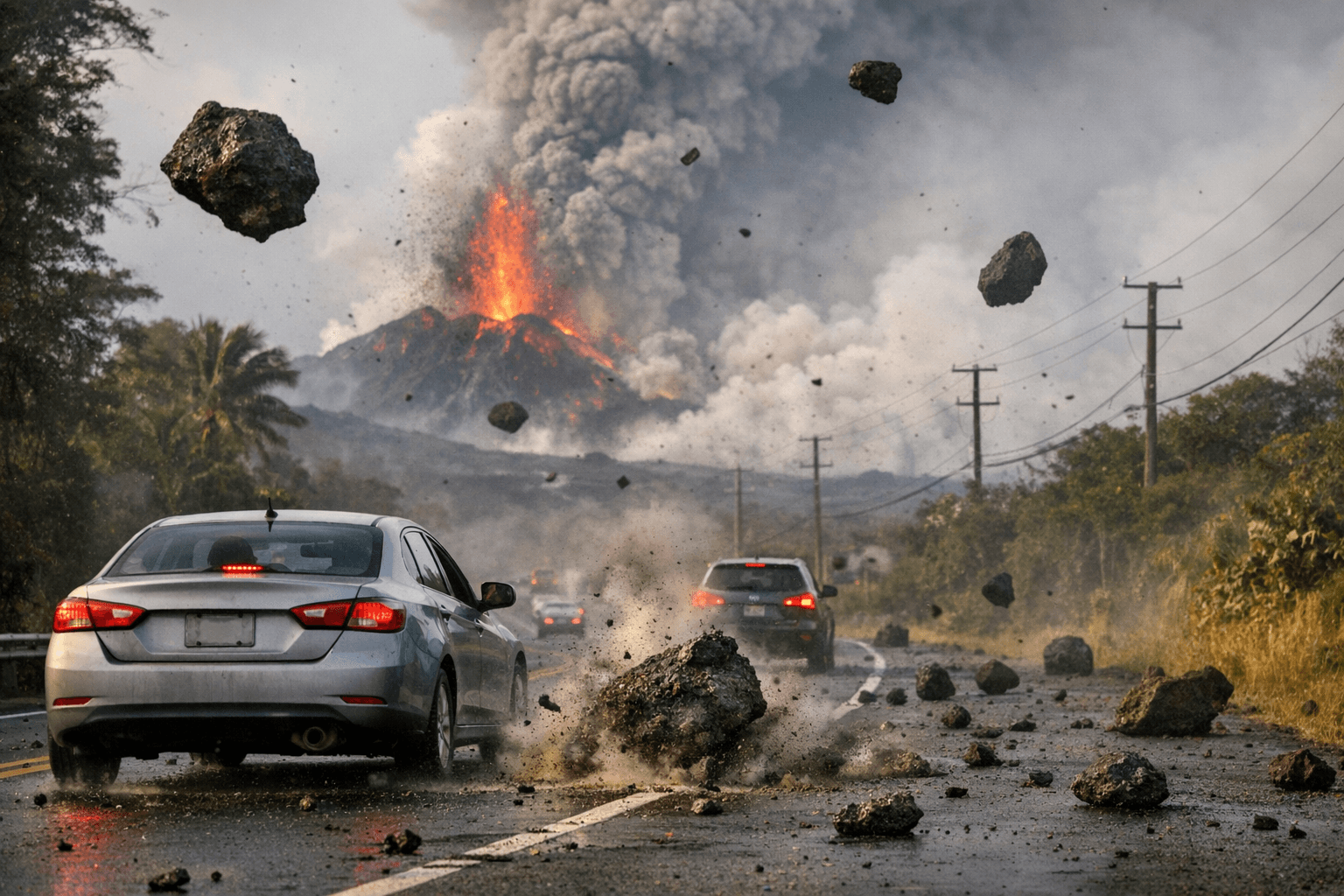
Ground-level video captured by a storm-chasing crew shows rocks striking vehicles and piling up on pavement near the park entrance. StormChasingVideo posted footage on January 25 that drew more than 34,000 views and 1,115 likes on a channel listed with 399,000 subscribers. The uploader termed the damage "Volcano Debris Dents" and described tephra in the video description as: "Tephra is the general term for any fragments of rock, minerals, and volcanic glass blasted into the air during a volcanic eruption, ranging from fine ash to large rocks that fall like bombs that can hurt or kill a person and or wildlife." Newsrooms or agencies seeking to license the footage should contact StormChasingVideo; the video credits list SID: Jen Walton.
The event sits within an ongoing episodic summit eruption that began December 23, 2024. USGS currently lists Kīlauea at Volcano Alert Level WATCH and notes that "summit region inflation since the end of episode 41 indicates that another fountaining episode is possible and could occur between February 9 and 20." Elevated micro-seismicity has continued intermittently in the summit region since the end of episode 40, while Mauna Loa remains at Alert Level NORMAL with no eruptive activity.
For residents and officials, the episode underscores the need for clear road and park protocols, prompt cleanup capacity and up-to-date hazard communication. Expect authorities to monitor inflation and seismic trends closely through early to mid-February and verify road closures and safety guidance with Hawaiʻi County Civil Defense and the National Park before travel near the summit.
This article was produced by Prism’s automated news system from verified source data, official records, and press releases, then run through automated quality and moderation checks before publishing. The system is built and supervised by the people who set the standards it runs under. Read our full AI policy.
Did this article answer your question?