International diplomats tour Maunakea, learn astronomy and Hawaiian protocol
A group of about 50 diplomats saw Maunakea’s summit observatories and Halepōhaku protocol, spotlighting Big Island science and cultural stewardship.
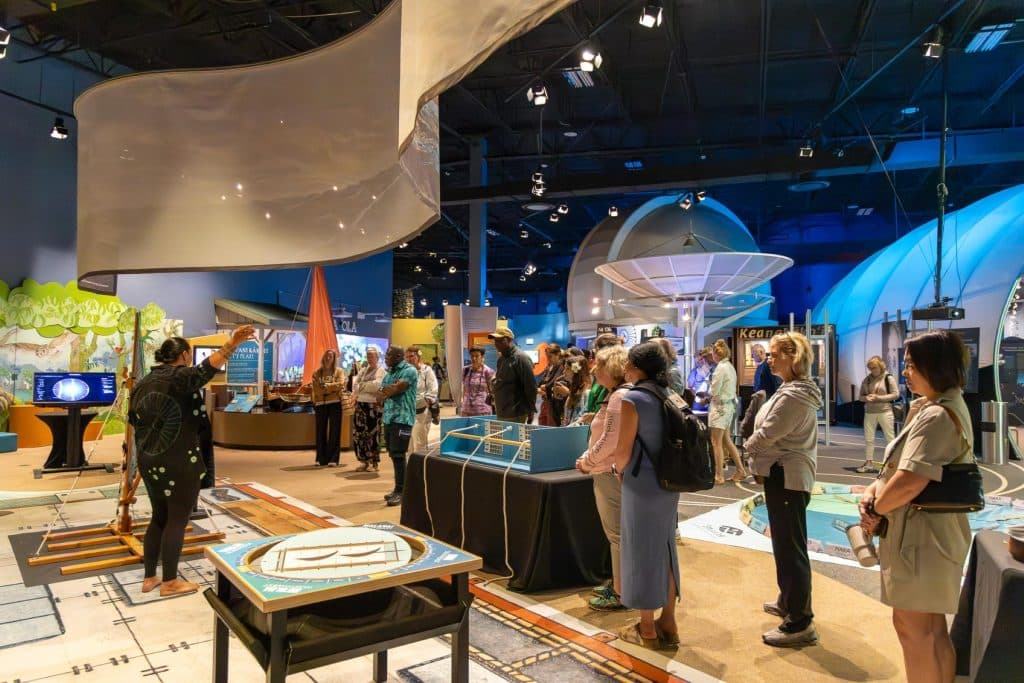
About 50 international diplomats got a close look at Maunakea and the UH Hilo Imiloa Astronomy Center, a visit that put Hawaii Island’s highest observatories and its cultural responsibilities side by side for a global audience.
The tour, coordinated through the U.S. Department of Defense’s annual Defense Attaché Orientation Program, showed visitors how University of Hawaii researchers and international partners are contributing to discoveries that reach far beyond the island, from exoplanets and brown dwarfs to black holes and advanced robotic optics. At the summit, teams from W. M. Keck Observatory, Canada-France-Hawaii Telescope, Subaru Telescope and the NASA Infrared Telescope Facility guided the diplomats through observatory facilities.
The scale of the site underscored why Maunakea remains central to astronomy. University visitor information places the Onizuka Center for International Astronomy Visitor Information Station at 9,200 feet, or 2,804 meters, while the summit rises to 13,796 feet, or 4,205 meters. Maunakea Observatories describes the mountain as a highly productive ground-based astronomy site that spans radio through ultraviolet wavelengths, a scientific reach that has made the summit one of the most important observing locations in the world.

But the message at Halepōhaku was not only about science. Staff from the UH Hilo Center for Maunakea Stewardship welcomed the diplomats with oli and cultural protocol before the tour continued, a reminder that the mountain’s management is shaped by Native Hawaiian values, environmental responsibility and restoration work. The university said the summit visit also included discussion of decommissioning commitments, part of a broader effort to remove old telescope infrastructure and restore the mountain.
That governance shift is already underway. The Mauna Kea Stewardship and Oversight Authority was established under Hawaii law in 2022 and is in the third year of a transition period that ends June 30, 2028, when it is set to assume full management responsibility for Maunakea lands. UH has said it committed in 2023 to remove two telescopes before July 1, 2028. The decommissioning of Hōkū Kea Observatory began in April 2024 and cost about $1 million.

The tour also stopped at Imiloa, where diplomats were introduced to Polynesian wayfinding, knot tying and Hawaiian canoe traditions. Together, the stops framed Maunakea as more than a remote summit of telescopes: it is a place where Hawaii is trying to present world-class astronomy, cultural protocol and stewardship as inseparable parts of the same public promise.
This article was produced by Prism’s automated news system from verified source data, official records, and press releases, then run through automated quality and moderation checks before publishing. The system is built and supervised by the people who set the standards it runs under. Read our full AI policy.
Did this article answer your question?