Kaina Makua to Keynote Toastmasters District 49 Conference
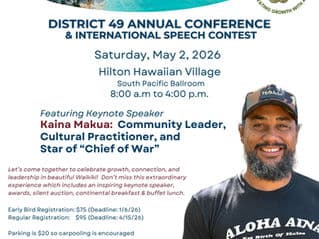
Toastmasters District 49 has named Kauaʻi cultural practitioner and actor Kaina Makua as the keynote speaker for its Annual Conference and International Speech Contest on May 2, 2026, in Honolulu. Local residents will learn what Makua’s background in Hawaiian language education, kalo farming, nonprofit leadership and cultural restoration means for community conversations, public health, and statewide cultural resilience.
1. District 49 Announcement
Toastmasters District 49 publicly announced its Annual Conference and International Speech Contest keynote, signaling an event intended to draw participants across the islands. The district-level announcement establishes a statewide platform for leadership and communication development that can influence civic engagement in Hawaiʻi.
2. Keynote Speaker, Kaina Makua
Kauaʻi cultural practitioner and actor Kaina Makua will deliver the keynote address, bringing both cultural practice and media visibility to the conference. His combined roles position him to speak to issues of cultural revival, community leadership, and storytelling as public practice.
3. Acting Credit, Chief of War
Makua is known for his role in Apple TV+’s “Chief of War,” a credit that raises the visibility of Native Hawaiian narratives in mainstream media. Representation in high-profile productions can expand public awareness of Hawaiian culture and create openings for cultural perspectives in broader policy and health dialogues.
4. Event Date, May 2, 2026
The District 49 Annual Conference and International Speech Contest are scheduled for May 2, 2026, giving organizations and individuals time to plan attendance and travel. Timely scheduling helps community groups integrate the conference into professional development calendars and inter-island programming.
5. Event Location, Honolulu (Oʻahu)
Although hosted on Oʻahu, the conference carries statewide interest, inviting participation from neighbor islands including Big Island County. Location choices matter for accessibility and equity; organizers and community partners should consider transportation, lodging, and virtual access to reduce barriers for rural and neighbor island residents.
6. Annual Conference and International Speech Contest Format
The combined conference and speech contest offer opportunities for public-speaking practice, competitive skill-building, and cross-community networking. These formats can strengthen communication capacity in sectors like public health, education, and nonprofit advocacy.
7. Hawaiian Language Education Work
Makua’s background in Hawaiian language education underscores the role of language revitalization in cultural and mental health outcomes. Language programs support cultural identity, intergenerational transmission of knowledge, and social cohesion, factors linked to resilience and well-being.
8. Kalo Farming Practice
His work in kalo farming connects traditional food systems to contemporary community health and food security conversations. Restoring loʻi (taro patches) and traditional agricultural practices contributes to local food sovereignty, nutritional diversity, and ecological stewardship.
9. Nonprofit Leadership, Kumano I Ke Ala
Makua’s leadership with the nonprofit Kumano I Ke Ala highlights the role of community-based organizations in cultural restoration and civic engagement. Strong nonprofit leadership can mobilize resources, coordinate volunteers, and advocate for policy changes that address structural inequities.
10. Cultural Restoration Work
Active cultural restoration practice integrates place-based knowledge with social well-being, offering models for healing and community-driven development. Such work supports mental health, reconnects people to land, and helps preserve practices that sustain community identity.

11. Statewide Interest and Relevance
Big Island coverage reflects statewide interest in an event on Oʻahu, demonstrating how cultural figures and forums resonate across island communities. Statewide engagement creates cross-island solidarity and can help align policy priorities around culture, health, and education.
12. Big Island Community Significance
For Big Island residents, Makua’s keynote and the conference’s themes can inform local programming in schools, health centers, and cultural organizations. Insights shared at the conference may inspire local partnerships that bolster food systems, language programs, and public-health outreach.
13. Conference Registration Details Included
The announcement included registration and conference details, so residents and organizations have the opportunity to plan participation or send delegates. Transparent registration information is essential for equitable access, organizers should promote scholarships, remote attendance, and sliding-scale options where possible.
14. Networking and Capacity Building
Toastmasters conferences are spaces for networking and leadership development that can strengthen community capacity in communication, advocacy, and crisis response. Enhanced communication skills help community leaders translate cultural knowledge into policy influence and public-health messaging.
15. Public Health Implications
Events that center cultural practitioners can promote social connectedness and mental health, reduce isolation, and amplify culturally congruent health messaging. Integrating cultural leaders into public forums supports trust-building between communities and health systems, improving outreach effectiveness.
16. Policy and Funding Opportunities
A high-profile keynote and statewide attention can be leveraged to advocate for policy support and funding for language revitalization, traditional agriculture, and community-led health initiatives. Policymakers attend to visible community priorities; conferences can be platforms to elevate systemic needs.
17. Social Equity and Accessibility Considerations
Ensuring equitable access, through remote options, scholarships, and transportation assistance, will determine whether neighbor island and low-income community members benefit from the conference. Equity-minded planning aligns with public-health goals by enabling broader participation in knowledge exchange.
18. Community Next Steps and Recommendations
Local organizations should track conference materials and consider partnering with District 49 to bring learnings home, host watch parties, or invite Makua to Big Island events where possible. Coordinated follow-up can translate keynote themes into community-led projects around language, food systems, and health equity.
This article was produced by Prism’s automated news system from verified source data, official records, and press releases, then run through automated quality and moderation checks before publishing. The system is built and supervised by the people who set the standards it runs under. Read our full AI policy.
Did this article answer your question?