Kīlauea Episode 43 Erupts, Lava Fountains Close Park and Highway 11
Lava fountains topping 1,300 feet buried Highway 11 in five inches of tephra during Kīlauea's 43rd eruption episode Monday.
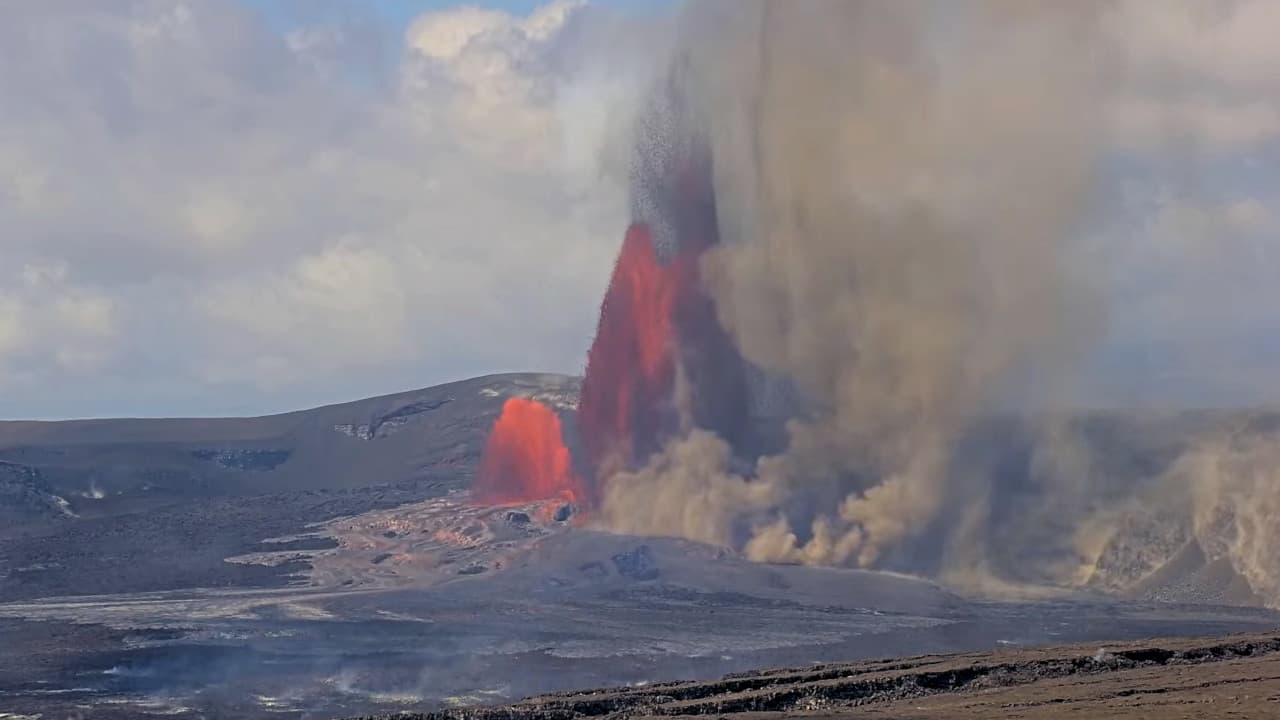
Lava fountains exceeding 1,300 feet tore through the summit of Kīlauea on Tuesday, burying sections of Highway 11 in volcanic debris and forcing the closure of Hawaiʻi Volcanoes National Park's summit area as the volcano's 43rd eruption episode since December 2024 played out over nine hours.
The U.S. Geological Survey Hawaiian Volcano Observatory recorded the start of Episode 43 at 9:17 a.m. HST on March 10, when volcanic tremor doubled and summit tilt accelerated downward. Precursory lava had already been flowing from the north vent since approximately 8:17 a.m., slowly inflating for about an hour before the full episode ignited.
By 10:42 a.m., both the north and south vents inside Halemaʻumaʻu crater had surpassed 1,000 feet. The south fountain climbed to 1,150 feet and the north vent reached 1,000 feet, with maximum heights for both vents reported above 1,300 feet. Earlier that morning, just before 10 a.m., the Observatory's webcam had recorded the north vent at just over 300 feet, capturing the rapid escalation in real time. A newly installed microphone attached to the V1 camera north of the vents picked up the sound of tephra raining down as the episode intensified.
The eruption's plume surpassed 25,000 feet in altitude and dispersed northward, driving voluminous tephra into neighboring communities. The USGS Hawaiian Volcano Observatory reported tephra deposits up to five inches on Highway 11 and in the golf course housing area. Hawaiʻi County Civil Defense announced the closure of Highway 11 between mile markers 24 and 40, citing dangerous conditions from tephra falling on the roadway. The National Weather Service issued an ashfall warning.
At 11:15 a.m., the USGS raised the Volcano Alert Level from WATCH to WARNING and the Aviation Color Code from ORANGE to RED as tephra spread north. KITV reported a Volcano Warning was in effect from 2:48 p.m., with the alert level returning to Volcano Watch at 8:33 p.m. after the eruption subsided.

The Observatory noted that ground-level sensors near the vents showed light and variable winds, "which suggests that volcanic gas emissions and volcanic material may be distributed unpredictably from Halemaʻumaʻu." USGS also warned that if the Episode 43 fountaining coincided with an anticipated storm, tephra fall could affect communities north and east of the park and along Highway 11.
Hawaiʻi County opened a shelter at a district gymnasium for residents and tourists stranded by the road closure or displaced by falling tephra. County spokesperson Tom Callis said there were no people using the shelter soon after it opened. Civil Defense urged sensitive individuals to shelter indoors or leave the area, minimize exposure to glass particles and larger tephra pieces, and disconnect water tank connections from gutters to limit contamination.
Lava flows covered approximately one third of Halemaʻumaʻu's crater floor by the time of midday reporting. The molten rock remained confined within the summit crater and did not threaten homes or structures, though tephra's reach extended well beyond the park boundary. County officials noted that volcanic tephra can irritate eyes, skin, and the respiratory system and poses particular risk to the water catchment systems common across the Big Island.
Episode 43 ended at approximately 6:21 p.m. HST, lasting roughly nine hours. It is the latest chapter in an eruption sequence that began December 23, 2024, with most individual episodes producing fountaining for a day or less. The previous episode, Episode 42, ended February 15 at 11:38 p.m. after nearly 10 hours of continuous fountaining.
Know something we missed? Have a correction or additional information?
Submit a Tip