Kohala High Students Revive FFA Chapter, Earn State and National Recognition
Kohala High's 27-member FFA chapter placed top 10 nationally against 70,000 competitors, built by an alumnus teacher who returned to give students what he never had.
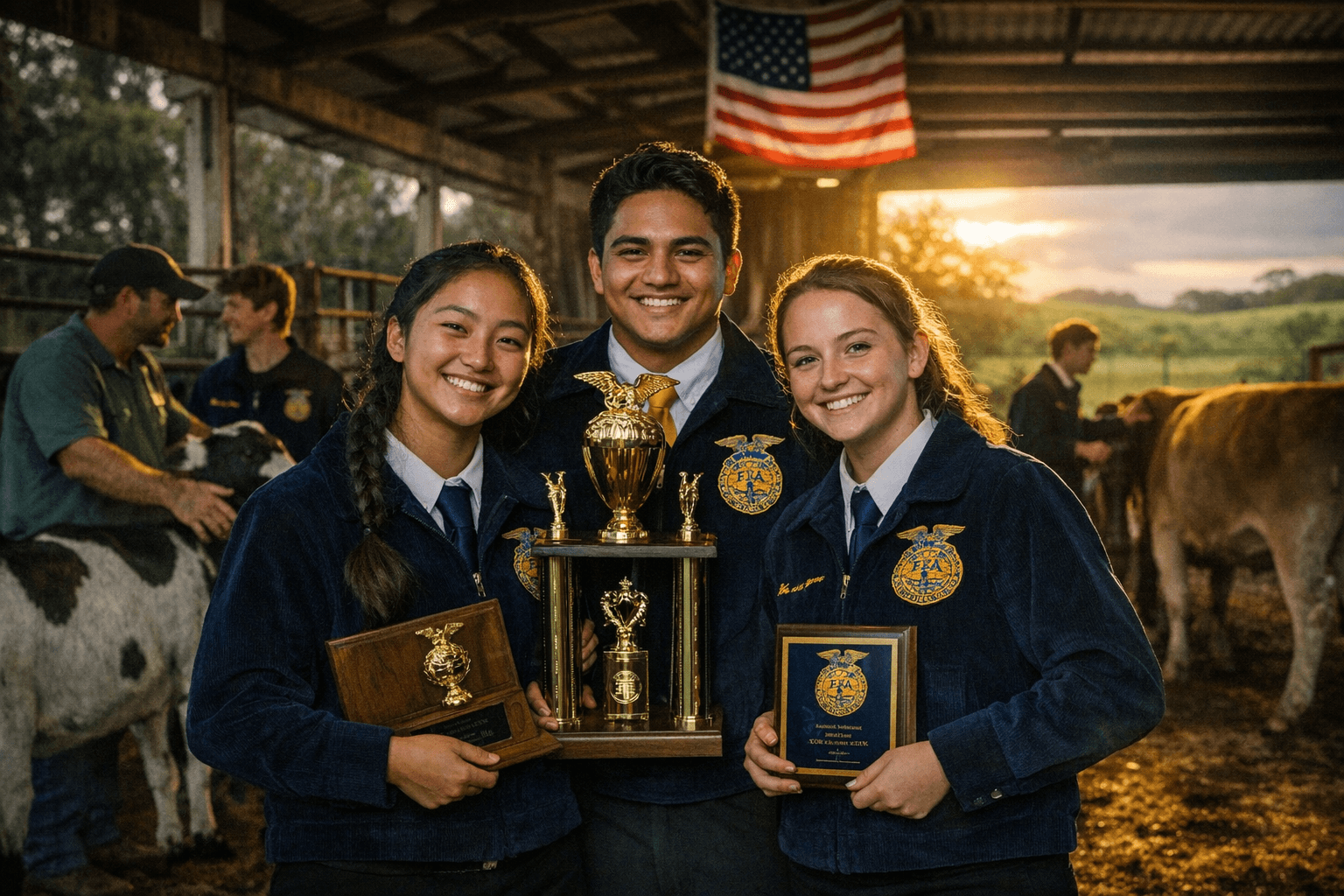
Against a field of 70,000 students at the National Future Farmers of America Convention and Expo in Indiana last October, a team from Kapaau's Kohala High School finished in the top 10 for horse evaluation, a result that would have been unthinkable a decade ago: the school had no FFA chapter at all.
Sophomore Daywakiha'a Kawe was among the students who made that finish possible. She spent eight hours in an arena evaluating eight different horses across categories including appearance and horsemanship, then presented her findings to a panel of judges. That kind of sustained, technical focus is exactly what natural resources teacher Dean Snelling had in mind when he launched the chapter six years ago.
Snelling, a Kohala High alumnus, returned to teach at his old school and found it without the agricultural program he believed North Kohala students deserved. He built the FFA chapter from the ground up. Today it has 27 members and is recognized as one of the largest chapters in the state of Hawai'i, operating within Kohala High's natural resources career pathway alongside three others: construction, culinary, and nursing.
The national appearance in Indiana was not the chapter's only measure of growth. On Feb. 26, students competed at the 2026 Hawai'i FFA state event at Konawaena High School and placed in several categories, including agricultural demonstrations built around chicken processing and calamansi pickling, a Filipino fermentation technique that transforms the calamansi fruit into a savory-sour condiment. The breadth of those demonstrations reflects Snelling's approach: students at the school farm learn hands-on skills tied directly to the food systems and cultural practices of Hawai'i Island.
That connection matters in a place like North Kohala, where small farms and ranches depend on workers who understand both the land and the business of agriculture. The FFA curriculum covers animal husbandry, plant science, and agribusiness, giving students a foundation that local employers recognize. Chicken processing, for example, is not a classroom abstraction; Kohala High students practice it at Honomaka'u Farms, one of the community partners that provides mentorship, land access, and real-world context the school alone could not supply.
Snelling's chapter has grown in part because of Hawai'i's broader push to revitalize career and technology education in public schools, with many campuses now building structured pathways designed to produce graduates ready for local industries rather than students chasing opportunities on the mainland. For Kohala, with its historic ties to sugar cane agriculture and its ongoing ranching economy, an FFA chapter anchored at the school is a direct pipeline into that workforce.
With the state competition now complete and the national results already on the board, attention turns to whether district support, including land access, seed funding, or expanded curriculum resources, can scale what Snelling has built. The chapter's trajectory over six years suggests the demand is there; the question is whether the infrastructure will follow.
This article was produced by Prism’s automated news system from verified source data, official records, and press releases, then run through automated quality and moderation checks before publishing. The system is built and supervised by the people who set the standards it runs under. Read our full AI policy.
Did this article answer your question?