Kona Farmers Rebuild After Back-to-Back Storms Uproot Trees, Reshape Land
Greenwell Farms, 176 years old and closed until further notice, tallies $10 million in storm losses as Kona farms dig out from two kona lows and wait on state grants due this week.
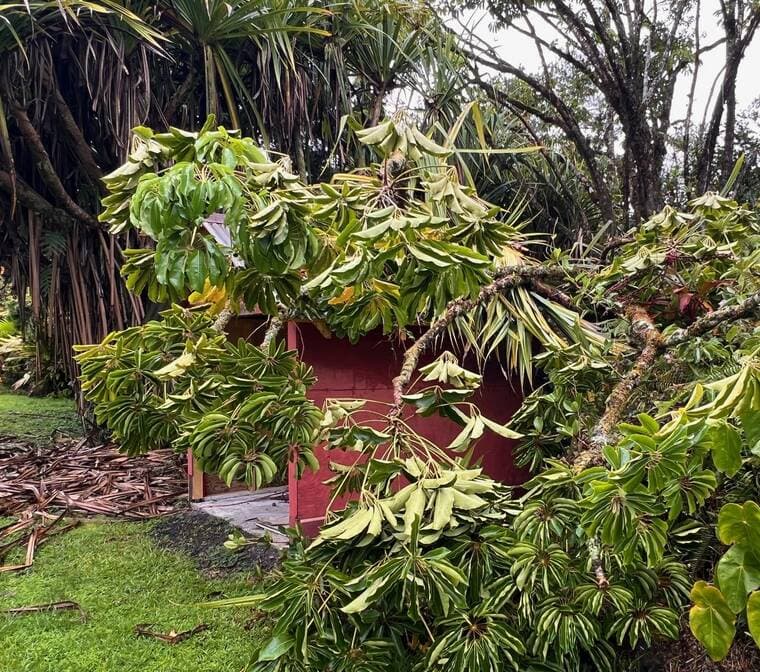
Greenwell Farms, the 176-year-old coffee operation in Kealakekua, is closed until further notice. Floodwaters from the two back-to-back kona low storms that struck the island in March carved three separate ditches through the farm's coffee land below Konawaena High School, destroyed 24,000 nursery trees, wiped out roughly 20 percent of the crop, and rendered owner Tom Greenwell's on-property home unlivable under a layer of silt. Greenwell estimates his total agricultural damage and lost revenue at $10 million, with another $1 million in personal losses. He and his crews spent a week doing nothing but hauling trash: pipes, cans, and a stranger's refrigerator that washed onto the property from somewhere uphill.
That single farm anchors what has become a statewide agricultural crisis. Across Hawaii, more than 250 farms have reported losses totaling at least $10.5 million through Agriculture Stewardship Hawaii's storm damage tracking dashboard, with more than 1,000 acres affected and the figure still rising. Total statewide damage from the two systems has been estimated at over $1 billion.
In the hills above Kona, the Perata family of Earthly Delights Farm is doing a different kind of accounting. The storms opened a new mauka-to-makai channel across their property, sending a river of mud and debris through the farm and pulling macadamia nut trees out of rain-saturated soil. Banana stands toppled in the wind. And buried under the flowing mud: Ms. Peep, the farm's turkey hen, sitting on 11 eggs. Bonnie Perata dug them all out. Ms. Peep is back on her nest.
The Peratas have already begun mitigation: cleared the new channel, repositioned stone and rock barriers along flood paths, and planted woody border plants to hold soil against the next heavy rain. Their longer-term thinking has turned to rethinking the farm's drainage layout and establishing windbreaks sized for the kind of sustained wind and rain events that kona lows bring. Shifting planting schedules to account for damaged soils is also part of the calculus.
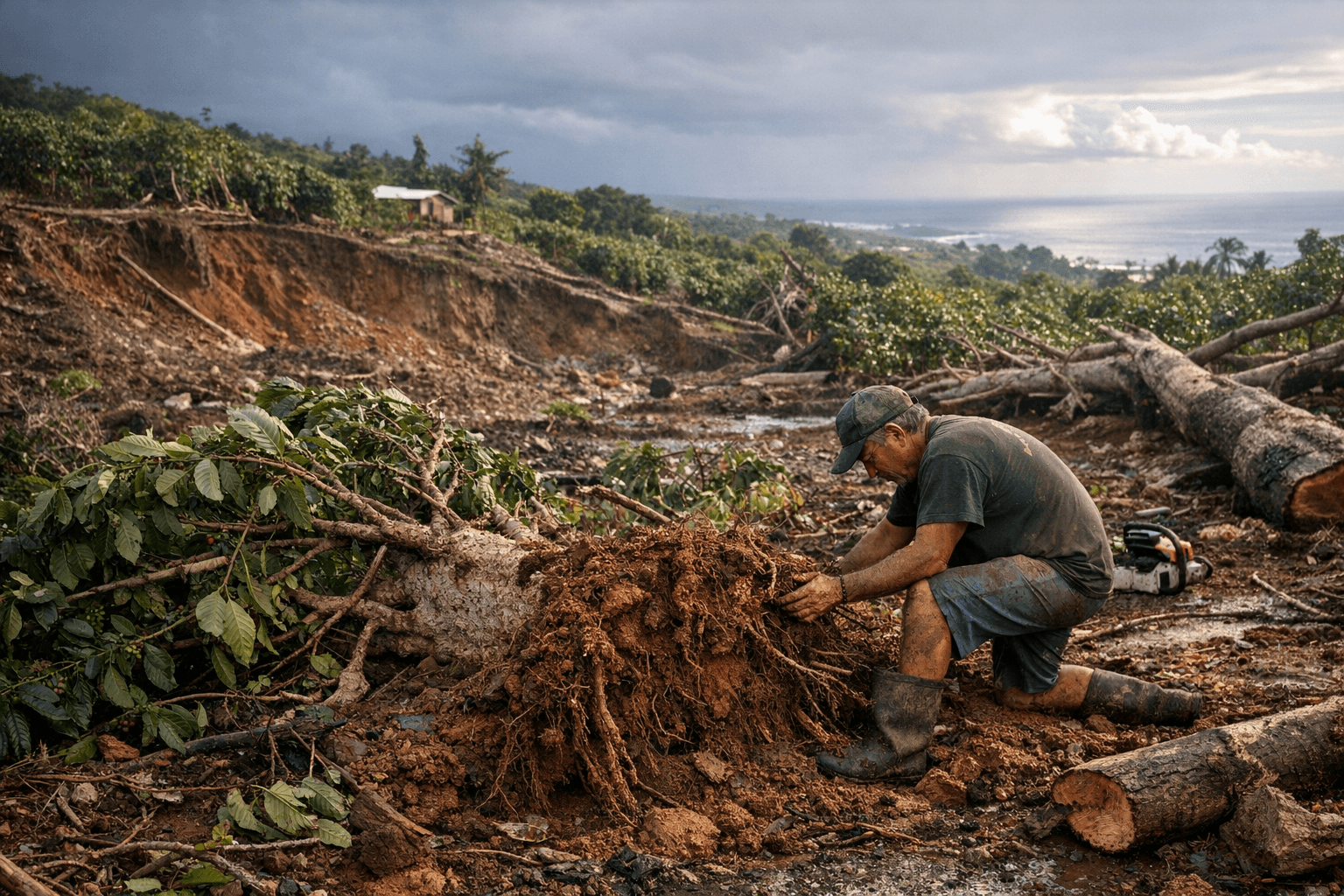
That phased thinking reflects a harder financial reality. For farms that grow coffee, macadamia nuts, and tropical fruit, the cash-flow damage runs well past cleanup. Mature perennial trees that are uprooted or badly damaged can take multiple seasons to return to full production, compressing revenue across several harvest cycles. Most Kona coast operations are small-to-medium family farms with limited insurance and thin reserves, and every replanting decision gets weighed against available labor and whatever assistance arrives.
Here is what is available now. The state Department of Agriculture and Biosecurity opened applications March 24 for an Emergency Farmer Relief Program offering one-time $1,500 grants to farms, ranches, and agricultural businesses affected by the two storms. A total of $500,000 was authorized, with awards expected this week. Farmers with questions can email dab.efr@hawaii.gov; those without reliable internet can call the Governor's Office of Recovery and Resiliency at 808-586-0034. The department's Board of Agriculture is also considering emergency agricultural loans of up to $100,000 at 3 percent interest; the Agricultural Loan Division can be reached at 808-973-9460 or dab.agloan@hawaii.gov. The Hawaii Agricultural Foundation and the Hawaii Farm Bureau Federation have jointly launched a Hawaii Farmers Disaster Relief Fund with a broader community fundraising push.
Volunteer crews and local extension services are already on the ground helping clear debris. For farms measured in decades and trees measured in years, that neighbor-by-neighbor recovery may ultimately outlast any single grant cycle.
This article was produced by Prism’s automated news system from verified source data, official records, and press releases, then run through automated quality and moderation checks before publishing. The system is built and supervised by the people who set the standards it runs under. Read our full AI policy.
Did this article answer your question?