Kona Palisades gets free green waste drop-off to fight beetles
Kona Palisades got free green waste drop-off at Lokahi Makai Park as crews try to starve CRB of breeding material and protect palms, farms and nearby landscapes.
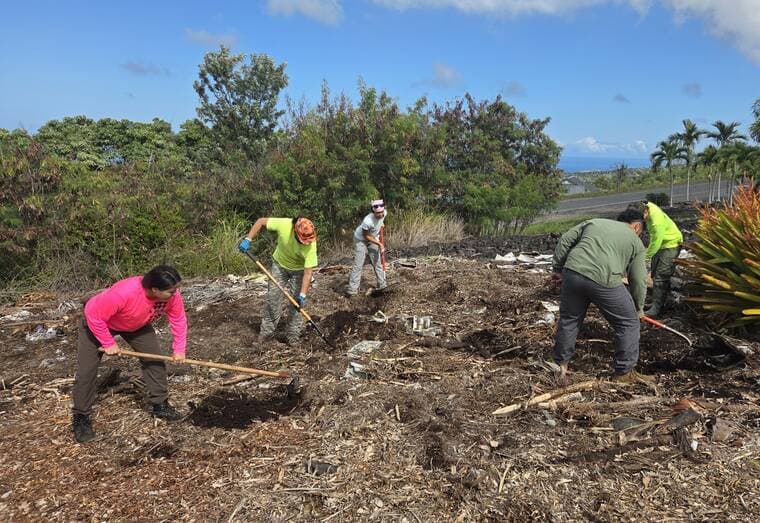
Free green waste bins sat at Lokahi Makai Park off Maheu Circle as Kona Palisades residents dropped off slash to help cut down coconut rhinoceros beetle breeding sites. The free disposal ran from June 26 through Saturday and folded wildfire cleanup into the island’s latest CRB push.
CRB does most of its damage out of sight. The beetle spends most of its life in compost piles, mulch and decaying stumps, where females lay eggs and larvae develop. Adults feed only briefly in palms before moving on, but not before they can scar and weaken trees. The pest also threatens native hala and the endangered loulu, along with taro, banana, breadfruit, papaya, pineapple, date palms and sugarcane. In heavy infestations, adults have even been found on mango trees.

Hawaii Island’s detections have already spread beyond the first discovery site. The Hawaii Department of Agriculture logged the first island detection in Waikoloa Village on Oct. 11, 2023. BIISC’s July 2025 update put the first beetles found outside Waikoloa at four adults in Kona in March 2025. A survey at Keāhole Agricultural Park last July found two active breeding sites, 110 late-stage larvae and three adults, and BIISC’s July 2025 update put crews’ findings at about 20 adults per month along with larvae.
State and county officials have tightened containment as the problem has widened. Mayor Kimo Alameda and the Hawaii Department of Agriculture issued a 90-day voluntary stop-movement order on CRB host material in West Hawaii from July 1 through Sept. 30, 2025, covering areas with detections in the previous six months. In August and September, crews fumigated and hauled away 144 tons of potential breeding material from a nursery at Keāhole Agricultural Park.
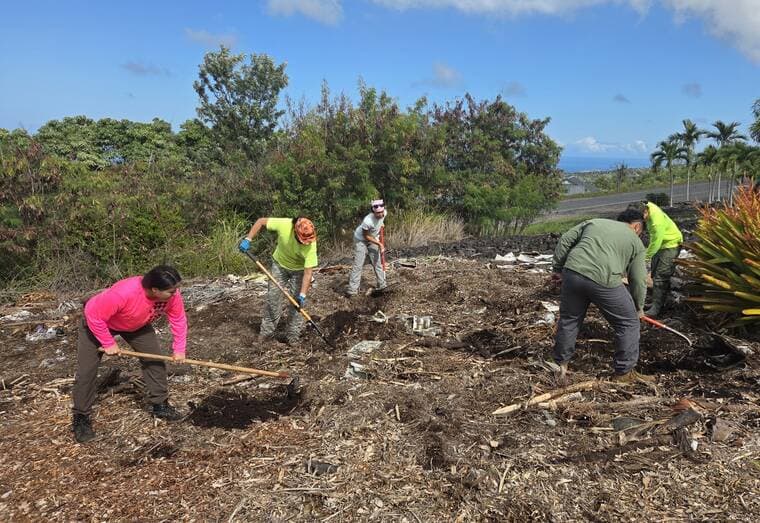
The broader CRB program began after the beetle was first detected on Oahu in 2013 and now runs through the University of Hawaii under an incident command system. On Hawaii Island, officials have also been treating palms at Ellison Onizuka Kona International Airport, while UH researchers advanced virus-based control work in January and directed about $1.36 million to a project in May.
This article was produced by Prism’s automated news system from verified source data, official records, and press releases, then run through automated quality and moderation checks before publishing. The system is built and supervised by the people who set the standards it runs under. Read our full AI policy.
Did this article answer your question?