Kona police use keiki bowling to build youth relationships
Kona police are turning bowling lanes and beach cleanups into youth outreach, but the real test is whether the effort builds trust beyond turnout counts.
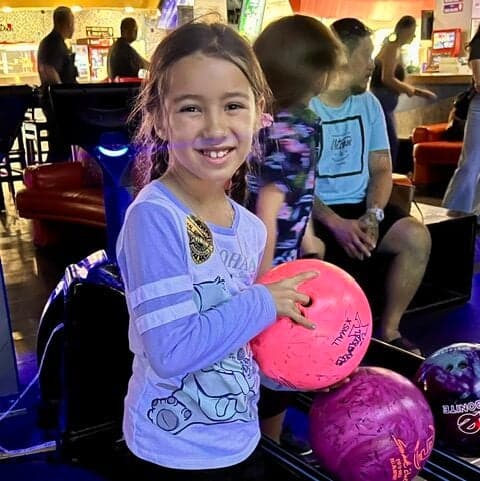
A free game card and a few frames of bowling may not sound like public-safety strategy, but that is exactly where Kona police are putting some of their trust-building work. At KBXtreme in Kailua-Kona, 20 children joined the department’s first annual keiki bowling event on May 8, 2026, and the top three bowlers were recognized. A separate cleanup at Old Airport Recreation Area turned litter pickup into a scavenger hunt, with 15 volunteers collecting five bags and five buckets of marine debris.
Bowling as an entry point, not just entertainment
The bowling event says a lot about how the Kona Community Policing Section wants to be seen by island youth. Sergeant Wyattlane Nahale described it as a new way to connect with kids outside the department’s usual sports programming and to build a positive relationship between officers and young people on Hawaii Island. The format matters: bowling is structured enough to create interaction, but casual enough to lower the temperature that often surrounds police contact.
The department also handed out a free game card, which turns the outing into more than a symbolic appearance. That kind of small incentive helps explain who the program is trying to reach: keiki and families who may not otherwise show up for a police-sponsored event, especially one that is not tied to a classroom, a crisis, or a disciplinary setting. The top-three recognition gave the morning a competitive edge, but the bigger value was in the setting itself, where officers and children shared time in a neutral space rather than across a desk or after a call for service.
A cleanup designed like a game
The beach effort at Old Airport Recreation Area in Kailua-Kona took a similar approach. Held on May 16, it drew 15 volunteers who gathered five bags and five buckets of litter and marine debris. Participants were asked to hunt for bottles, straws, food wrappers, fishing line and aluminum cans, turning a routine cleanup into something closer to a civic scavenger hunt.
That design is not accidental. Cleanup events can feel like chores, especially for children, but adding a search element gives families a reason to stay engaged and gives police a chance to be present in one of Kona’s most heavily used coastal public spaces. Old Airport Recreation Area is not just a backdrop; it is a place where local residents see the daily consequences of trash, recreation pressure and shared responsibility for shoreline stewardship. In that setting, police are not enforcing a rule so much as modeling one: public spaces stay usable when people take ownership of them.
What the department is trying to solve
The common thread between bowling lanes, beach cleanups and school-based programming is not recreation for its own sake. It is contact. The Kona Community Policing Section appears to be using low-pressure events to reach children, parents and volunteers before those people ever need help from law enforcement in a more formal setting. That is a different kind of public-safety investment than patrols or arrests, and it is designed for a place like West Hawaii, where familiarity can shape whether residents call, cooperate or stay distant.

The department’s use of HI-PAL youth sports programming fits the same pattern. Sports, cleanup activities and informal public gatherings all create repeated contact between officers and residents, especially keiki. The underlying theory is simple: trust is easier to build around a game, a cleanup bag or a cup of coffee than it is in the aftermath of an incident. Coffee With a Cop events in Kona show that the department has been using that formula with adults as well, not only with children.
DARE still has a place in the mix
The outreach strategy also connects to DARE programming, which remains part of the department’s youth-facing work. The roundup references a training scenario demonstrated in front of children, suggesting that prevention messaging is still being folded into hands-on community events rather than kept behind classroom walls. That matters because the police are not just trying to show up; they are trying to shape how young people understand law enforcement before attitudes harden.
The broader DARE history on the Big Island gives that effort some scale. Hawaii Police Department and DARE Hawaii held their first DARE Day celebration since 2019 in 2024, recognizing 500 West Hawaii 5th- and 6th-grade student graduates. Back in 2008, about 1,000 elementary and middle school students on the Big Island took the DARE pledge. Those numbers suggest that the department has long viewed school-based prevention as a core part of community policing, not a side project.
Why the scale matters
Measured against islandwide crime problems, these events are small. Twenty children at a bowling alley and 15 volunteers at a beach cleanup do not tell you whether theft is falling, whether traffic deaths are down or whether neighborhood trust has improved. What they do show is where the department is placing its time: in repeated, relationship-driven contact with residents who are still young enough to form lasting impressions.
That is where the accountability question lives. The value of these events is not whether they look positive in a photo; it is whether they produce a meaningful public-safety dividend over time. If a child who bowls with an officer later feels comfortable asking for help, if a family that cleans up Old Airport sees itself as a caretaker of the shoreline, or if a student who hears DARE messaging remembers it during a hard decision, then the program has moved beyond symbolism.
The roundup also points to an upcoming poke contest, another sign that the department is leaning on familiar community-centered settings as part of its outreach mix. In Kona, that approach appears to be less about a single event than about steadily stacking small, positive encounters. The public-safety test is whether those encounters add up to something residents can feel in daily life: more trust, more cooperation and a police presence that is known long before it is needed.
This article was produced by Prism’s automated news system from verified source data, official records, and press releases, then run through automated quality and moderation checks before publishing. The system is built and supervised by the people who set the standards it runs under. Read our full AI policy.
Did this article answer your question?