Mauna Kea telescope helps UH scientists date rare brown dwarf system
Mauna Kea astronomers found a way to date a rare brown dwarf system, giving UH researchers a better clock for objects that cool and fade over time.

A Mauna Kea telescope has given University of Hawaii scientists a cleaner way to measure the age of a rare brown dwarf system, a result that strengthens the Big Island observatory’s role in science with reach far beyond Hawaii Island.
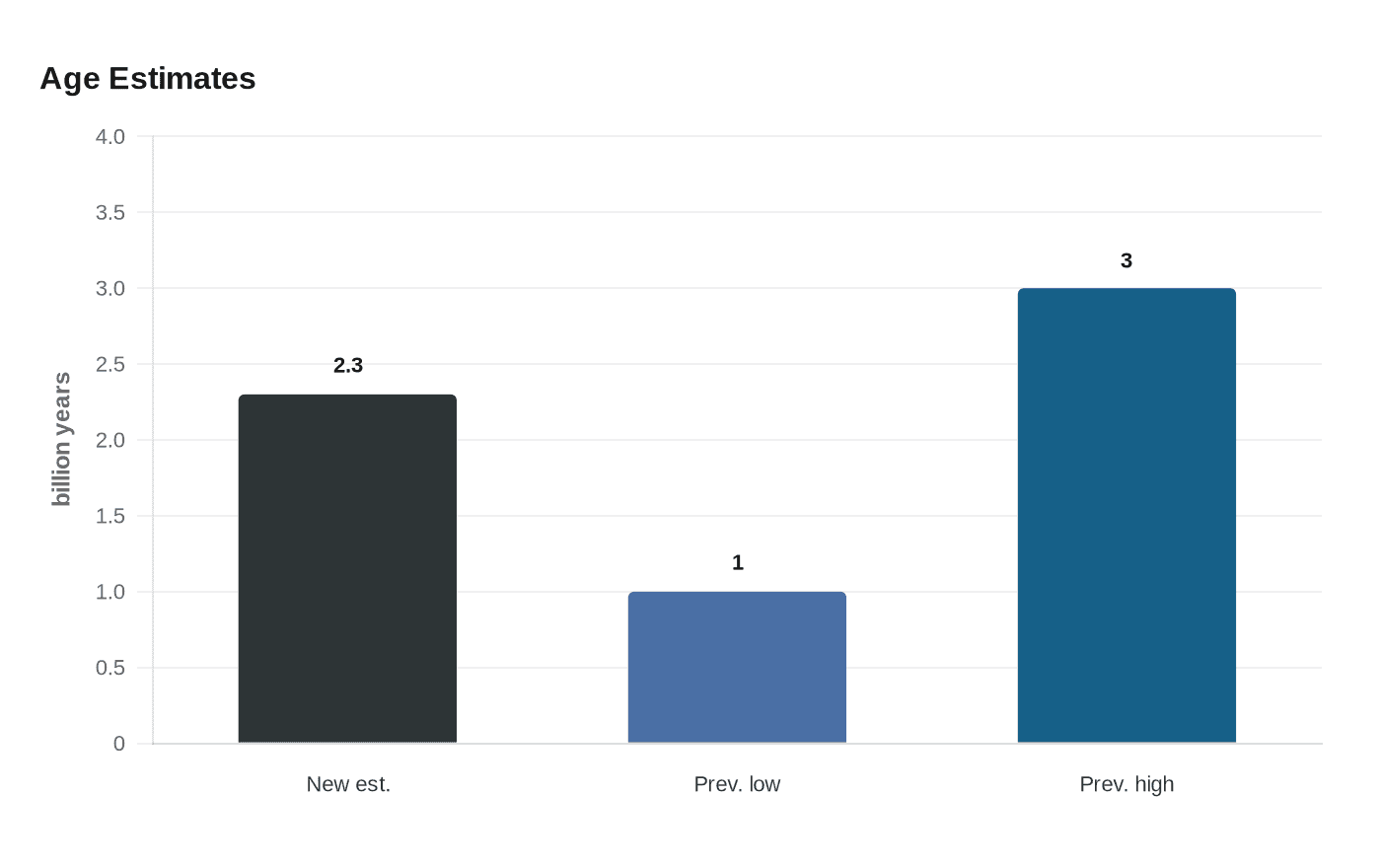
Using the W. M. Keck Observatory and its Keck Planet Finder, a UH-led team studied HR 7672, a nearby system that pairs a Sun-like star with the faint brown dwarf companion HR 7672B. By tracking tiny five-minute pulsations in the star’s light, the researchers estimated the system’s age at about 2.3 billion years, with 18% uncertainty. Because the star and brown dwarf formed together, that age also applies to the companion and gives astronomers a much firmer benchmark for testing brown dwarf models.
That matters because brown dwarfs sit in the gray area between planets and stars. They do not sustain the long-term energy-producing reactions that power stars, so they slowly cool and fade as they age. Yaguang Li, a University of Hawaii Institute for Astronomy fellow involved in the work, described the finding as a reliable clock for an object scientists have struggled to understand. The new paper, published in The Astrophysical Journal, helps scientists check whether theoretical models of brown dwarf cooling and evolution match reality.
HR 7672B has been a key target for more than two decades. It was discovered in 2002 and was one of the first brown dwarfs directly imaged around a Sun-like star using adaptive optics. The original discovery paper described it as a very close L-dwarf companion with a projected separation of about 14 astronomical units, or 14 AU, and estimated its mass at 55 to 78 times Jupiter’s mass. The system was then placed about 58 light-years from Earth, with the host star thought to be 1 to 3 billion years old.
Keck Observatory said HR 7672B is about 2,000 times fainter than its host star, which is part of why the system has been such a challenge to study. The Keck Planet Finder’s fast-readout mode made it possible to sample the star’s oscillations on very short timescales, opening the door to the age measurement.
Michael C. Liu, who first discovered HR 7672B more than 20 years ago and is now a co-author on the new study, said the early Keck adaptive-optics work helped illuminate the brown dwarf desert, the scarcity of such companions close to Sun-like stars. The new result extends that legacy, turning a rare Big Island discovery into a sharper tool for understanding how these elusive objects form, age and fade.
The project drew on a large international team that included researchers from the University of Hawaii at Mānoa, the University of Edinburgh, UC Santa Barbara, Yale, Princeton, Aarhus University, the University of Sydney and the National University of Singapore.
This article was produced by Prism’s automated news system from verified source data, official records, and press releases, then run through automated quality and moderation checks before publishing. The system is built and supervised by the people who set the standards it runs under. Read our full AI policy.
Did this article answer your question?