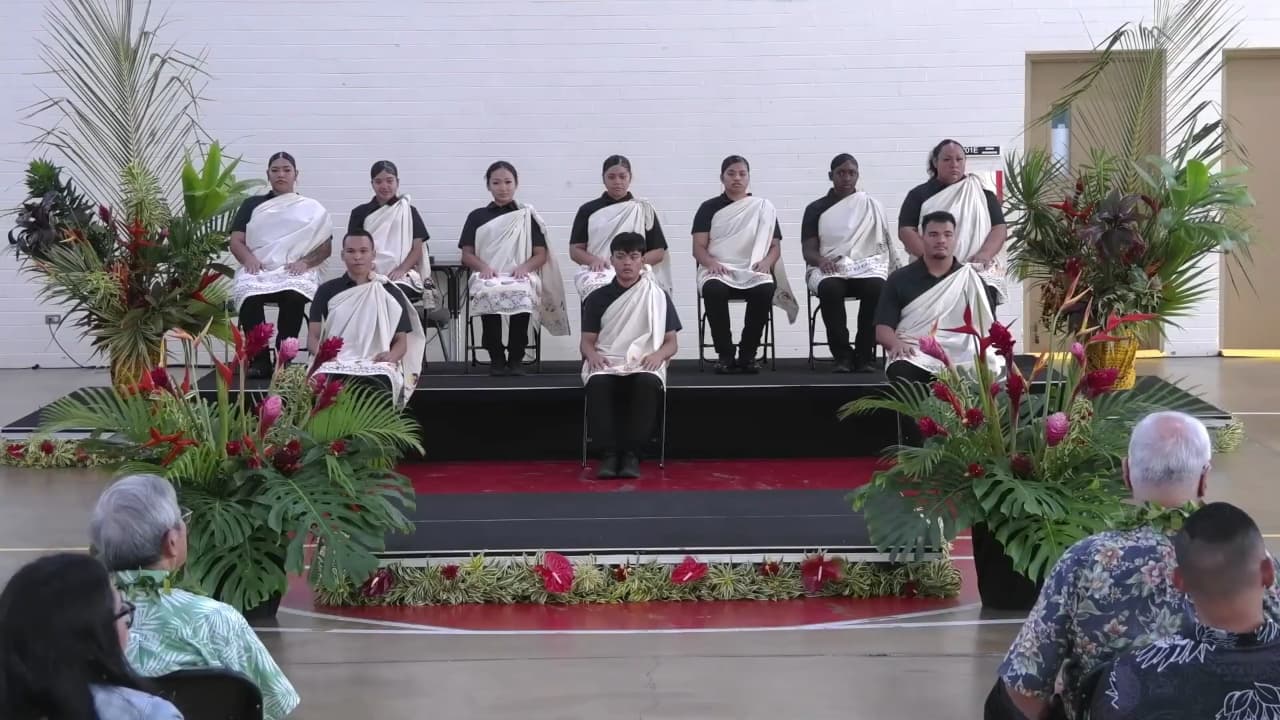
Maunakea Scholars Program Marks 10 Years, Waiākea Students Win Telescope Time
Fourteen Waiākea High students earned telescope time on Maunakea's world-class observatories, part of a 10-year program that has launched six alumni into astronomy careers.
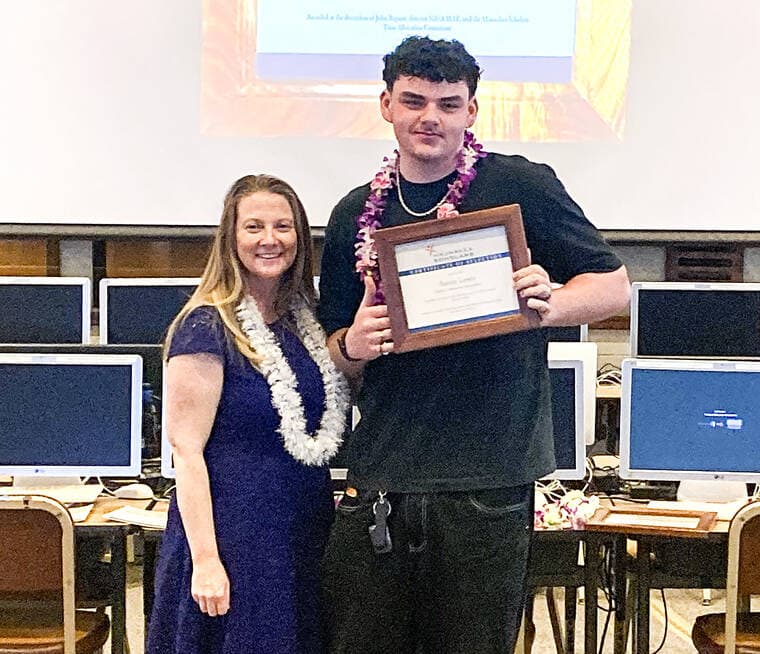
Waiākea High School senior Aaron Lewis stood in the school's library last week and delivered what the Hawaii Tribune-Herald called "a short speech heavy with scientific wonder and inquiry" — a presentation that, the paper noted, "instantly dispelled any doubt whether he has the makings of an astronomer." Lewis was one of 14 Waiākea students recognized as Maunakea Scholars for the 2025–2026 school year, each awarded coveted observing time at Maunakea's telescope array in an awards ceremony held in the March 10–11 timeframe.
The ceremony coincided with the Maunakea Scholars program's 10-year anniversary. Launched during the 2015–2016 school year by the Canada-France-Hawaiʻi Telescope and Gemini International Observatory, the program is a partnership between the Maunakea Observatories and the Hawaii State Department of Education. It gives public high school students across the state a competitive opportunity to write original astronomy research proposals and earn what program administrators call "telescope time" on some of the world's most powerful scientific instruments.
University of Hawaiʻi Institute for Astronomy Director Doug Simons, one of the program's creators, attended the Waiākea ceremony alongside Maunakea Scholars Coordinator Mary Beth Laychak. The two have been central to the program since its inaugural year, which began with classes of juniors and seniors at Waiākea High and Kapolei High on Oʻahu.
Since its 2015 launch, more than 1,000 Hawaiʻi public high school students have participated in the program. Just over 275 have earned telescope time. This year, 99 students from 18 high schools across the state took part.
The program's reach extended to Oʻahu this cycle as well. Eleven students from Waipahu High School were recognized for their original astronomy research proposals, with 10 awarded telescope time on facilities including the W. M. Keck Observatory, the Canada-France-Hawaiʻi Telescope, the NASA Infrared Telescope Facility, and Las Cumbres Observatory. Their proposals ranged from Natalie Tosta's "The Barium Star of WeBo1" and Janessa Torres' "Structure and Evolution of Arp 298" to Jorge Badua's "The Blue of Life: Looking at NGC-2023" and Arielle Daguio's "Arp 87 Curiosities." Athea Brielle Orbita received an honorable mention for "A Supermassive Conundrum."
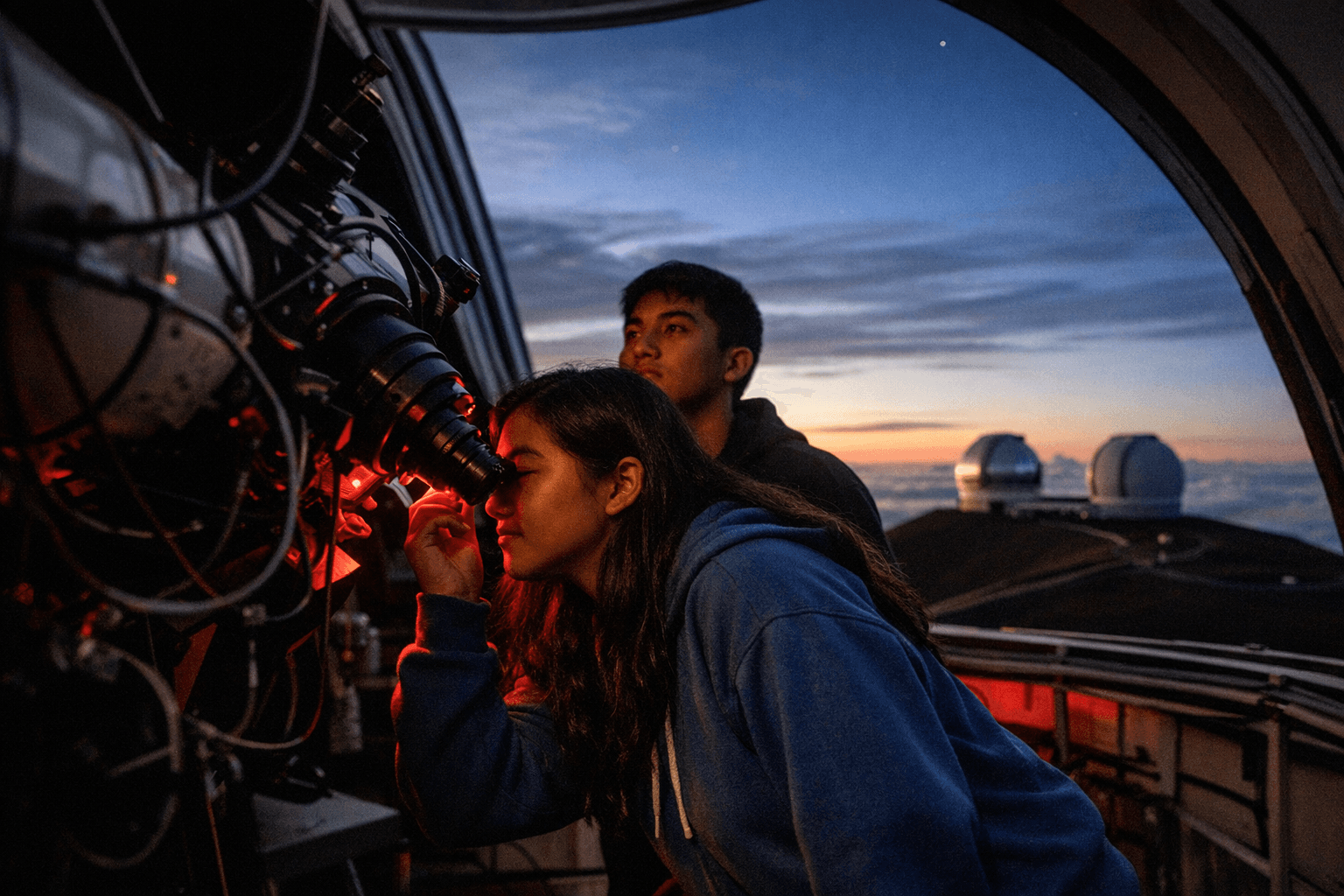
"I am exceptionally proud of the Maunakea Scholars students and alumni," said Laychak. "I know of six alumni who are either working in Maunakea astronomy or continuing their education in the field. That's in addition to many others working in education, engineering, and computer science. I can't wait to see what these students do moving forward."
DOE Superintendent Kathryn Matayoshi framed the program's significance in broader terms. "Maunakea Scholars is an example of the game-changing partnerships that enrich our classrooms and inspire our kids to do great things," Matayoshi said. "These students will have unparalleled research opportunities using some of the world's greatest scientific instruments, and there's no telling what amazing discoveries they will achieve."
For the newly recognized scholars at Waiākea and Waipahu alike, the awards mark what Maunakea Observatories described as "the beginning of the transition from proposal to discovery" — the point where months of research writing give way to actual nights at the telescope.
Know something we missed? Have a correction or additional information?
Submit a Tip