NWS Issues Wind Advisory, High Surf and Flood Watches for Hawaiʻi Island
The National Weather Service has ramped up alerts as a north-northeast swell approaches, with Kohala west shores forecast at 6–10 feet and summit winds gusting up to 70 mph before a downgrade.
The National Weather Service in Honolulu has ramped up its weather alerts today as a massive north-northeast swell begins its approach toward the islands," the Star-Advertiser reported as officials warned of dangerous surf and coastal impacts. Forecasters told the paper Kohala west shores on Hawaiʻi Island could see surf building to 6 to 10 feet, while Maui west shores were forecast at 8 to 15 feet and Molokai west and Lanai north shores at 10 to 16 feet.
Hawaii News Now issued a clear flood warning footprint: "The National Weather Service has issued a FLOOD WATCH for the islands of Niihau, Kauai, Oahu, and all of Maui County," in effect through 6 AM Monday, and warned that "isolated, slow-moving thunderstorms could build in throughout late Sunday night" and that "due to highly saturated ground in some portions of the state, runoff and continued flooding are once again possible if downpours develop." The Star-Advertiser noted many residents spent Sunday under a flood watch as attention shifts toward shoreline hazards.
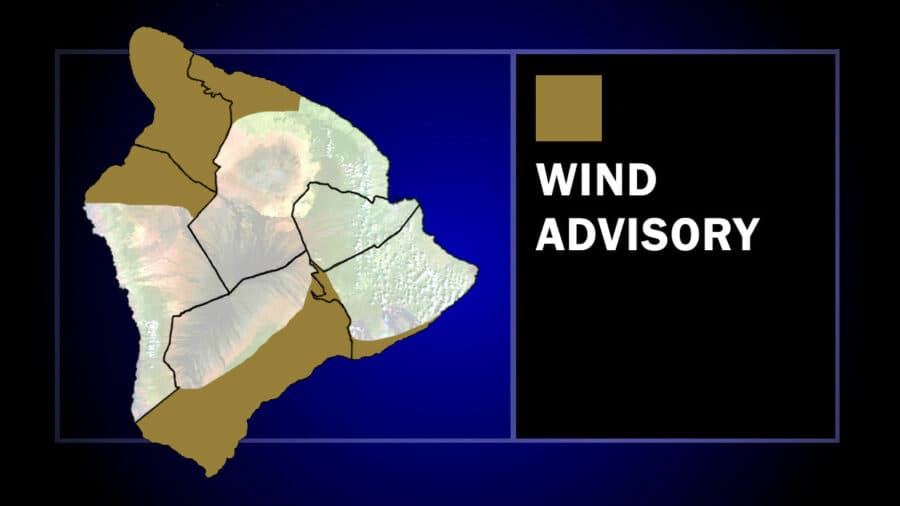
Summit conditions on the Big Island moved from warning to advisory in a rapidly changing timeline. Hawaii News Now reported "A HIGH WIND WARNING is currently in effect for the summits of Hawaii Island" and that the warning called for "west winds 50 to 60 mph with gusts up to 70 mph," scheduled to last until 6 AM Monday. Big Island Now posted time-stamped updates showing the warning extended earlier and then, at 4:00 a.m. on Feb. 23, the warning was canceled and "a high wind advisory is in effect on the summits of Mauna Kea and Mauna Loa ... until noon today," with NWS expecting "sustained winds from 40 to 50 mph, with gusts up to 60 mph." Big Island Now relayed NWS safety notes that "the winds can make driving and walking dangerous" and that people should "consider postponing travel to the summits until conditions improve."
Marine impacts are concentrated on north-facing harbors. Hawaii News Now carried the NWS marine statement saying the northeast swell will produce hazardous conditions and "heavy surges in north facing harbors, mainly in Hilo and Kahului." The Star-Advertiser quoted weather officials saying the coastline impact is expected to be "very high" and warned "ocean water surging and sweeping across beaches" could pose "the potential for impacts to coastal roads and infrastructure," while swimmers and boaters were told to expect "powerful longshore and rip currents ... at most beaches."

Local government action has shifted with the threat level. The County of Hawaiʻi posted the termination of an earlier emergency proclamation issued Feb. 8, 2026; the proclamation text states that when first issued there were an active statewide Flood Watch and High Wind Warning and a Winter Storm Warning for Big Island summits above 11,000 feet, but that "the relevant NWS watches, warnings, and/or advisories affecting the County of Hawaiʻi are no longer in effect, and the dangers, threats, and/or circumstances supporting the emergency proclamation have waned." Mayor C. Kimo Alameda "hereby terminate[d] the Emergency Proclamation Relating to the February 2026 Severe Weather Event dated February 8, 2026 ... effective immediately."
Sources vary on start times and product types for high surf on specific coastlines; Hawaii News Now listed a HIGH SURF WARNING for most north and east-facing shores effective noon Monday through 6 PM Tuesday, while the Star-Advertiser reported "Starting at 6 p.m., a high surf advisory will also go into effect for several other coastlines." For authoritative, location-specific wording and current start and end times, the National Weather Service Honolulu office lists active watches, warnings and advisories (NWS Honolulu, 2525 Correa Rd Suite 250, Honolulu, HI 96822, phone (808) 973-5286). Forecasts also indicate "the trade winds will build back in on Monday, remaining relatively breezy throughout the middle of this week," leaving shoreline danger and summit travel risk the primary local hazards to monitor through today.
Know something we missed? Have a correction or additional information?
Submit a Tip