Puna residents demand action as dangerous dog enforcement falls short
A Puna dog accused of repeated attacks kept families on edge, while county officers said the ordinance left them without the power to act before the next bite.

Families in Puna have been watching a dangerous pattern play out close to home: a dog that has terrorized one neighborhood, with police still trying to persuade the owner to surrender it even after several attacks. For people walking to a bus stop, biking through the area or letting children outside, the gap between repeated complaints and a real removal order has become the safety issue itself.
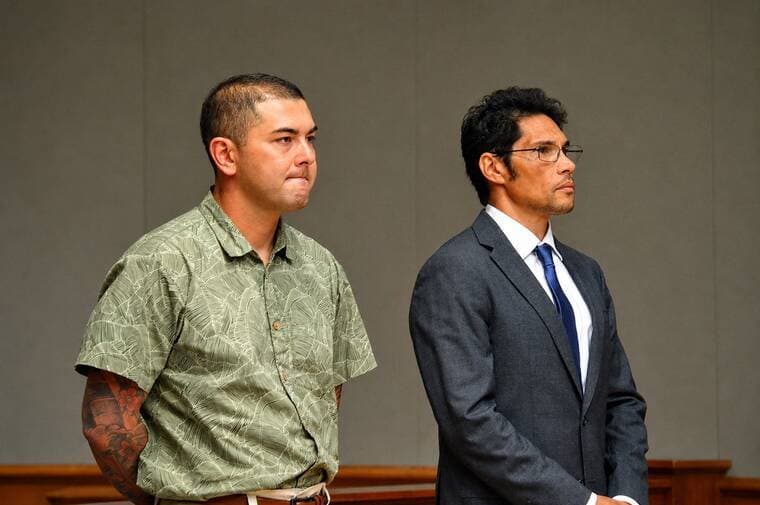
The frustration reaches beyond one neighborhood. Hawaii County’s dangerous-dog enforcement has long been criticized as ineffective because police have said they lacked jurisdiction under the county ordinance. That weakness became impossible to ignore after the 2021 mauling death of 85-year-old Dolores Oskins in Hawaiian Paradise Park, and again after the first people prosecuted under the county law had their charges dismissed in late 2023. In the Northrop case, police concluded their investigation and sent results to prosecutors on Oct. 30, according to Capt. Akira Edmoundson.
That case helped drive House Bill 2058, introduced in 2024 by Puna Rep. Greggor Ilagan. Backed by hundreds of oral and written testimonies, the measure wrote a state-level standard for dangerous dogs, defining one as any dog that, without provocation, causes a bite injury to a person or another animal. It also said breed could not be used to decide whether a dog was dangerous. If an owner failed to control a dangerous dog that killed a human, the bill created a Class C felony punishable by up to five years in prison. Lesser injuries to people, pets or other animals carried misdemeanor penalties.
The new law also gave officers a clearer enforcement tool than the county ordinance ever did. Police could seize and impound a dog if there was probable cause that it posed an imminent threat, and if no one claimed the animal within five days, it was considered abandoned. The Hawaiian Humane Society said the one-year delay before the dangerous-dog provisions took effect was meant to give the three counties that contract out animal services time to set up due-process procedures. For residents still dealing with an aggressive dog in Puna, that is the test now: whether county police and Animal Control will use the state law fast enough to stop the next attack before it happens.
This article was produced by Prism’s automated news system from verified source data, official records, and press releases, then run through automated quality and moderation checks before publishing. The system is built and supervised by the people who set the standards it runs under. Read our full AI policy.
Did this article answer your question?