Puuhonua o Hōnaunau explains ancient Hawaii's refuge and power system
Puuhonua o Hōnaunau turns ancient Hawaiian law into a visible shoreline landscape, where refuge, chiefly power, and sacred space still meet on the Kona coast.
Puuhonua o Hōnaunau National Historical Park is one of the clearest places on Hawaii Island to see how ancient Hawaiian authority worked in daily life. On the South Kona coast, the park ties refuge, punishment, chiefly power, and sacred ceremony to a single shoreline landscape. Its Great Wall, Hale o Keawe, royal grounds, and kii lāau make that system visible instead of abstract.
Why this site matters on the Kona coast
The park sits along the southern Kona coastline on the western side of the Island of Hawaii, where lava rock, ocean, and cultural sites meet in a compact stretch of shoreline. The National Park Service describes it as a prehistoric and historic cultural landscape, which is the right frame for understanding it: this is not just a scenic stop, but a place shaped by governance, belief, and social order.
That setting matters because old Hawaii did not separate politics from spirituality the way many modern systems do. The same shoreline that supported residence and ceremonial use also held a place of refuge, where the rules of kapu could be enforced and, in some cases, escaped if someone reached sanctuary in time. Puuhonua o Hōnaunau shows those overlapping functions in one place, with the coast itself forming part of the story.
How refuge worked in ancient Hawaii
A puuhonua was a place of refuge. In the traditional system, people who had broken kapu, or those fleeing battle, could seek protection there if they reached it before being caught. That made the refuge site part of a larger legal order, not an exception to it.
Puuhonua o Hōnaunau helps explain that order because the park interpretation is built around the idea of refuge and sacred use. The site shows that the law was not only punitive. It also created a path to survival, one that depended on geography, timing, and recognized sacred space.
What to look for on the ground
Several features at the park turn this history into something you can still walk through today.
- The Great Wall separated the royal grounds from the puuhonua.
- Hale o Keawe marked a sacred burial and ceremonial center.
- The Royal Grounds were a center of power open only to alii and their close companions.
- Kii lāau, carved wooden images associated with gods and guardians, help explain the spiritual dimension of the site.
Those features do more than fill out a trail map. Together, they show how a refuge site was organized, where authority sat, and how physical barriers reinforced social boundaries. The wall was not merely architectural; it was part of the political order.
The role of chiefs and sacred authority
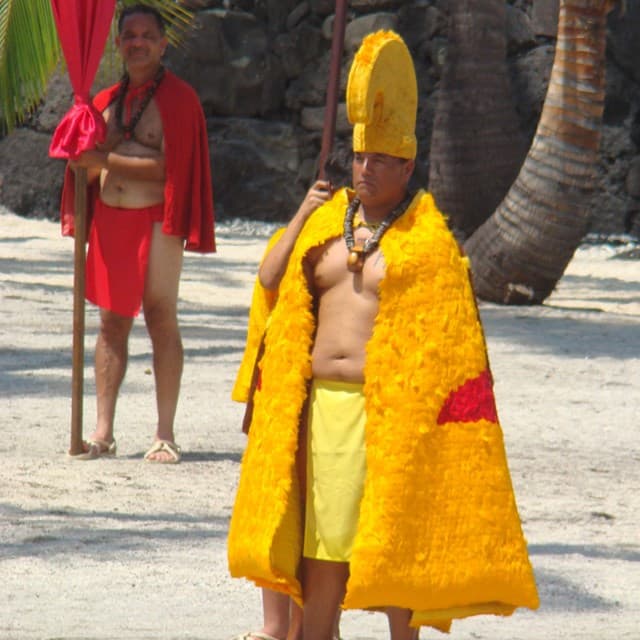
The park archives describe the site as possessing extraordinary mana in ancient Hawaii. Part of that power came from the bones of 23 alii, or chiefs, protected in Hale o Keawe. In Hawaiian thought, that kind of burial place was not a side note. It was central to the authority and sanctity of the site.
The Royal Grounds carried the same weight. They were reserved for alii and their close companions, which tells you how carefully rank and access were managed at the site. For visitors, that helps explain why some spaces feel open and others feel restricted: the layout reflects a historical system in which status, sacredness, and governance were closely linked.
Why the shoreline location was strategic
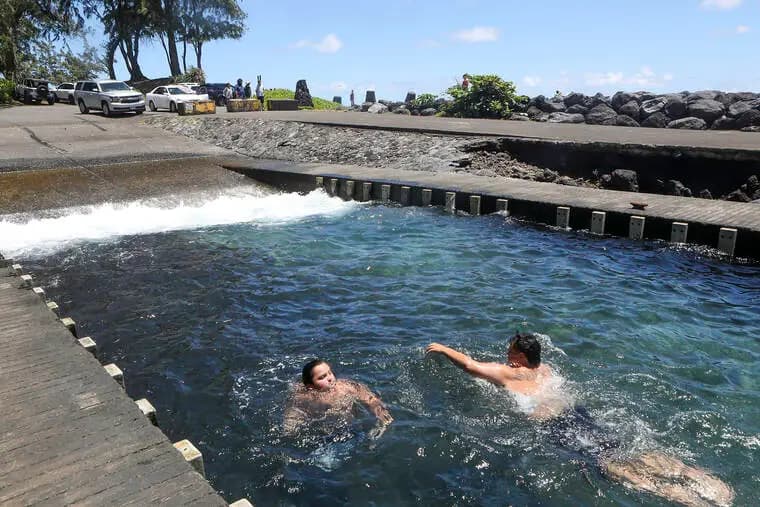
Hōnaunau and Hōnaunau Bay sit in a part of Kona where coastal settlement, ceremony, and movement could overlap. Fresh water, sheltered shoreline, and access to the sea made the area practical, while the sacred landscape made it politically important. The park’s placement along the South Kona coast shows that ancient Hawaiian leadership depended on real geography, not just ceremony.
That is one reason the site works so well as a guide to daily life. It shows how power operated in a place where people lived, traveled, worshipped, and sought protection. The refuge itself, the royal enclosure, and the burial temple all sit within the same larger landscape.
How the park is managed today
Puuhonua o Hōnaunau became a unit of the National Park Service in 1961. In June 2025, Big Island Video News noted that the park was preparing to celebrate its 64th anniversary as an NPS unit, which places the site within a modern preservation timeline as well as an older Hawaiian one.
The park’s size is another detail worth getting right. Some visitor and travel sources describe it as about 180 acres, but the National Park Service foundation document gives the total as 420 acres. That larger figure reflects the protected prehistoric and historic cultural landscape, not just the portion most people experience on a short visit.
How to visit with context, not just curiosity
A meaningful visit starts at the visitor center, where the interpretive material gives the route a historical frame before you begin walking. The self-guided tour is the best way to absorb the site at the right pace, because the meaning is in the relationships between the features, not just in any single monument.
Take time to read the interpretive signs and move slowly through the royal grounds, the Great Wall, and the puuhonua. This is a sacred cultural landscape, so quiet observation matters. The site is most powerful when you treat it as a living record of Native Hawaiian history rather than as a backdrop for a quick photo stop.
What the site teaches about Hawaiian leadership
Puuhonua o Hōnaunau shows that governance in ancient Hawaii was practical and spiritual at the same time. The rules of kapu shaped everyday behavior; chiefs held authority through rank and sacred connection; refuge existed as a structured response to conflict and transgression. The park makes that system legible because the physical layout still matches the social order it once served.
That is why the place remains so useful for residents, families, and visitors on Hawaii Island. The Great Wall, Hale o Keawe, the Royal Grounds, and the kii lāau are not separate attractions. They are parts of one civic and religious system, preserved on the Kona coast in a form that still explains how ancient Hawaii organized power, punishment, and refuge.
This article was produced by Prism’s automated news system from verified source data, official records, and press releases, then run through automated quality and moderation checks before publishing. The system is built and supervised by the people who set the standards it runs under. Read our full AI policy.
Did this article answer your question?