Puuhonua o Hōnaunau reveals Hawaii Island's sacred laws and refuge system
Puuhonua o Hōnaunau shows how Hawaiian law made refuge real, with kapu breakers, warriors, and civilians protected at the shoreline. Its walls and rituals still shape how Hawaii Island reads justice.
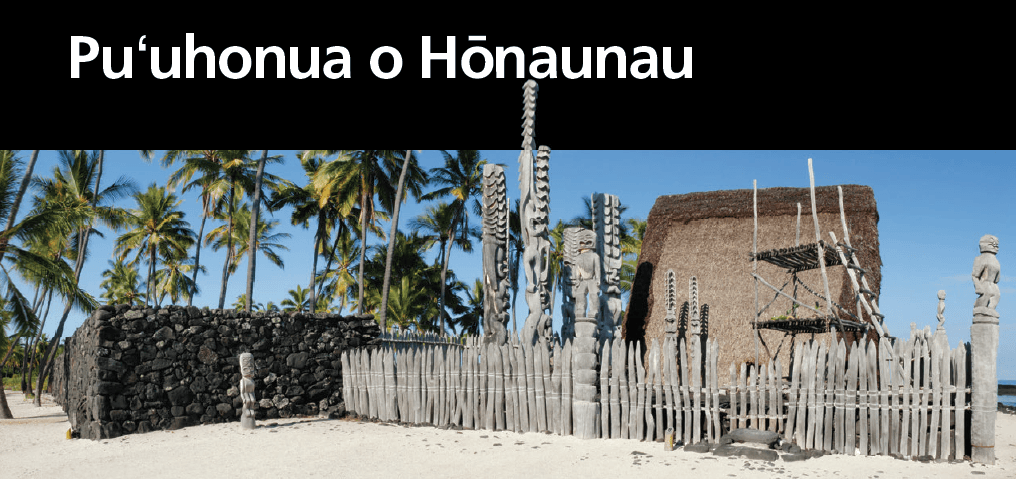
Puuhonua o Hōnaunau is not just a Kona landmark. It is one of the clearest places on Hawaii Island to see how sacred law, chiefly authority, and refuge worked in pre-contact Hawaii, and why that system still matters when residents talk about leadership, accountability, and community protection today. The 420-acre park on the southern Kona coastline keeps that history visible in the land itself, from the black lava flats of the Kona Coast to the narrow beaches shaped by coral sand.
A refuge built into the landscape
The park sits on prehistoric lava flows from Mauna Loa, where fault subsidence created cliffs and coral reefs helped supply the sand that lines the shoreline. That physical setting is not background scenery. It explains why Puuhonua o Hōnaunau became a place where people could cross from danger into sanctuary, and why the National Park Service describes it as a wahi pana, a sacred place that helps perpetuate the cultural connections of kānaka maoli to the land.
Congress authorized the park on July 26, 1955, and it was formally established effective July 1, 1961. The park now protects historic and ancient sites that tie together royal grounds, ceremonial spaces, and the refuge area where survival could depend on reaching the boundary in time. The site remains a rare place where the legal and spiritual order of old Hawaii can still be read directly from the shoreline inward.
Who the puuhonua protected
In Hawaiian tradition, a ruling chief could declare certain lands or heiau as puuhonua. Many such refuges existed across ancient Hawaii, but Puuhonua o Hōnaunau is regarded as the best preserved and most dramatic because of its scale and architecture. The sanctuary protected kapu breakers, defeated warriors, and civilians caught in battle, and no physical harm could come to those who reached its boundaries.
That mattered because the kapu system governed daily life, rank, behavior, and sacred restrictions. A person who broke kapu could face death, unless he or she reached a place of refuge in time. Puuhonua o Hōnaunau turns that abstract idea into something concrete: a boundary line, a wall, and a protected space where law and mercy intersected under chiefly authority.
The Great Wall and the sacred center
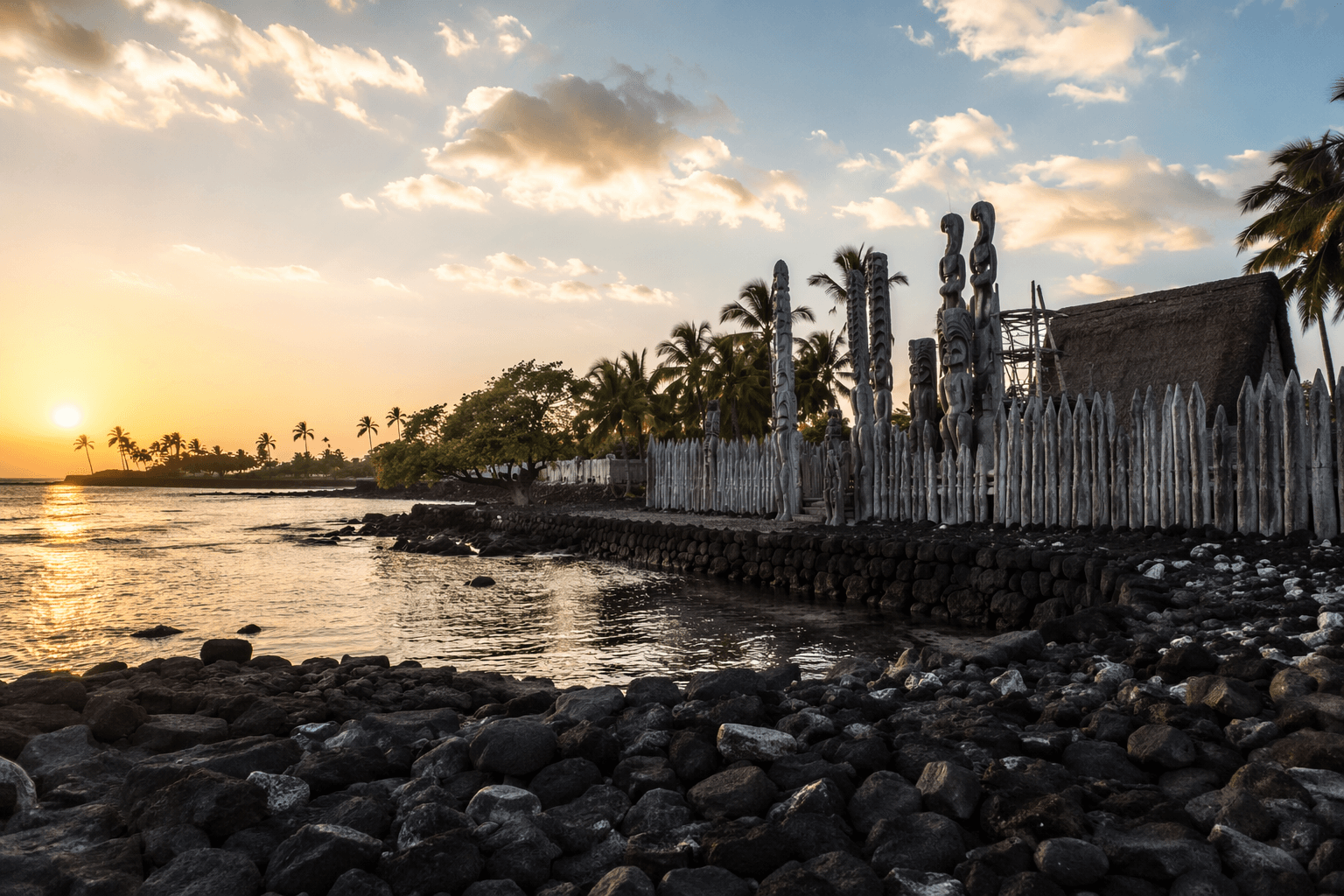
One of the park’s most important features is the Great Wall, a massive 965-foot-long masonry wall that marks the boundary between the royal grounds and the refuge quarters. Its scale makes the division unmistakable. On one side stood chiefly power; on the other, a sanctuary whose protection depended on sacred status and the authority that recognized it.
Within the puuhonua are Hale o Keawe, Ālealea Heiau, and the Ancient Heiau. Hale o Keawe was built in honor of Chief Keawe-i-kekahi-alii-o-ka-moku, and by 1818 the bones of at least 23 chiefs had been placed there. That detail deepens the meaning of the site: this was not simply a shelter from punishment, but a place layered with ancestral presence, ritual obligation, and political legitimacy.
The self-guided walking tour lets visitors move through these spaces at their own pace, tracing the relationship between royal grounds and sacred refuge without needing to imagine it from a distance. The landscape itself does the teaching.
The collapse of kapu changed everything
The history of Puuhonua o Hōnaunau becomes even more revealing in 1819, when Kamehameha I died. During the mourning period, Kaahumanu, Keōpūolani, and Liholiho, later Kamehameha II, defied kapu by eating together. That act began the collapse of the kapu system just as Christian missionaries and other Europeans and Americans arrived.
For Hawaii Island residents, that moment is important because it shows that law in old Hawaii was not static or purely punitive. It could be upheld, challenged, and transformed by the highest-ranking people in the kingdom itself. Puuhonua o Hōnaunau stands as a reminder that governance in Hawaii had its own internal systems of order, consequence, and change long before Western legal frameworks took hold.
A modern park inside an ancient cultural landscape
The visitor center adds another layer to the story. It was constructed between 1968 and 1969 and is the only surviving Mission 66-style visitor center in Hawaii. That makes the park one of the few places where a mid-century federal park building sits inside a deeply traditional Hawaiian setting without overshadowing it.
The visitor center is open year-round, and the park store is cashless. Park gates open daily from 8:15 a.m. until sunset. Those details matter for anyone planning a visit from Hilo, Kailua-Kona, or elsewhere on the island, because the site still functions as a living public space, not just a preserved ruin.

The park also protects the interconnected cultural and natural resources of the Hōnaunau, Kēōkea, and Kiilae ahupuaa so traditional Hawaiian values and practices can thrive now and into the future. That stewardship frame connects the ancient refuge system to present-day land care, reminding visitors that cultural preservation and environmental protection are inseparable here.
Why the site still speaks to the Big Island now
Puuhonua o Hōnaunau matters because it makes Hawaiian leadership legible. It shows how authority was exercised through sacred law, how refuge worked in practice, and how communities understood restoration after transgression. For Big Island residents trying to understand the deeper roots of justice traditions in Hawaii, the site offers something more concrete than a lesson in the past: it shows how power, protection, and responsibility were organized in place.
That is also why the park’s Cultural Festival remains so meaningful. The annual event is in its 65th year, it is free to enter on festival day, and the 2026 theme is “Hoolono i ka leo o ka āina,” or “Listen to the voice of the land.” Hawaii Island cultural practitioners, hula, crafts, and information tables keep the site connected to living practice rather than leaving it frozen as a monument.
At Puuhonua o Hōnaunau, the shoreline still carries the weight of Hawaiian law. The walls, heiau, and refuge grounds do more than preserve memory: they show how a society organized protection, rank, and responsibility, and why that history still belongs in the public life of Hawaii Island.
This article was produced by Prism’s automated news system from verified source data, official records, and press releases, then run through automated quality and moderation checks before publishing. The system is built and supervised by the people who set the standards it runs under. Read our full AI policy.
Did this article answer your question?