Puukoholā Heiau reveals Hawaii’s history of unification and power
Puukoholā Heiau turns Kamehameha’s rise into a shoreline landscape you can walk. The site connects unification, royal alliances, and living cultural practice on the Kohala Coast.
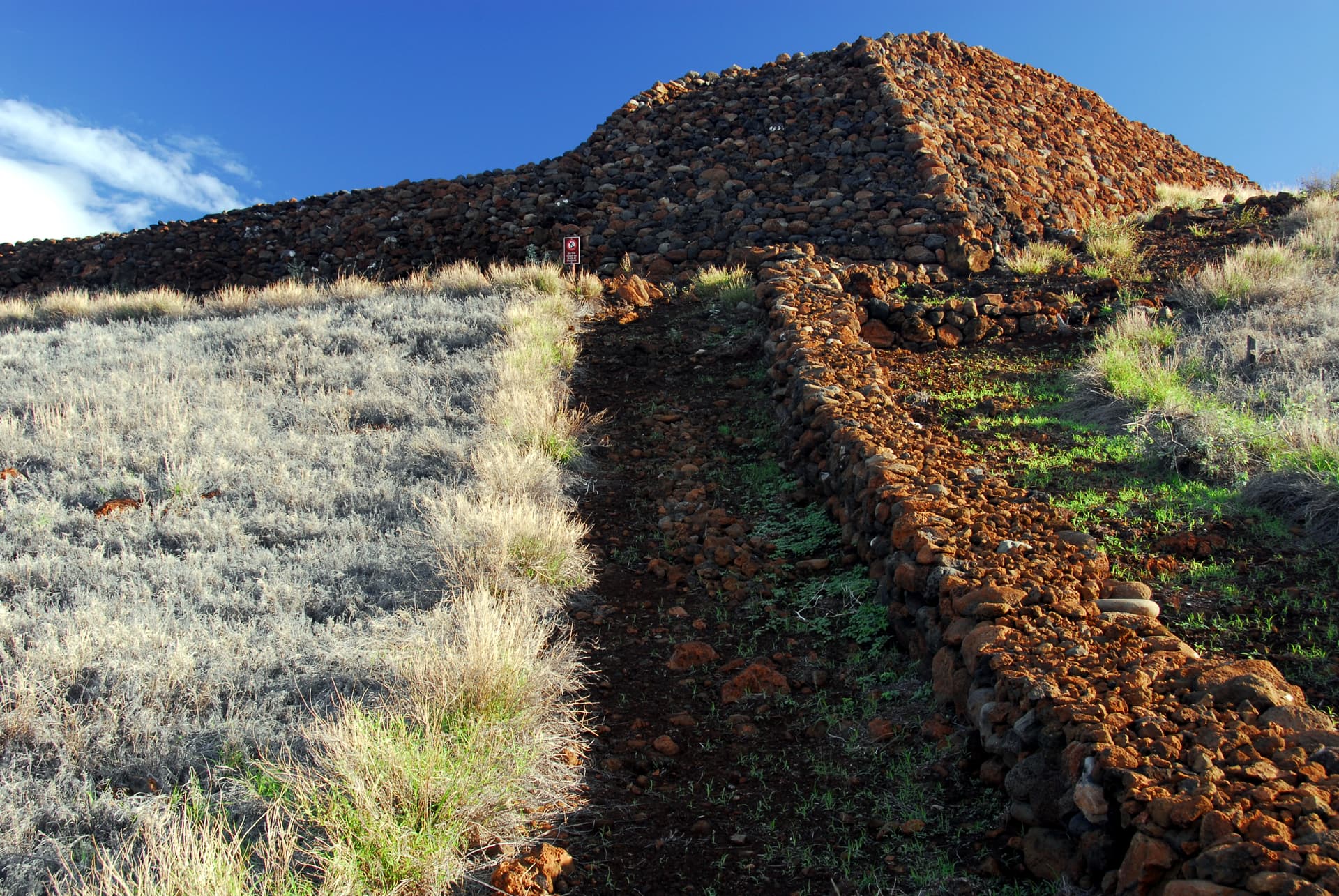
Puukoholā Heiau is one of the clearest places on Hawaii Island to see how religion, land, and state power were bound together. Built by Kamehameha the Great from 1790 to 1791, it is not just a scenic stop above Kawaihae Bay. It is where the history of Hawaiian unification becomes visible in the ground itself.
Why this shoreline matters
The National Park Service frames Puukoholā Heiau National Historic Site as a place that shares the beginning stages of the Hawaiian Kingdom and stands as a symbol of unification and lasting peace. That framing fits the landscape. The heiau sits on the Kohala Coast, where access to the sea, command of the shoreline, and control of movement all shaped political power as much as spiritual authority.
The site also represents one of the last major temples built in the Hawaiian Islands. Kamehameha ordered it built after a prophecy delivered through the priest Kapoukahi, and the project became part of the final push that helped him establish rule across the islands. The struggle was not abstract. In 1791, the political stakes at the site came into focus with the arrival of Keoua Kuahuula, Kamehameha’s rival, and the chain of events tied to the dedication of the heiau.
A park made of several places, not one monument
What makes Puukoholā especially revealing is that it is not a single isolated structure. The historic site includes Puukoholā Heiau, Mailekini Heiau, Hale o Kapuni, the John Young Homestead, and Pelekane. Together, those places preserve layers of Hawaiian political history, religious practice, and later colonial-era contact in one compact coastal landscape.
Mailekini Heiau is especially important for reading the site correctly. During Kamehameha’s reign, it was converted into a fort, which shows how sacred space and military strategy could overlap. That detail helps explain why the area mattered so much during the period of consolidation: it was a spiritual center, a political stage, and a defensive position at once.

The park’s history materials also make clear that Hawaiian society had a deeply rooted socio-political hierarchy long before Kamehameha I. Spiritual beliefs were tied to rank, authority, and the use of heiau, so the site is best understood as an instrument of power as well as worship. Standing there, the relationship between belief and governance is easier to grasp than it is in a classroom summary.
What to look for when you visit
A first stop at the visitor center pays off quickly. The center opened in 2007 and includes exhibits, a museum, and a park store, giving visitors context before they walk the grounds. The site is open year-round, and current National Park Service hours list daily access from 8:30 a.m. to 4:30 p.m. The address is 62-3601 Kawaihae Road, Kawaihae, HI 96743.
The value of seeing the site in person is that the landscape explains relationships that are easy to flatten in print. Puukoholā Heiau does not sit apart from its neighbors. It is part of a broader coastal setting that includes the homestead of John Young, later royal lands associated with Queen Emma, and the remains of spaces used for ceremony, residence, and defense. That geography makes Kamehameha’s rise feel less like a distant royal narrative and more like a series of calculated moves anchored to one shoreline.
The site also gives visitors a sharper sense of scale. A textbook can list names, dates, and outcomes, but the location shows how much depended on place: the visibility of the coast, the proximity to Kawaihae, and the way the heiau dominates the surrounding area. That physical setting helps explain why this corner of Hawaii Island was central to the rise of the Hawaiian Kingdom.
John Young, Isaac Davis, and the wider royal network
Puukoholā Heiau also tells a cross-cultural story that reaches beyond Kamehameha’s immediate circle. The National Park Service notes that Kamehameha brought John Young to Kawaihae while the heiau was being built. Young and Isaac Davis later assisted him in the unification of the Hawaiian Islands, linking the site to the broader diplomatic and military networks that shaped the kingdom.
Young’s own family history remains part of the landscape. He married Kaoanaeha, Kamehameha’s niece, and had children at the homestead. The lands inherited by Queen Emma are now part of Puukoholā Heiau National Historic Site, which connects the site not only to the first phase of the kingdom but also to later Hawaiian royal history. That continuity is one reason the historic site still feels relevant to Big Island readers: it is part of the story of how power, kinship, and inheritance were organized on this island.
A living cultural place, not a frozen one
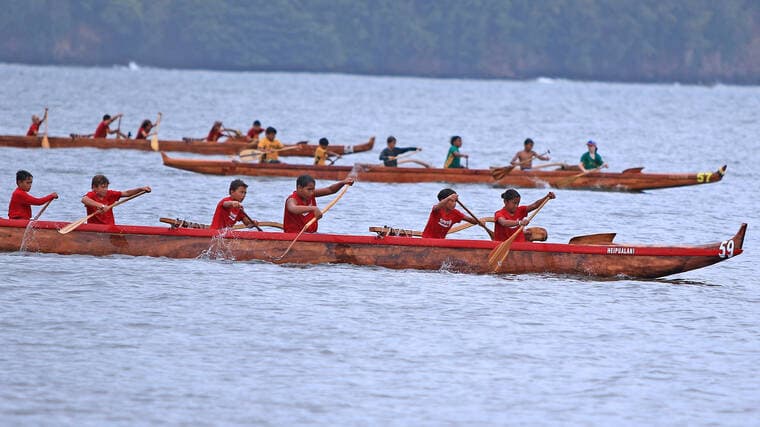
Puukoholā Heiau still functions as a place of observance, not just interpretation. The annual Hookūikahi Establishment Day Hawaiian Cultural Festival was planned for August 16-17, 2025, and the park lists future festival dates through 2032. The 2025 event began with a 6:00 a.m. hookupu ceremony, followed by informational booths and demonstrations of Hawaiian arts and crafts.
That continuing calendar matters because it shows the site is used by living cultural practitioners, not only by historians and tourists. For visitors, that changes the experience. The heiau is not a relic viewed from a distance. It is a place where the meaning of unification, stewardship, and sovereignty is still publicly acknowledged on the same ground where Kamehameha’s power was consolidated.
For anyone trying to understand the Big Island’s role in Hawaii’s political history, Puukoholā Heiau is the place where the story stops being abstract. The shoreline, the heiau, the fort, the homestead, and the modern festival all point to the same conclusion: Hawaii Island was not a backdrop to unification, but one of the places where it happened.
This article was produced by Prism’s automated news system from verified source data, official records, and press releases, then run through automated quality and moderation checks before publishing. The system is built and supervised by the people who set the standards it runs under. Read our full AI policy.
Did this article answer your question?