Residents Oppose 1,400-Mailbox Park Near Burial Cave in Hawaiian Paradise Park
On December 27, 2025, neighbors in Hawaiian Paradise Park discovered and reported construction of a large community mailbox park, about 1,400 mailboxes, sited at Makuʻu Drive and 16th Avenue directly adjacent to a Native Hawaiian burial cave. The presence of a concrete slab and rapid installation has raised urgent cultural, archaeological, and equity concerns for local residents, who are pursuing administrative and legal remedies.
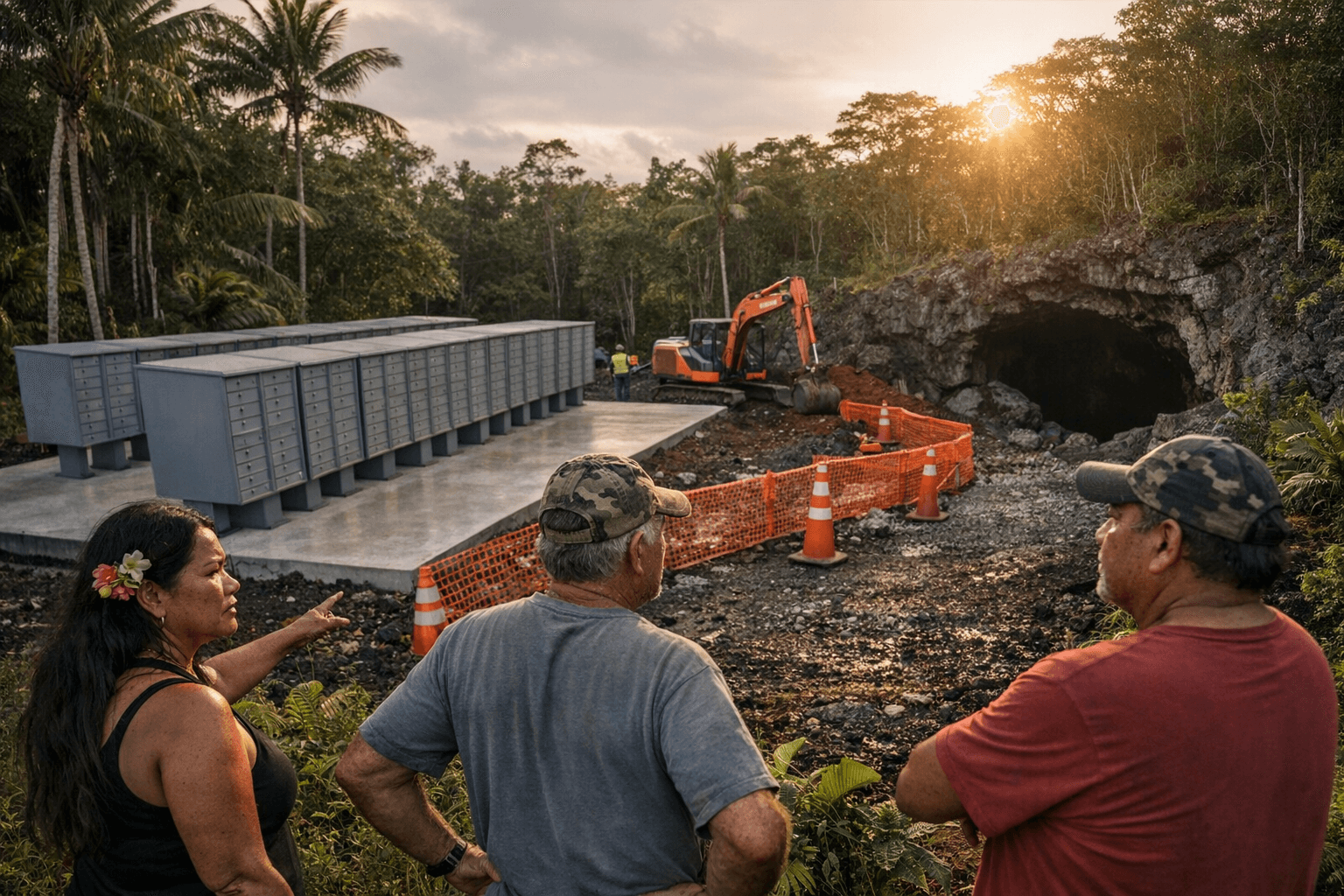
Neighbors and cultural preservation advocates moved quickly after discovering a concrete slab and other signs of construction at the corner of Makuʻu Drive and 16th Avenue in Hawaiian Paradise Park on December 27, 2025. The site has been designated for a centralized community mailbox park expected to hold roughly 1,400 mailboxes. Residents objected that the intended location lies adjacent to a known Native Hawaiian burial cave and say the project threatens cultural and archaeological resources.
The dispute crystallized community concerns about how infrastructure projects are sited and permitted in areas with indigenous cultural features. Residents reported the work, lodged complaints with government agencies, and sought administrative review and appeals. The visible slab has become a focal point for neighbors who say there was inadequate consultation with Native Hawaiian stakeholders and insufficient archaeological review before construction began.
For many in rural and semi-rural communities like Hawaiian Paradise Park, mail delivery touches on daily life in practical ways. Residents contend that moving to a centralized mailbox park of this scale can create accessibility challenges for elders, people with disabilities, and those who rely on mail for medications and health-related communications. Neighbors frame these concerns as part of a broader public health and equity conversation about how infrastructure decisions can disproportionately burden vulnerable populations.
The dispute pits developer and utility plans for consolidated delivery against local cultural preservation advocates seeking protection of burial sites and archaeological context. Community members say their appeals will focus on permitting processes, the adequacy of cultural-resource evaluations, and whether state and county consultation requirements were met. Neighbors are pursuing administrative and legal channels; the timeline for any injunctions, permit revocations, or redesign remains uncertain.
The conflict underscores systemic issues in land use processes on the Big Island, including how the needs of Native Hawaiian cultural practitioners are weighed against utility and development plans. For local residents, the debate is not only about one cluster of mailboxes but about trust in local permitting, protection of ancestral sites, and equitable access to services. As the administrative reviews proceed, community leaders expect delays in installation and are calling for more transparent consultation and independent archaeological assessment.
County and state officials have been contacted as neighbors seek remedies. The outcome of the dispute will shape how similar infrastructure projects are reviewed across the island and could influence policy discussions about cultural protections, accessibility, and equitable service planning for rural communities.
This article was produced by Prism’s automated news system from verified source data, official records, and press releases, then run through automated quality and moderation checks before publishing. The system is built and supervised by the people who set the standards it runs under. Read our full AI policy.
Did this article answer your question?