Scientists Reveal How They Take Kīlauea's Temperature as Magma Heats Up
Kīlauea's magma is running at least 50°F hotter than it did just three years ago, a signal scientists say could drive more eruptions and possibly push activity beyond the summit.
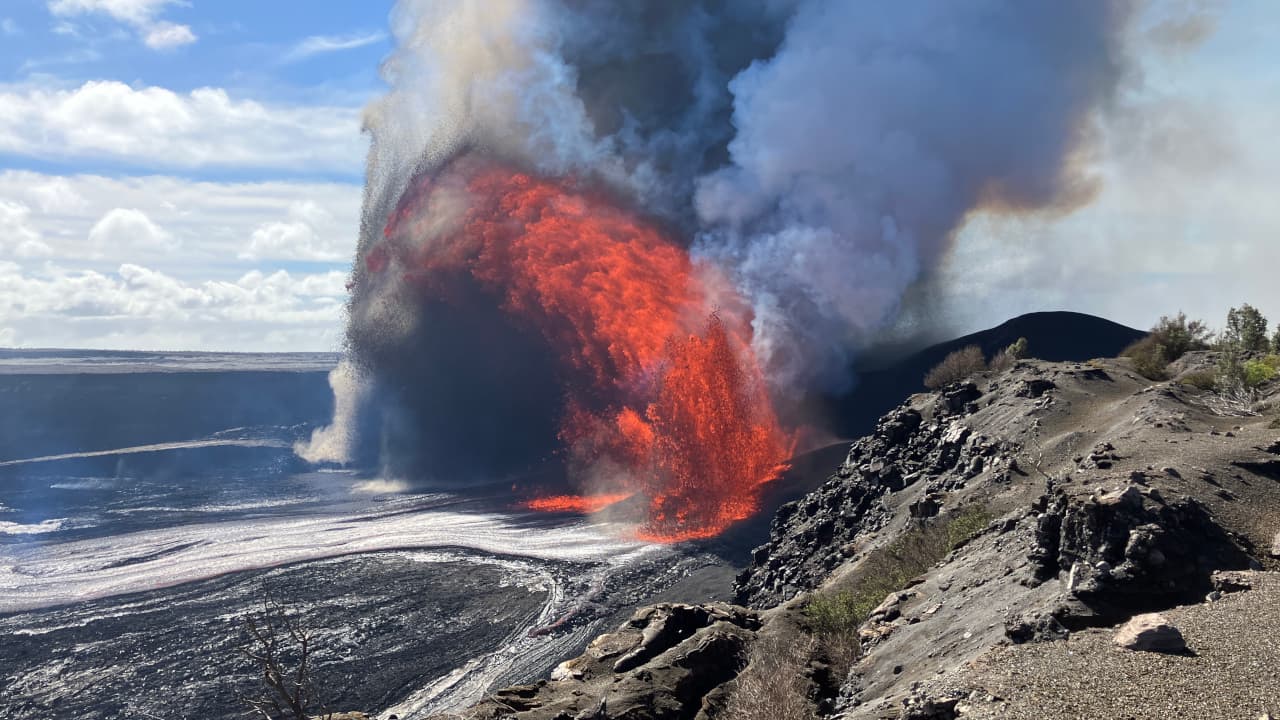
Fifty degrees hotter. That is how much warmer Kīlauea's erupting lava is right now compared to the summit eruptions of 2018 through 2023, according to geochemical data published by the U.S. Geological Survey's Hawaiian Volcano Observatory. The finding, detailed in an HVO Volcano Watch column, arrives while the volcano sits in a pause between lava fountain episodes, its summit inflating and both vents glowing through the night, with scientists forecasting the next eruption window between April 6 and April 14.
Understanding exactly what that temperature shift means, and what it doesn't, requires a look at how HVO actually takes Kīlauea's temperature.
Reading the Heat: Three Tools HVO Uses
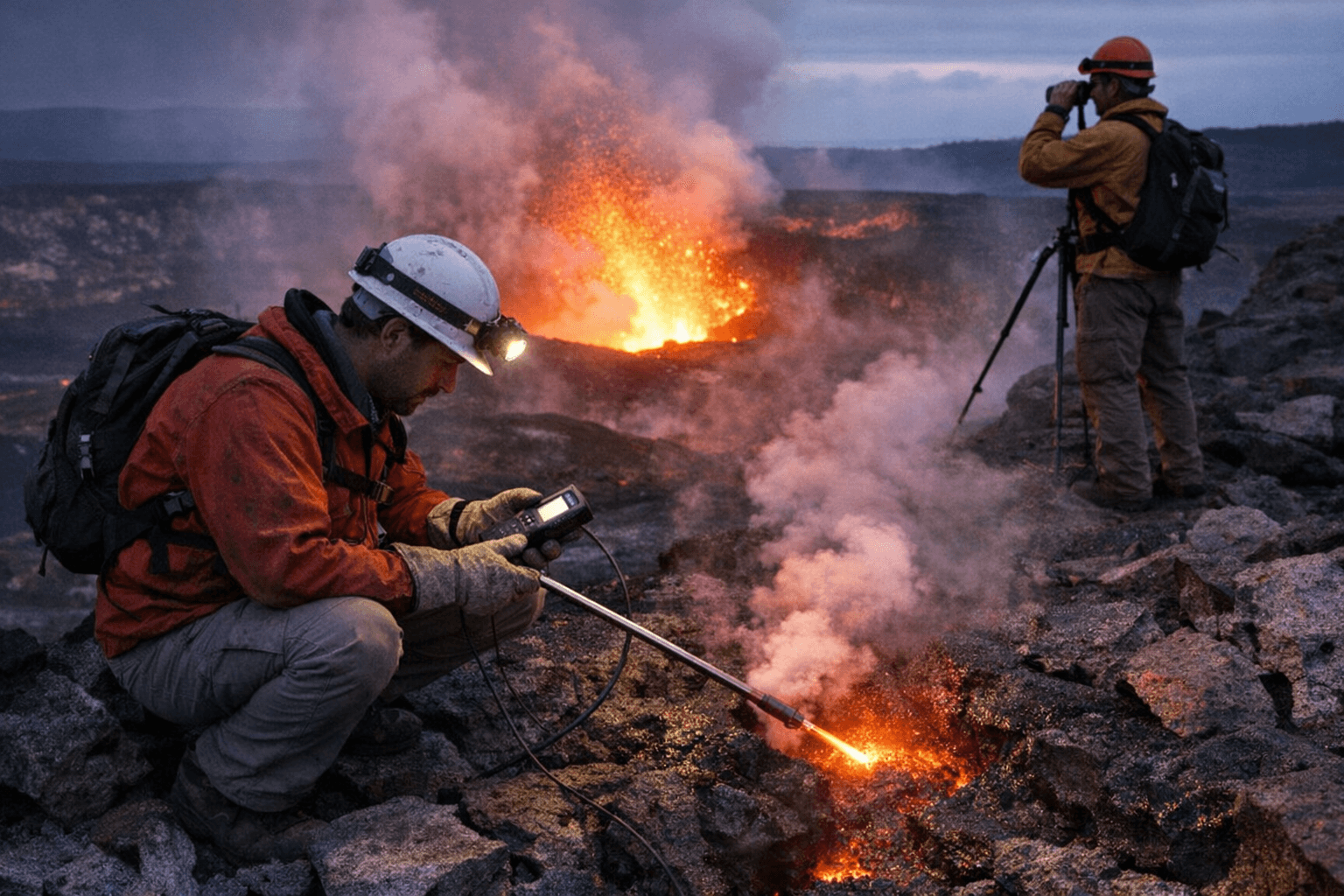
Measuring the temperature of an active volcano is not a single act; it is an integrated system of methods that cross laboratory chemistry, airborne imaging, and direct field contact. HVO scientists rely on three primary approaches.
The first is thermal camera imaging, which captures radiative heat from active lava surfaces and vent areas during eruptions and overflights. The second is thermocouple probes, which provide direct contact measurements inside active lava flows and offer the most immediate temperature readings. The third, and arguably the most revealing for long-term trend analysis, is geochemical proxies, specifically the concentration of magnesium oxide (MgO) in tephra glass. When lava erupts and rapidly chills, it locks in a chemical snapshot of the magma's pre-eruptive state. MgO content is a reliable proxy for temperature: higher MgO means hotter magma.
On March 25, 2026, HVO staff conducted a helicopter overflight of Halema'uma'u, collecting tephra samples from the crater floor alongside thermal and visual imagery. That kind of routine fieldwork, done safely from the air during a pause between fountain episodes, feeds directly into the geochemical monitoring record that makes temperature trend analysis possible.
What Olivine and Glass Are Telling Scientists
The MgO signal from the current eruption cycle is striking. Over the first 42 episodes of the ongoing lava fountaining eruption in Halema'uma'u, which began on December 23, 2024, glass MgO has registered higher at 7.0 to 8.2 weight percent, meaning temperatures are at least 50°F higher than previous summit eruptions, ranging from approximately 2,129 to 2,176°F (1,165 to 1,191°C).
When HVO scientists examined olivine chemistry from the 2008 to 2018 lava lake, the 2020 to 2023 summit eruptions, and the ongoing lava fountain episodes in Halema'uma'u, they found that olivine tracks an increase in temperature of about 15 to 20°C (roughly 60 to 70°F). That upward trajectory, documented across more than a decade of Kīlauea's behavior, is not a one-episode anomaly. It is a sustained directional signal.
Those figures reflect surface lava temperatures in ambient air. Before lava ever reaches the surface, it is losing heat rapidly; once it erupts, dramatic cooling happens within seconds to minutes. The MgO proxy gives scientists a window into the pre-eruptive temperature of the magma system itself, well below the crater floor.
What Rising Temperatures May Indicate
It is possible that the increasing temperatures observed for the current eruption relate to its prolonged episodic nature: hotter, fresher magmas entering the system are driving repeated eruptive episodes. With temperatures still elevated, it could mean the episodic activity will continue for some time. It may also reflect somewhat high rates of magma supply to the shallow reservoir beneath Kīlauea's summit, which could lead to continued episodes or an eruption elsewhere on the volcano.
That last possibility carries significant weight for Big Island communities. An eruption along the East Rift Zone or Southwest Rift Zone would affect different communities and travel corridors than summit activity does. HVO has confirmed no significant activity along either rift zone as of the latest updates, but it is precisely the kind of scenario that elevated magmatic supply could eventually enable.
Rising MgO values and hotter magma can also presage shifts in eruptive style and intensity, including more energetic lava fountaining episodes. For Hawaiʻi Volcanoes National Park managers and downwind communities, that translates directly into planning considerations: more vigorous fountaining means more tephra production, wider ashfall distribution, and potentially stronger volcanic gas emissions.
Episode 43, the Current Pause, and What Comes Next
Episode 43 of the ongoing Halema'uma'u eruption occurred on March 10, 2026. As of March 28, the eruption remains paused. Rapid rebound of tilt following episode 43 fountaining, continued seismic tremor, and visible glow from the vents suggest that another fountaining episode is likely. Models based on summit inflation indicate episode 44 fountains are likely to start between April 6 and April 14.
Kīlauea has been erupting episodically since December 23, 2024, from two vents, north and south, in Halema'uma'u. Fountaining episodes generally last less than 12 hours and are separated by pauses that can be longer than two weeks.
The current alert level sits at WATCH, with an aviation color code of ORANGE. Those designations reflect ongoing eruption potential and the known gas and tephra hazards, even during pause periods. Both vents are currently emitting gas plumes, and glow has been visible at the north vent.
Practical Impacts: Vog, Air Quality, and Park Access
Even during inter-episode pauses, Kīlauea's summit vents continue releasing volcanic gases, primarily water vapor, carbon dioxide, and sulfur dioxide. That SO2 interacts with sunlight and atmospheric moisture to produce volcanic smog, or vog, which can drift across the island depending on wind patterns. Communities on the Kona coast and in Ka'u are particularly susceptible under trade-wind conditions that push summit emissions to the leeward side.
When a new fountaining episode begins, tephra production increases sharply. Fine volcanic glass and Pele's hair can travel well beyond the national park boundary, and ashfall has historically affected visibility on roadways, including Highway 11 through the park corridor. For agriculture operations and anyone with respiratory sensitivities, the air quality implications of elevated fountaining are not abstract.
Hawaiʻi Volcanoes National Park manages access to viewing areas based on real-time HVO guidance. Closures during active episodes protect visitors from sudden changes in lava fountain height and volcanic gas concentrations. Understanding the temperature trends that drive those episodes gives park managers and the public a longer-range view of what conditions may look like in the weeks ahead.
Where to Track Updates
HVO's team of interdisciplinary scientists, working with university partners for near-real-time geochemical monitoring, is carefully monitoring Kīlauea to detect any changes to the pattern of episodic eruptions, with laboratory-based work and geochemical monitoring serving as an important perspective for detecting changes to the thermal state of the magmatic system.
The primary sources for actionable guidance are:
- USGS HVO Daily Updates: Published each morning at usgs.gov/volcanoes/kilauea/volcano-updates, covering eruption status, tilt readings, and forecast windows for upcoming episodes
- HVO Observatory Messages: Issued between daily updates when significant changes occur
- Hawaiʻi County Civil Defense Agency: The local authority for public safety advisories tied to eruption events
- Hawaiʻi Volcanoes National Park: Manages real-time trail and viewing area access based on HVO data
Conditions at Kīlauea can shift within hours. A forecast window is not a countdown clock; episodes have started earlier or later than modeled, and tilt rates, seismic tremor, and gas output can accelerate quickly. Tracking those numbers daily, rather than waiting for a major announcement, is the most reliable way to stay ahead of changes that affect air quality, travel routes, and park access across the Big Island.
This article was produced by Prism’s automated news system from verified source data, official records, and press releases, then run through automated quality and moderation checks before publishing. The system is built and supervised by the people who set the standards it runs under. Read our full AI policy.
Did this article answer your question?