Shallow quakes and ground rise raise hazards at Kilauea summit
Shallow quakes and rising ground are adding rockfall and cracking hazards at Halemaumau, where the summit remains a closed area.
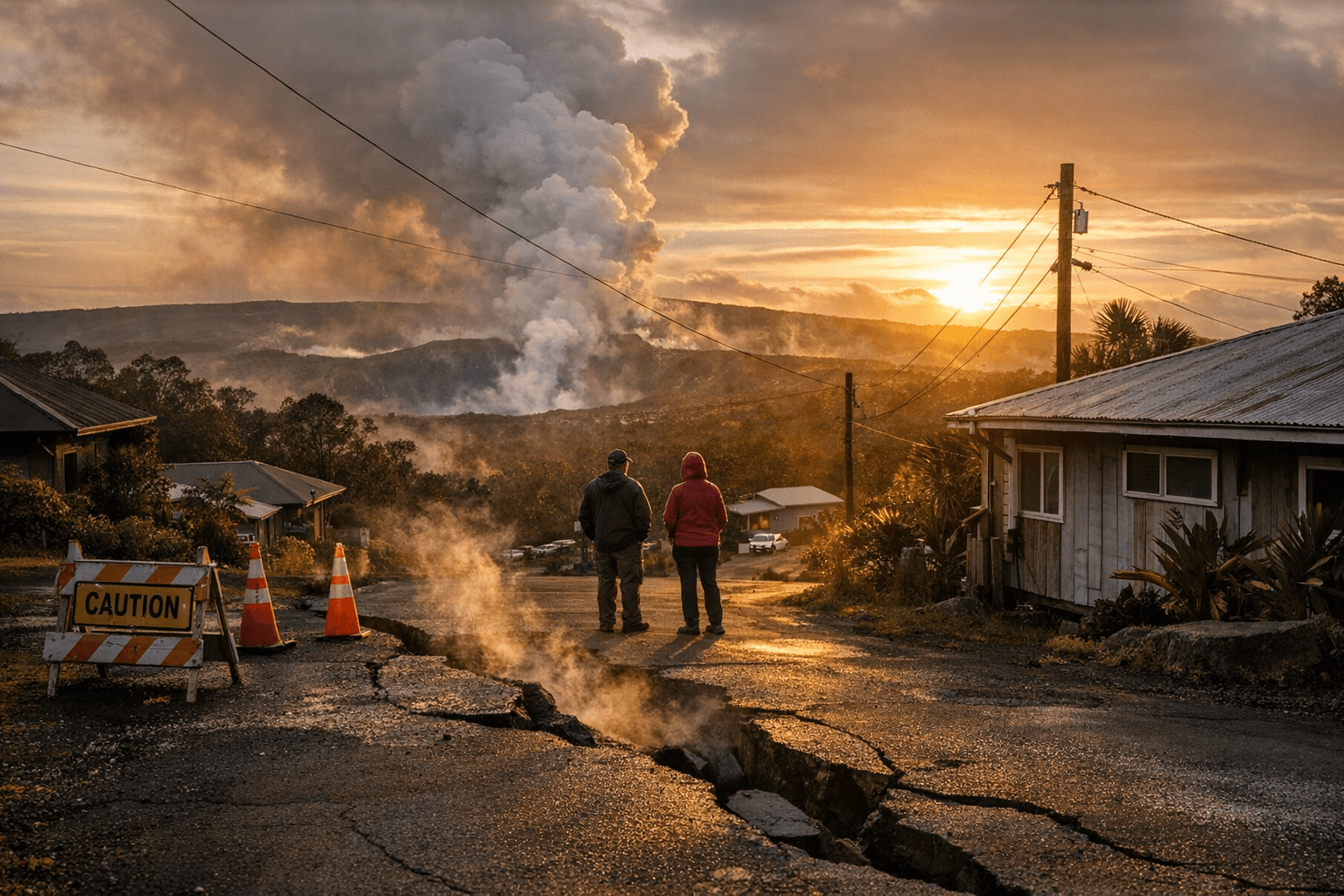
The most immediate danger around Halemaumau is not lava crossing a trail, but unstable ground that can fail without warning. Shallow earthquakes, rising ground and tephra on the crater rim are raising the risk of rockfalls, ground cracking and sudden changes inside the closed summit area of Hawaii Volcanoes National Park.
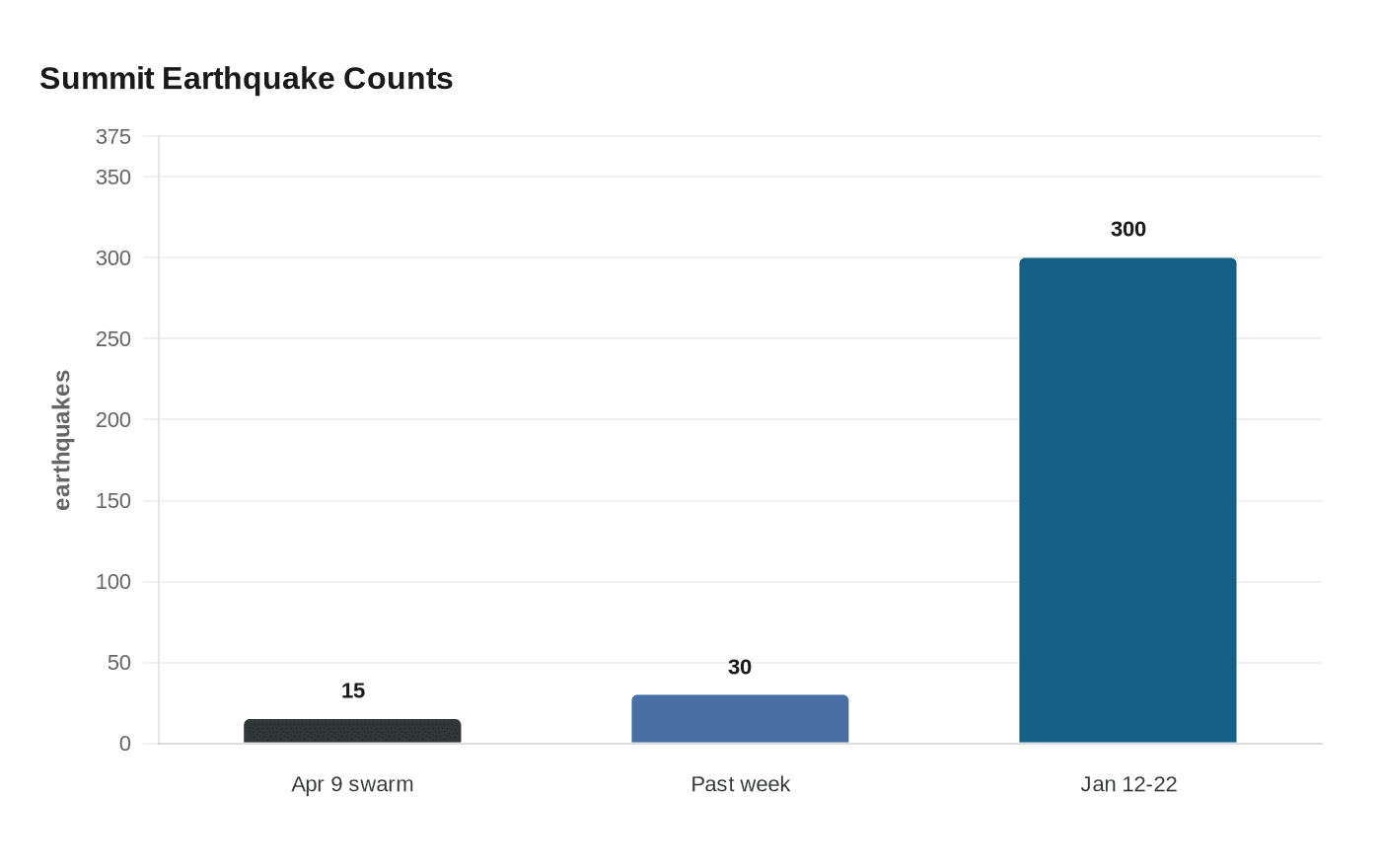
The U.S. Geological Survey’s Hawaiian Volcano Observatory said it detected increased shallow seismicity and localized ground deformation beneath the south rim of Halemaumau on April 23. During the past week, the observatory recorded 30 additional magnitude-2 and smaller earthquakes at depths of about 0.6 to 1.8 miles, or 1 to 3 kilometers, below the surface. A separate swarm of 15 shallow magnitude-2-or-smaller earthquakes struck on April 9 during the final hours of episode 44, and several were felt by staff monitoring the eruption from the crater rim.
Ground deformation data showed part of the south rim rose by several inches. After episode 44, HVO staff did not see obvious ground cracks, likely because tephra obscured visibility. Even so, the observatory warned that the crater wall remains unstable and that earthquakes can increase the odds of rockfalls and slumping along the rim. Tephra on the crater edge can also slide and expose hot, molten material.
Kīlauea has been erupting episodically since December 23, 2024, from two vents in Halemaumau. Episode 45 ran from 1:34 a.m. to 10:01 a.m. HST on April 23, then the eruption paused. As of April 25, Kīlauea remained at Volcano Alert Level ADVISORY and Aviation Color Code YELLOW.
HVO said the summit was inflating between episodes, with one April 1 status report estimating 21.2 microradians of inflationary tilt since the end of episode 43. The observatory also said eruption pauses can stretch beyond two or even three weeks, and typical sulfur dioxide emissions during pauses range from 1,000 to 5,000 tonnes per day.
The latest pattern echoes earlier unrest at the summit. Between January 12 and 22, roughly 300 earthquakes were located in the summit region, mostly smaller than magnitude 2. HVO said the only other comparable case was a small intrusion in the southwest wall of the crater on August 6, 2025, which preceded a brief fissure eruption.
HVO continues to monitor Kīlauea and remains in contact with Hawaii Volcanoes National Park and the Hawaii County Civil Defense Agency as the summit keeps shifting underground.
This article was produced by Prism’s automated news system from verified source data, official records, and press releases, then run through automated quality and moderation checks before publishing. The system is built and supervised by the people who set the standards it runs under. Read our full AI policy.
Did this article answer your question?