Team Rubicon Volunteers Clean Up Volcano After Historic Kīlauea Eruption
Team Rubicon sent over a dozen volunteers to Volcano for a week-long "Tephra Falling" operation to clear ash and Pele’s hair from roofs and gutters after Episode 41 dropped tephra for the first time in over 40 years.
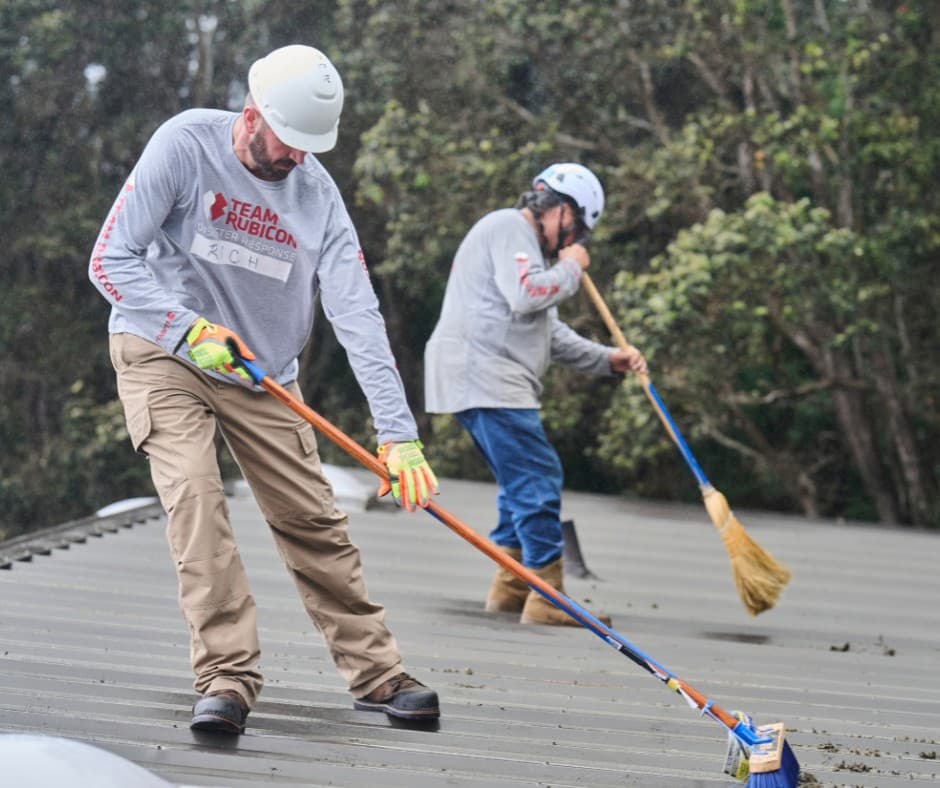
Team Rubicon volunteers set up a forward operating base at the Keaʻau Armory in Herbert Shipman Park and worked in Volcano for a week-long "Tephra Falling" operation after Kīlauea's Episode 41 on Jan. 24, 2026 deposited large tephra and ash across Puna and into South Hilo and the eastern edge of Kaʻū. Bigislandthieves reported that over a dozen volunteers from across the state arrived in Volcano to assist homeowners near Hawaiʻi Volcanoes National Park.
The mission focused on protecting household water catchment systems from acidic volcanic material. "Anything that hits the roof or the gutters has a possibility of going into those holding tanks, and the material - the ash and tephra - has some acidity to it and can block systems in there, so it's not good," said Bill Terrill, Team Rubicon incident commander for the operation. Volunteers cleaned and repaired catchment systems and removed debris from roofs and gutters to reduce the risk of contamination and blockages.
Volunteers used hands-on roof work to remove Pele's hair and ash. "We get up on the roofs and either brush them down or blow them down, clear the gutters out so that there's actually a free flow for the water to come from the roofs, through the downspouts, and into their catchment systems," Terrill said. Hawaiʻi Public Radio reported the organization provided these services at no cost to residents, operating on a donation-based model and coordinating with local partners to reach households in greatest need.
Team Rubicon partnered with the Volcano Emergency Response Team, the Salvation Army, Hawaiʻi County Civil Defense Agency, and the Red Cross for logistics and outreach. The operation targeted elderly, disabled, and low-income residents who might not be able to clear tephra on their own; Terrill said, "There’s this great outpour of joy when we get there and do what we do. The folks that we tend to target would be elderly, disabled, low‑income folks – people that definitely wouldn't be able to take care of it on their own."
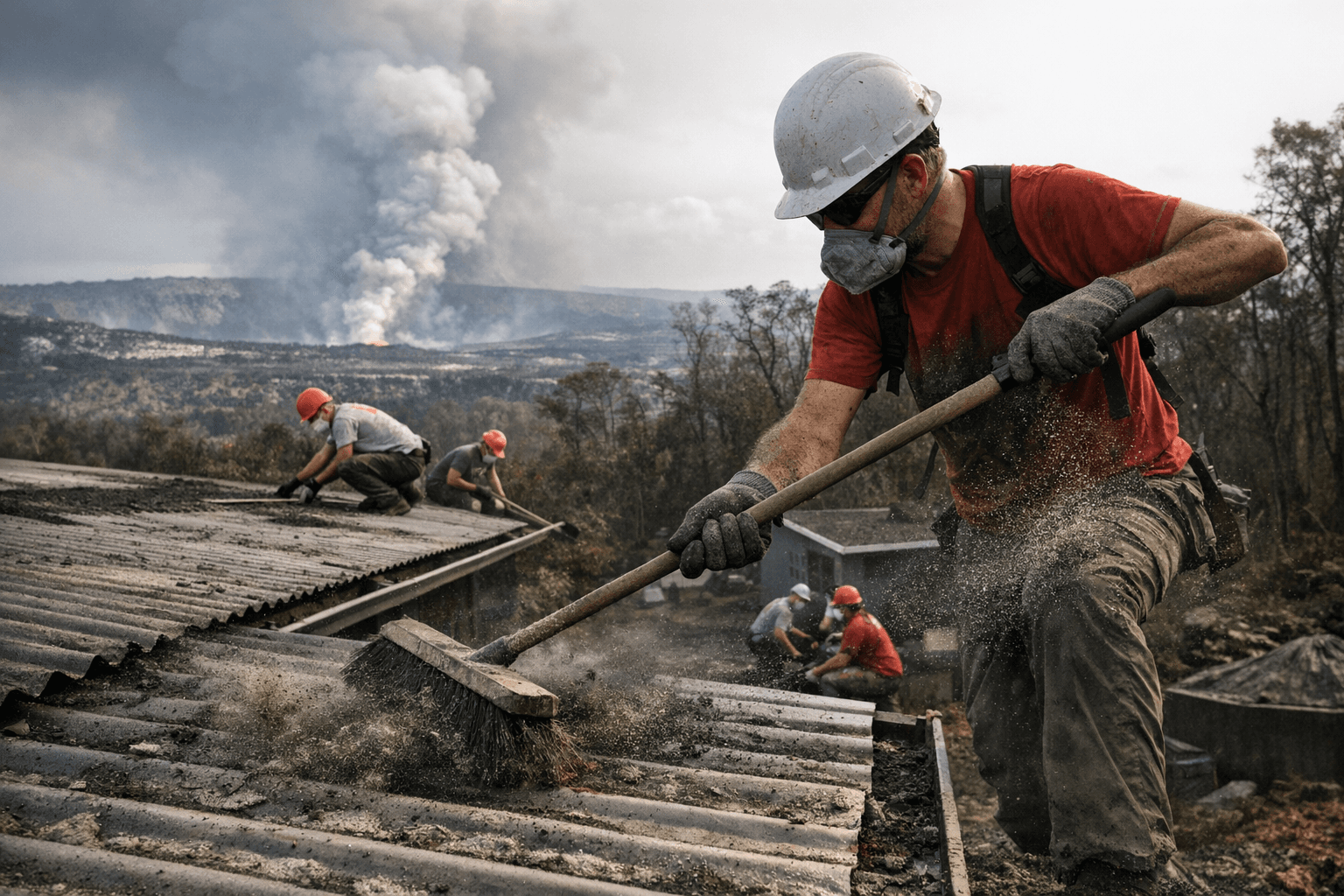
Episode 41's tephra and ashfall included reports of Pele’s hair, thin golden fibers of volcanic glass, over the summit area of Hawaiʻi Volcanoes National Park, parts of Volcano Village, Mauna Loa Estates, and as far away as Hilo, with smaller fallout noted in Mountain View, Pāhoa, and Pepeʻekeo. Bigislandnow described the Jan. 24 episode as highly unusual and the largest tephra fall in more than 40 years, a comparison drawn to Puʻuʻōʻō activity in the 1980s.
Scientific and public-reporting tools were active during the event. The Hawaiian Volcano Observatory maintained webcams and launched a citizen-science reporting tool called "Is Tephra Falling?" to help map fallout. Hawaiʻi County Civil Defense issued precautionary information about volcanic debris and health impacts, though some community members reported difficulty obtaining all needed county information as residents awaited a possible Episode 43.
Team Rubicon emphasized local capacity-building during the mid-February mobilization. The organization has been active in Hawaiʻi for more than a decade, with more than 1,200 volunteers across the islands; Bigislandthieves also invited local volunteers to join the Greyshirts and this mitigation work, noting no prior Team Rubicon experience is required.
Know something we missed? Have a correction or additional information?
Submit a Tip